Birdr

Grey-headed Canary-Flycatcher vs Yellow-browed Tit

Culicicapa ceylonensis versus Sylviparus modestus

Play a quiz with Grey-headed Canary-Flycatcher and Yellow-browed Tit
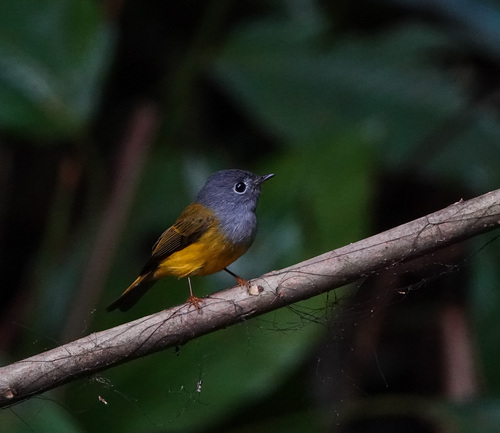
Grey-headed Canary-Flycatcher (Culicicapa ceylonensis) Grey-headed Canary-Flycatcher
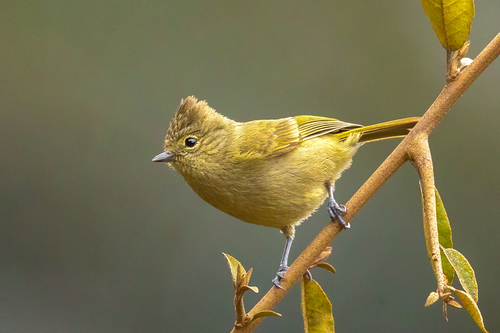
Yellow-browed Tit (Sylviparus modestus) Yellow-browed Tit

Media

Loading…

In short

The Grey-headed Canary-Flycatcher and Yellow-browed Tit can be distinguished by their head and wing patterns. The Canary-Flycatcher has a distinctive grey head and a more slender, flycatcher-like appearance, while the Yellow-browed Tit features a prominent yellow brow and a more compact, tit-like structure.

Identification tips

  1. Look for the grey head of the Canary-Flycatcher versus the yellow brow of the Tit. 2. Note the slender build of the Canary-Flycatcher compared to the compact shape of the Tit. 3. Observe behavior: flycatching in the canopy for the Canary-Flycatcher versus flocking behavior for the Tit. 4. Listen for the soft calls of the Canary-Flycatcher versus the tit-like calls of the Yellow-browed Tit.

Size

The Grey-headed Canary-Flycatcher is generally more slender and elongated compared to the more compact and robust Yellow-browed Tit.

Plumage

The Grey-headed Canary-Flycatcher has a grey head with a yellowish body, whereas the Yellow-browed Tit displays a yellow brow stripe and a more uniform yellowish-green plumage.

Behaviour

The Canary-Flycatcher often flits actively in the canopy, typical of flycatchers, while the Yellow-browed Tit is more likely to be seen in mixed-species flocks, behaving like a typical tit.

Habitat

Both species can be found in forested areas, but the Canary-Flycatcher prefers more open forest and edges, while the Yellow-browed Tit is often found in denser forests.

Voice

The vocalizations differ, with the Canary-Flycatcher having a soft, high-pitched call, while the Yellow-browed Tit produces a series of tit-like calls.

Submit a better description

Use the same sections as the comparison. Your text is published immediately.

The Grey-headed Canary-Flycatcher and Yellow-browed Tit can be distinguished by their head and wing patterns. The Canary-Flycatcher has a distinctive grey head and a more slender, flycatcher-like appearance, while the Yellow-browed Tit features a prominent yellow brow and a more compact, tit-like structure.

  1. Look for the grey head of the Canary-Flycatcher versus the yellow brow of the Tit. 2. Note the slender build of the Canary-Flycatcher compared to the compact shape of the Tit. 3. Observe behavior: flycatching in the canopy for the Canary-Flycatcher versus flocking behavior for the Tit. 4. Listen for the soft calls of the Canary-Flycatcher versus the tit-like calls of the Yellow-browed Tit.

The Grey-headed Canary-Flycatcher is generally more slender and elongated compared to the more compact and robust Yellow-browed Tit.

The Grey-headed Canary-Flycatcher has a grey head with a yellowish body, whereas the Yellow-browed Tit displays a yellow brow stripe and a more uniform yellowish-green plumage.

The Canary-Flycatcher often flits actively in the canopy, typical of flycatchers, while the Yellow-browed Tit is more likely to be seen in mixed-species flocks, behaving like a typical tit.

Both species can be found in forested areas, but the Canary-Flycatcher prefers more open forest and edges, while the Yellow-browed Tit is often found in denser forests.

The vocalizations differ, with the Canary-Flycatcher having a soft, high-pitched call, while the Yellow-browed Tit produces a series of tit-like calls.

Discard your changes?

You have unsaved edits. If you leave now, those changes will be lost.

Grey-headed Canary-Flycatcher · Yellow-browed Tit · My Tricky Birds