Birdr

Grey-headed Kingfisher vs Mangrove Kingfisher

Halcyon leucocephala versus Halcyon senegaloides

Play a quiz with Grey-headed Kingfisher and Mangrove Kingfisher
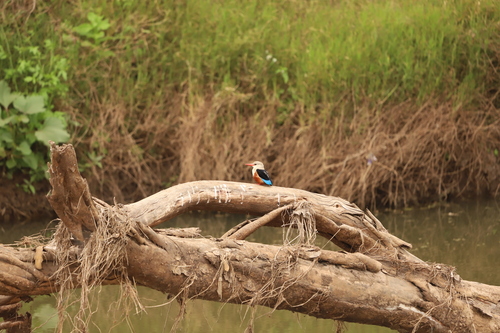
Grey-headed Kingfisher (Halcyon leucocephala) Grey-headed Kingfisher
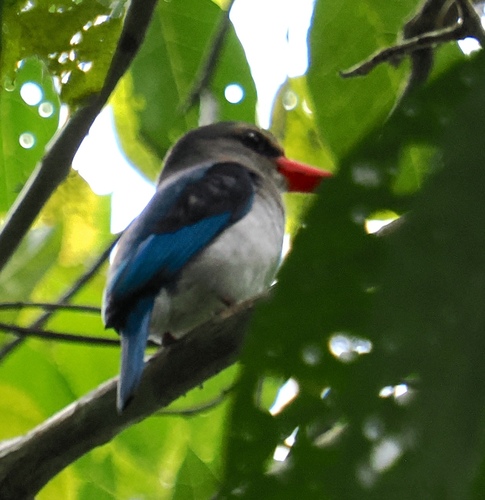
Mangrove Kingfisher (Halcyon senegaloides) Mangrove Kingfisher

Media

Loading…

In short

The Grey-headed Kingfisher and Mangrove Kingfisher are similar in size and structure, but differ in habitat preference and subtle plumage details. The Grey-headed Kingfisher is often found in more open and varied habitats, while the Mangrove Kingfisher is more restricted to coastal mangroves.

Identification tips

  1. Habitat: Check the surrounding environment; mangroves suggest Mangrove Kingfisher. 2. Head Color: Look for a grey head with contrasting chestnut belly for Grey-headed Kingfisher. 3. Plumage Contrast: Grey-headed Kingfisher shows more contrast between head and body. 4. Location: Consider geographical range and habitat type, especially near coastlines for Mangrove Kingfisher.

Size

Both species are similar in size, typical of medium-sized kingfishers.

Plumage

The Grey-headed Kingfisher has a distinctive grey head and chestnut belly, while the Mangrove Kingfisher features a more uniform blue-grey head and back with less contrast. Both have bright blue wings and tails, but the Grey-headed Kingfisher's head is more contrasting against its body.

Behaviour

Both species exhibit typical kingfisher behavior, such as perching quietly and diving for prey. There are no significant behavioral differences noted between them.

Habitat

The Grey-headed Kingfisher is found in a variety of habitats including savannas and open woodlands, whereas the Mangrove Kingfisher is more specialized, primarily inhabiting coastal mangroves.

Voice

Vocalizations are not well-documented for differentiation, but both species have typical kingfisher calls. Observers should note any differences in call patterns if known.

Submit a better description

Use the same sections as the comparison. Your text is published immediately.

The Grey-headed Kingfisher and Mangrove Kingfisher are similar in size and structure, but differ in habitat preference and subtle plumage details. The Grey-headed Kingfisher is often found in more open and varied habitats, while the Mangrove Kingfisher is more restricted to coastal mangroves.

  1. Habitat: Check the surrounding environment; mangroves suggest Mangrove Kingfisher. 2. Head Color: Look for a grey head with contrasting chestnut belly for Grey-headed Kingfisher. 3. Plumage Contrast: Grey-headed Kingfisher shows more contrast between head and body. 4. Location: Consider geographical range and habitat type, especially near coastlines for Mangrove Kingfisher.

Both species are similar in size, typical of medium-sized kingfishers.

The Grey-headed Kingfisher has a distinctive grey head and chestnut belly, while the Mangrove Kingfisher features a more uniform blue-grey head and back with less contrast. Both have bright blue wings and tails, but the Grey-headed Kingfisher's head is more contrasting against its body.

Both species exhibit typical kingfisher behavior, such as perching quietly and diving for prey. There are no significant behavioral differences noted between them.

The Grey-headed Kingfisher is found in a variety of habitats including savannas and open woodlands, whereas the Mangrove Kingfisher is more specialized, primarily inhabiting coastal mangroves.

Vocalizations are not well-documented for differentiation, but both species have typical kingfisher calls. Observers should note any differences in call patterns if known.

Discard your changes?

You have unsaved edits. If you leave now, those changes will be lost.

Grey-headed Kingfisher · Mangrove Kingfisher · My Tricky Birds