Birdr

Grey-hooded Babbler vs Grey-headed Babbler

Cyanoderma bicolor versus Stachyris poliocephala

Play a quiz with Grey-hooded Babbler and Grey-headed Babbler
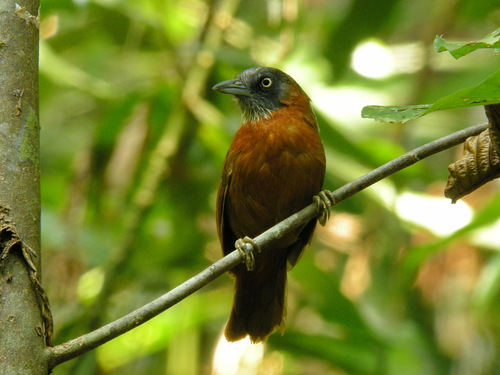
Grey-hooded Babbler (Cyanoderma bicolor) Grey-hooded Babbler
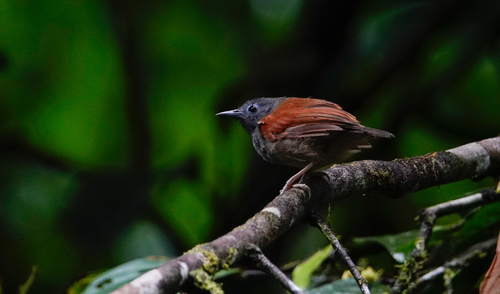
Grey-headed Babbler (Stachyris poliocephala) Grey-headed Babbler

Media

Loading…

In short

The Grey-hooded Babbler (Cyanoderma bicolor) and Grey-headed Babbler (Stachyris poliocephala) can be distinguished by their head coloration and habitat preferences. The Grey-hooded Babbler has a more uniform grey hood, while the Grey-headed Babbler features a contrasting grey head with a more defined supercilium. Both species inhabit similar forest environments, but their vocalizations and subtle plumage differences aid in identification.

Identification tips

1. Head Coloration: Look for the more uniform grey hood of the Grey-hooded Babbler versus the contrasting grey head and supercilium of the Grey-headed Babbler. 2. Plumage Tone: Note the chestnut or rufous tones on the wings and body of the Grey-headed Babbler. 3. Habitat: Consider the habitat, as Grey-hooded Babblers may be found in plantations. 4. Vocalizations: If known, listen for differences in calls, as these can be distinctive.

Size

Both species are similar in size, typical of small babblers.

Plumage

The Grey-hooded Babbler has a uniform grey hood that blends into the body, while the Grey-headed Babbler shows a distinct grey head with a contrasting supercilium and a more pronounced chestnut or rufous tone on the wings and body.

Behaviour

Both species exhibit typical babbler behavior, often seen in small, active flocks foraging in dense undergrowth.

Habitat

Both species are found in lowland and foothill forests, but the Grey-hooded Babbler may also be seen in some types of plantations.

Voice

Vocalizations differ, but specific details are not well-documented. Listening for differences in calls can be helpful if known.

Submit a better description

Use the same sections as the comparison. Your text is published immediately.

The Grey-hooded Babbler (Cyanoderma bicolor) and Grey-headed Babbler (Stachyris poliocephala) can be distinguished by their head coloration and habitat preferences. The Grey-hooded Babbler has a more uniform grey hood, while the Grey-headed Babbler features a contrasting grey head with a more defined supercilium. Both species inhabit similar forest environments, but their vocalizations and subtle plumage differences aid in identification.

1. Head Coloration: Look for the more uniform grey hood of the Grey-hooded Babbler versus the contrasting grey head and supercilium of the Grey-headed Babbler. 2. Plumage Tone: Note the chestnut or rufous tones on the wings and body of the Grey-headed Babbler. 3. Habitat: Consider the habitat, as Grey-hooded Babblers may be found in plantations. 4. Vocalizations: If known, listen for differences in calls, as these can be distinctive.

Both species are similar in size, typical of small babblers.

The Grey-hooded Babbler has a uniform grey hood that blends into the body, while the Grey-headed Babbler shows a distinct grey head with a contrasting supercilium and a more pronounced chestnut or rufous tone on the wings and body.

Both species exhibit typical babbler behavior, often seen in small, active flocks foraging in dense undergrowth.

Both species are found in lowland and foothill forests, but the Grey-hooded Babbler may also be seen in some types of plantations.

Vocalizations differ, but specific details are not well-documented. Listening for differences in calls can be helpful if known.

Discard your changes?

You have unsaved edits. If you leave now, those changes will be lost.

Grey-hooded Babbler · Grey-headed Babbler · My Tricky Birds