Birdr

Grey-hooded Flycatcher vs Sao Paulo Bristle-Tyrant

Mionectes rufiventris versus Pogonotriccus paulista

Play a quiz with Grey-hooded Flycatcher and Sao Paulo Bristle-Tyrant
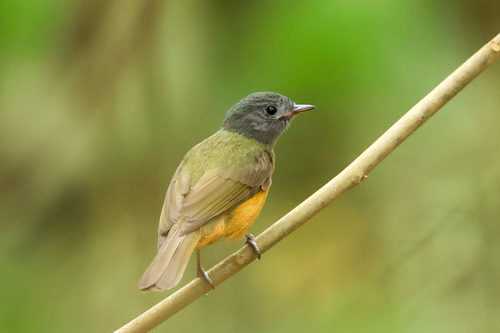
Grey-hooded Flycatcher (Mionectes rufiventris) Grey-hooded Flycatcher
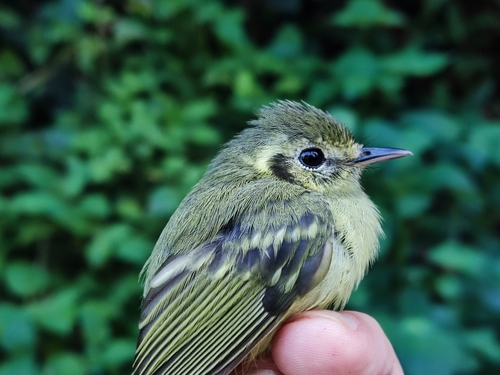
Sao Paulo Bristle-Tyrant (Pogonotriccus paulista) Sao Paulo Bristle-Tyrant

Media

Loading…

In short

The Grey-hooded Flycatcher and the Sao Paulo Bristle-Tyrant can be distinguished by their plumage and habitat preferences. The Grey-hooded Flycatcher has rufous underparts and is found in the Atlantic Forest, while the Sao Paulo Bristle-Tyrant's plumage details are less documented, but it is known to inhabit southeastern Brazil.

Identification tips

  1. Look for rufous underparts to identify the Grey-hooded Flycatcher. 2. Consider habitat: the Grey-hooded Flycatcher is in the Atlantic Forest, while the Sao Paulo Bristle-Tyrant is in southeastern Brazil. 3. Note behavior: lek-breeding may indicate Grey-hooded Flycatcher.

Size

Both species are small flycatchers, typical of the Tyrannidae family, with no significant size difference noted.

Plumage

The Grey-hooded Flycatcher has rufous underparts and olive-green upperparts. The Sao Paulo Bristle-Tyrant's plumage is less documented, but it is generally similar to other bristle-tyrants with subtle differences in coloration.

Behaviour

The Grey-hooded Flycatcher is known for its lek-breeding system, which is unusual among flycatchers. Little is known about the Sao Paulo Bristle-Tyrant's behavior, but it is presumed typical of the genus Pogonotriccus.

Habitat

The Grey-hooded Flycatcher inhabits the lower growth of humid forests in the Atlantic Forest region. The Sao Paulo Bristle-Tyrant is found in southeastern Brazil, but specific habitat preferences are not well documented.

Submit a better description

Use the same sections as the comparison. Your text is published immediately.

The Grey-hooded Flycatcher and the Sao Paulo Bristle-Tyrant can be distinguished by their plumage and habitat preferences. The Grey-hooded Flycatcher has rufous underparts and is found in the Atlantic Forest, while the Sao Paulo Bristle-Tyrant's plumage details are less documented, but it is known to inhabit southeastern Brazil.

  1. Look for rufous underparts to identify the Grey-hooded Flycatcher. 2. Consider habitat: the Grey-hooded Flycatcher is in the Atlantic Forest, while the Sao Paulo Bristle-Tyrant is in southeastern Brazil. 3. Note behavior: lek-breeding may indicate Grey-hooded Flycatcher.

Both species are small flycatchers, typical of the Tyrannidae family, with no significant size difference noted.

The Grey-hooded Flycatcher has rufous underparts and olive-green upperparts. The Sao Paulo Bristle-Tyrant's plumage is less documented, but it is generally similar to other bristle-tyrants with subtle differences in coloration.

The Grey-hooded Flycatcher is known for its lek-breeding system, which is unusual among flycatchers. Little is known about the Sao Paulo Bristle-Tyrant's behavior, but it is presumed typical of the genus Pogonotriccus.

The Grey-hooded Flycatcher inhabits the lower growth of humid forests in the Atlantic Forest region. The Sao Paulo Bristle-Tyrant is found in southeastern Brazil, but specific habitat preferences are not well documented.

Discard your changes?

You have unsaved edits. If you leave now, those changes will be lost.

Grey-hooded Flycatcher · Sao Paulo Bristle-Tyrant · My Tricky Birds