Birdr

Grey Kestrel vs Dickinson's Kestrel

Falco ardosiaceus versus Falco dickinsoni

Play a quiz with Grey Kestrel and Dickinson's Kestrel
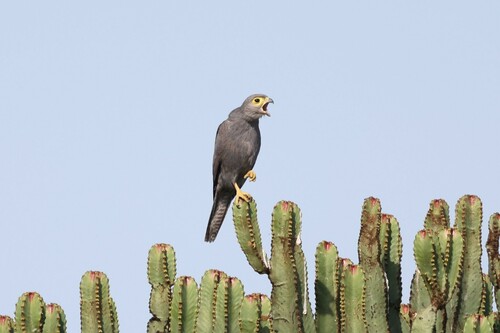
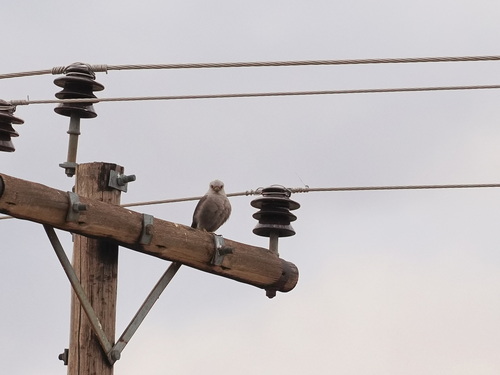
Grey Kestrel (Falco ardosiaceus) Grey Kestrel
Dickinson's Kestrel (Falco dickinsoni) Dickinson's Kestrel

Media

Loading…

In short

The Grey Kestrel and Dickinson's Kestrel are similar in size and shape, but the Grey Kestrel is distinguished by its darker, more uniform grey plumage and lack of a pale supercilium. In contrast, Dickinson's Kestrel has a paler grey head and a more distinct pale supercilium. Both species share similar habitats and behaviors, making plumage the most reliable field mark.

Identification tips

Size

Both species are similar in size, typical of small falcons, with no significant differences in overall structure.

Plumage

Grey Kestrel has a uniform dark grey plumage without a pale supercilium, while Dickinson's Kestrel shows a paler grey head and a more noticeable pale supercilium. Both have dark eyes and legs.

Behaviour

Both species exhibit typical kestrel behavior, including hovering and perching conspicuously, making behavior alone unreliable for differentiation.

Habitat

Both species inhabit open savannas and woodlands, often near water, and can be found in similar geographic regions, making habitat a poor distinguishing factor.

Voice

Vocalizations are not a reliable field mark as both species have similar calls typical of kestrels, consisting of high-pitched, repetitive notes.

Submit a better description

Use the same sections as the comparison. Your text is published immediately.

The Grey Kestrel and Dickinson's Kestrel are similar in size and shape, but the Grey Kestrel is distinguished by its darker, more uniform grey plumage and lack of a pale supercilium. In contrast, Dickinson's Kestrel has a paler grey head and a more distinct pale supercilium. Both species share similar habitats and behaviors, making plumage the most reliable field mark.

  • Look for the uniform dark grey plumage of the Grey Kestrel.
  • Check for the pale supercilium on Dickinson's Kestrel, especially around the head.
  • Observe in good light to distinguish subtle plumage differences.
  • Note that both species can be found in similar habitats and exhibit similar behaviors, so focus on plumage for identification.

Both species are similar in size, typical of small falcons, with no significant differences in overall structure.

Grey Kestrel has a uniform dark grey plumage without a pale supercilium, while Dickinson's Kestrel shows a paler grey head and a more noticeable pale supercilium. Both have dark eyes and legs.

Both species exhibit typical kestrel behavior, including hovering and perching conspicuously, making behavior alone unreliable for differentiation.

Both species inhabit open savannas and woodlands, often near water, and can be found in similar geographic regions, making habitat a poor distinguishing factor.

Vocalizations are not a reliable field mark as both species have similar calls typical of kestrels, consisting of high-pitched, repetitive notes.

Discard your changes?

You have unsaved edits. If you leave now, those changes will be lost.

Grey Kestrel · Dickinson's Kestrel · My Tricky Birds