Birdr

Grey-necked Bunting vs Cretzschmar's Bunting

Emberiza buchanani versus Emberiza caesia

Play a quiz with Grey-necked Bunting and Cretzschmar's Bunting
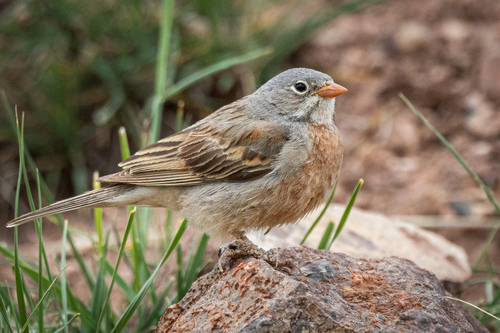
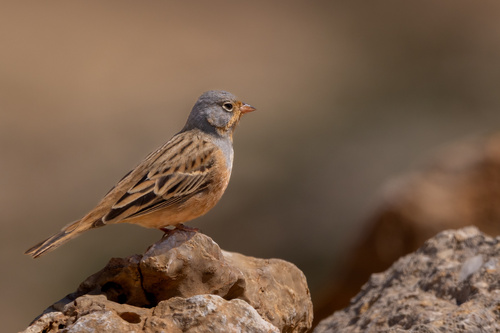
Grey-necked Bunting (Emberiza buchanani) Grey-necked Bunting
Cretzschmar's Bunting (Emberiza caesia) Cretzschmar's Bunting

Media

Loading…

In short

Grey-necked Bunting and Cretzschmar's Bunting are similar Old World buntings, but can be distinguished by their bill shape and plumage details. Grey-necked Bunting has a more robust bill and less contrasting plumage compared to Cretzschmar's Bunting, which exhibits a more distinct head pattern.

Identification tips

  1. Bill Shape: Grey-necked Bunting has a thicker, more robust bill compared to the slightly finer bill of Cretzschmar's Bunting. 2. Head and Neck Color: Look for the more uniform grey neck of Grey-necked Bunting versus the contrasting bluish-grey head and rufous throat of Cretzschmar's Bunting. 3. Habitat Context: Consider the surrounding habitat; Grey-necked Bunting favors more open, rocky areas. 4. Song: If heard, note the subtle differences in song structure, though this requires familiarity.

Size

Both species are similar in size, typical of small buntings.

Plumage

Grey-necked Bunting has a more uniform greyish head and neck, while Cretzschmar's Bunting shows a more contrasting head pattern with a bluish-grey head and a rufous throat and breast.

Behaviour

Both species exhibit similar foraging behavior, often seen on the ground or low vegetation.

Habitat

Grey-necked Bunting prefers dry, open habitats like rocky hillsides, while Cretzschmar's Bunting is often found in more shrubby areas, though there is some overlap.

Voice

The songs of both species are similar, consisting of simple, repetitive phrases, but specific differences are subtle and may require experience to discern.

Submit a better description

Use the same sections as the comparison. Your text is published immediately.

Grey-necked Bunting and Cretzschmar's Bunting are similar Old World buntings, but can be distinguished by their bill shape and plumage details. Grey-necked Bunting has a more robust bill and less contrasting plumage compared to Cretzschmar's Bunting, which exhibits a more distinct head pattern.

  1. Bill Shape: Grey-necked Bunting has a thicker, more robust bill compared to the slightly finer bill of Cretzschmar's Bunting. 2. Head and Neck Color: Look for the more uniform grey neck of Grey-necked Bunting versus the contrasting bluish-grey head and rufous throat of Cretzschmar's Bunting. 3. Habitat Context: Consider the surrounding habitat; Grey-necked Bunting favors more open, rocky areas. 4. Song: If heard, note the subtle differences in song structure, though this requires familiarity.

Both species are similar in size, typical of small buntings.

Grey-necked Bunting has a more uniform greyish head and neck, while Cretzschmar's Bunting shows a more contrasting head pattern with a bluish-grey head and a rufous throat and breast.

Both species exhibit similar foraging behavior, often seen on the ground or low vegetation.

Grey-necked Bunting prefers dry, open habitats like rocky hillsides, while Cretzschmar's Bunting is often found in more shrubby areas, though there is some overlap.

The songs of both species are similar, consisting of simple, repetitive phrases, but specific differences are subtle and may require experience to discern.

Discard your changes?

You have unsaved edits. If you leave now, those changes will be lost.

Grey-necked Bunting · Cretzschmar's Bunting · My Tricky Birds