Birdr

Grey Nightjar vs Large-tailed Nightjar

Caprimulgus jotaka versus Caprimulgus macrurus

Play a quiz with Grey Nightjar and Large-tailed Nightjar
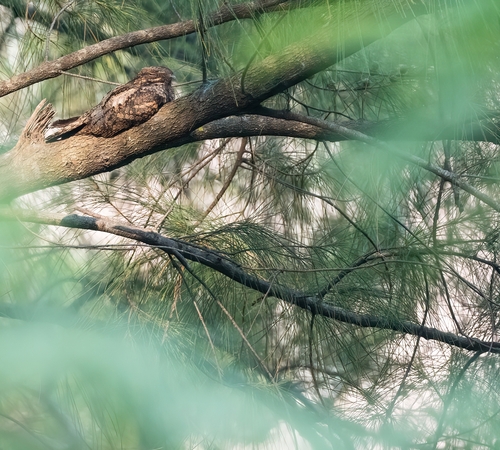
Grey Nightjar (Caprimulgus jotaka) Grey Nightjar
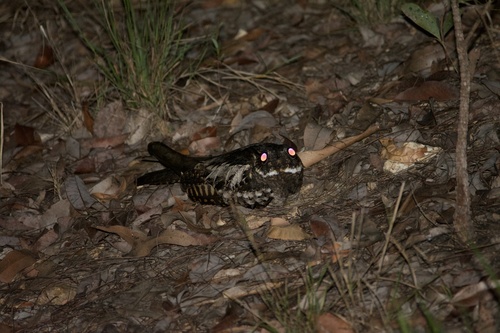
Large-tailed Nightjar (Caprimulgus macrurus) Large-tailed Nightjar

Media

Loading…

In short

The Grey Nightjar and Large-tailed Nightjar are both medium-sized nightjars with cryptic plumage, but they can be distinguished by tail and wing patterns. The Large-tailed Nightjar has a more prominent white band on the tail and broader white wing patches, while the Grey Nightjar's markings are more subdued.

Identification tips

  1. Look for the white band on the tail: more prominent in the Large-tailed Nightjar. 2. Check the wing patches: larger and more noticeable in the Large-tailed Nightjar. 3. Listen for vocalizations: the Large-tailed Nightjar has a more repetitive call. 4. Consider habitat: the Grey Nightjar may be found at higher elevations.

Size

Both species are similar in size, but the Large-tailed Nightjar may appear slightly bulkier due to its broader wings and longer tail.

Plumage

The Grey Nightjar has more subtle plumage with less contrast, while the Large-tailed Nightjar shows a more pronounced white band on the tail and larger white patches on the wings.

Behaviour

Both species exhibit similar nocturnal behaviors, often seen hawking for insects at dusk and dawn.

Habitat

Both species can be found in similar habitats, including open woodlands and forest edges, but the Grey Nightjar may also be found at higher elevations.

Voice

The vocalizations of these species differ, with the Large-tailed Nightjar having a more distinct, repetitive call compared to the Grey Nightjar's softer, less rhythmic song.

Submit a better description

Use the same sections as the comparison. Your text is published immediately.

The Grey Nightjar and Large-tailed Nightjar are both medium-sized nightjars with cryptic plumage, but they can be distinguished by tail and wing patterns. The Large-tailed Nightjar has a more prominent white band on the tail and broader white wing patches, while the Grey Nightjar's markings are more subdued.

  1. Look for the white band on the tail: more prominent in the Large-tailed Nightjar. 2. Check the wing patches: larger and more noticeable in the Large-tailed Nightjar. 3. Listen for vocalizations: the Large-tailed Nightjar has a more repetitive call. 4. Consider habitat: the Grey Nightjar may be found at higher elevations.

Both species are similar in size, but the Large-tailed Nightjar may appear slightly bulkier due to its broader wings and longer tail.

The Grey Nightjar has more subtle plumage with less contrast, while the Large-tailed Nightjar shows a more pronounced white band on the tail and larger white patches on the wings.

Both species exhibit similar nocturnal behaviors, often seen hawking for insects at dusk and dawn.

Both species can be found in similar habitats, including open woodlands and forest edges, but the Grey Nightjar may also be found at higher elevations.

The vocalizations of these species differ, with the Large-tailed Nightjar having a more distinct, repetitive call compared to the Grey Nightjar's softer, less rhythmic song.

Discard your changes?

You have unsaved edits. If you leave now, those changes will be lost.

Grey Nightjar · Large-tailed Nightjar · My Tricky Birds