Birdr

Grey Partridge vs Common Quail

Perdix perdix versus Coturnix coturnix

Play a quiz with Grey Partridge and Common Quail
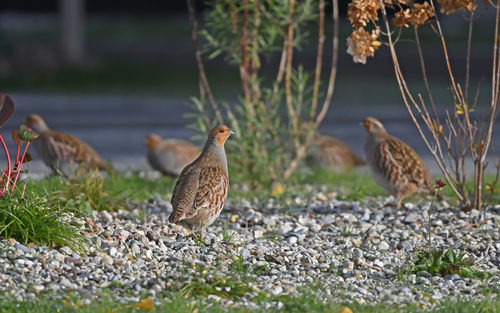
Grey Partridge (Perdix perdix) Grey Partridge
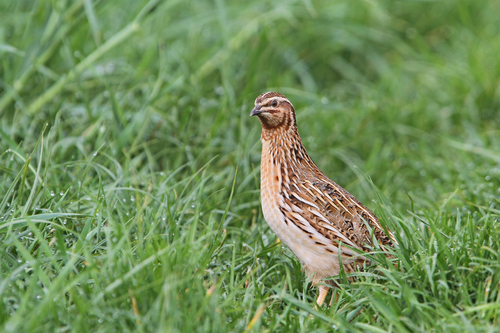
Common Quail (Coturnix coturnix) Common Quail

Media

Loading…

In short

The Grey Partridge (Perdix perdix) and Common Quail (Coturnix coturnix) are both small, ground-dwelling birds, but they differ in structure and plumage. The Grey Partridge is bulkier with a more rounded body, while the Common Quail is more compact with a shorter tail. Both species can be found in open fields, but their vocalizations are distinct, aiding identification.

Identification tips

  1. Look for the Grey Partridge's larger size and rounded body. 2. Note the Grey Partridge's chestnut belly patch. 3. Listen for the Common Quail's 'wet-my-lips' call. 4. Observe the habitat: Grey Partridge often in temperate fields, Common Quail in warmer areas. 5. Watch for behavior: Grey Partridge in coveys, Common Quail more solitary.

Size

Grey Partridge is larger and bulkier compared to the smaller, more compact Common Quail.

Plumage

Grey Partridge has a greyish body with a distinctive chestnut belly patch and a more uniform appearance. Common Quail has a more cryptic, streaked pattern with a buffy-brown coloration, making it well-camouflaged in grasslands.

Behaviour

Both species are ground-dwelling and prefer running to flying when disturbed. However, the Grey Partridge often forms small coveys, especially in winter, while Common Quail is more solitary or in pairs.

Habitat

Both species inhabit open fields and agricultural areas, but Grey Partridge is more often found in temperate regions, while Common Quail can also be found in warmer climates.

Voice

The Grey Partridge's call is a harsh, grating 'kerr-ick', while the Common Quail's call is a distinctive, repetitive 'wet-my-lips'.

Submit a better description

Use the same sections as the comparison. Your text is published immediately.

The Grey Partridge (Perdix perdix) and Common Quail (Coturnix coturnix) are both small, ground-dwelling birds, but they differ in structure and plumage. The Grey Partridge is bulkier with a more rounded body, while the Common Quail is more compact with a shorter tail. Both species can be found in open fields, but their vocalizations are distinct, aiding identification.

  1. Look for the Grey Partridge's larger size and rounded body. 2. Note the Grey Partridge's chestnut belly patch. 3. Listen for the Common Quail's 'wet-my-lips' call. 4. Observe the habitat: Grey Partridge often in temperate fields, Common Quail in warmer areas. 5. Watch for behavior: Grey Partridge in coveys, Common Quail more solitary.

Grey Partridge is larger and bulkier compared to the smaller, more compact Common Quail.

Grey Partridge has a greyish body with a distinctive chestnut belly patch and a more uniform appearance. Common Quail has a more cryptic, streaked pattern with a buffy-brown coloration, making it well-camouflaged in grasslands.

Both species are ground-dwelling and prefer running to flying when disturbed. However, the Grey Partridge often forms small coveys, especially in winter, while Common Quail is more solitary or in pairs.

Both species inhabit open fields and agricultural areas, but Grey Partridge is more often found in temperate regions, while Common Quail can also be found in warmer climates.

The Grey Partridge's call is a harsh, grating 'kerr-ick', while the Common Quail's call is a distinctive, repetitive 'wet-my-lips'.

Discard your changes?

You have unsaved edits. If you leave now, those changes will be lost.

Grey Partridge · Common Quail · My Tricky Birds