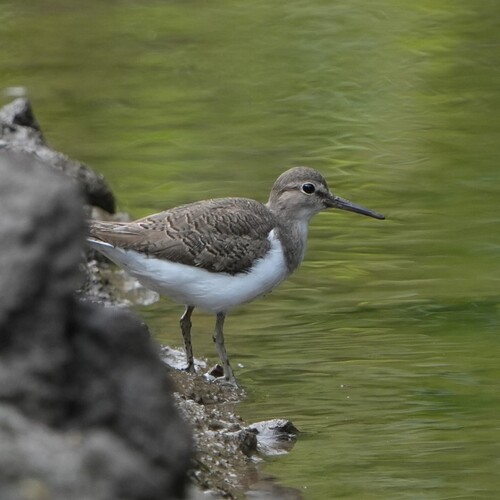
Grey Phalarope vs Common Sandpiper
Phalaropus fulicarius versus Actitis hypoleucos
Play a quiz with Grey Phalarope and Common Sandpiper
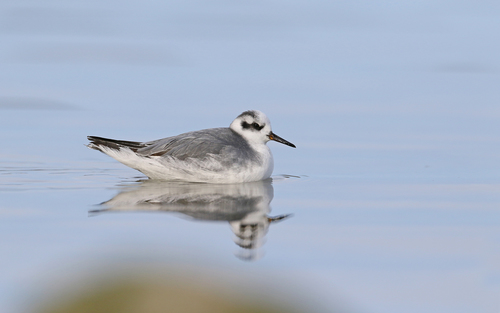
Grey Phalarope
Common Sandpiper
In short
The Grey Phalarope (Red Phalarope) and Common Sandpiper differ significantly in habitat and behavior. Grey Phalaropes are pelagic, often found in open ocean environments, while Common Sandpipers are typically seen along freshwater bodies. In flight, Grey Phalaropes show a distinctive white wing stripe, unlike the Common Sandpiper's white wingbar and dark rump.
Identification tips
1. Habitat: Check the habitat; Grey Phalaropes are pelagic, while Common Sandpipers are found near freshwater. 2. Flight Pattern: Look for the white wing stripe in Grey Phalaropes versus the white wingbar and dark rump in Common Sandpipers. 3. Behavior: Observe behavior; Grey Phalaropes spin in water, Common Sandpipers bob their tails on land. 4. Size and Structure: Note the larger, bulkier build of the Grey Phalarope compared to the smaller, more delicate Common Sandpiper.
Size
Grey Phalarope is larger and bulkier than the Common Sandpiper, with a more robust body.
Plumage
Grey Phalaropes in non-breeding plumage have a greyish appearance with a white face and underparts, and a bold white wing stripe in flight. Common Sandpipers have greenish-brown upperparts with dark lateral breast patches and a white wingbar in flight.
Behaviour
Grey Phalaropes are often seen swimming in deep water, spinning to stir up prey, while Common Sandpipers are more terrestrial, often seen bobbing their tails along shorelines.
Habitat
Grey Phalaropes are pelagic outside the breeding season, found in open ocean waters. Common Sandpipers prefer freshwater habitats like rivers and lakeshores.
Voice
Common Sandpipers have a distinctive, rapid 'swee-wee-wee' call, often heard when flushed. Grey Phalaropes are generally silent at sea.