Grey Phalarope vs Large-billed Lark
Phalaropus fulicarius versus Galerida magnirostris
Play a quiz with Grey Phalarope and Large-billed Lark
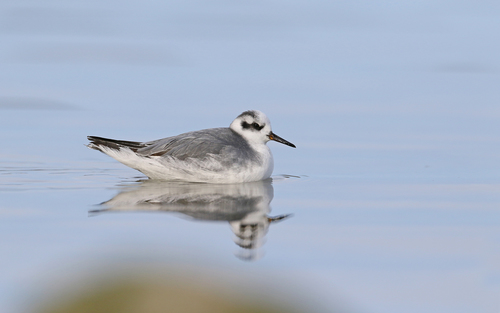
Grey Phalarope
Large-billed Lark
In short
The Grey Phalarope (Phalaropus fulicarius) and Large-billed Lark (Galerida magnirostris) are vastly different in appearance and habitat, making them easy to distinguish in the field. The Grey Phalarope is a pelagic bird often found in coastal waters, whereas the Large-billed Lark is a terrestrial bird of open, arid environments.
Identification tips
- Habitat: Look for Grey Phalaropes in coastal or pelagic waters, and Large-billed Larks in dry, open terrestrial habitats. 2. Plumage: In breeding season, Grey Phalaropes have rufous underparts, unlike the streaked brown of Large-billed Larks. 3. Behavior: Observe feeding behavior; Grey Phalaropes spin on water, while Large-billed Larks forage on the ground. 4. Vocalization: Listen for the song; Large-billed Larks sing, whereas Grey Phalaropes are mostly silent.
Size
The Grey Phalarope is a small wader, while the Large-billed Lark is a medium-sized passerine.
Plumage
Grey Phalaropes have a distinctive breeding plumage with bright rufous-red underparts, while Large-billed Larks have a more uniform brown plumage with streaking, typical of larks.
Behaviour
Grey Phalaropes are often seen swimming and spinning on water surfaces, feeding on invertebrates, whereas Large-billed Larks are ground-dwelling, feeding on seeds and insects.
Habitat
Grey Phalaropes are found in coastal and pelagic waters, especially during migration, while Large-billed Larks inhabit dry, open landscapes such as grasslands and semi-deserts.
Voice
The Grey Phalarope is generally silent at sea, while the Large-billed Lark is known for its varied and melodious song.