Grey Phalarope vs Terek Sandpiper
Phalaropus fulicarius versus Xenus cinereus
Play a quiz with Grey Phalarope and Terek Sandpiper
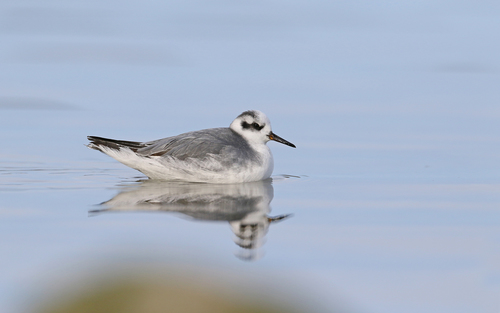
Grey Phalarope
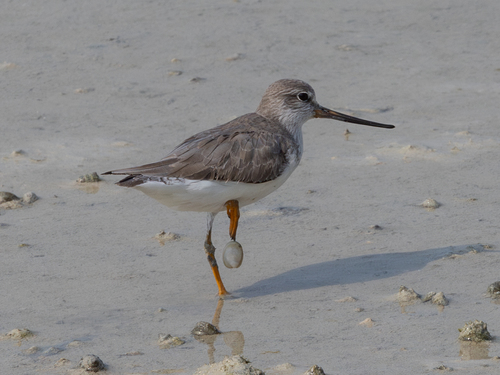
Terek Sandpiper
In short
The Grey Phalarope (Red Phalarope) and Terek Sandpiper are distinct in both structure and behavior. The Grey Phalarope is a pelagic species with a heavier body and shorter legs, while the Terek Sandpiper is more terrestrial with a distinctive upcurved bill and frenetic feeding style.
Identification tips
1. Bill Shape: Look for the Terek Sandpiper's distinct upcurved bill, unlike the straight bill of the Grey Phalarope. 2. Behavior: Note the Terek Sandpiper's frenetic movements on mudflats compared to the swimming and spinning behavior of the Grey Phalarope. 3. Habitat: Consider the habitat; Grey Phalaropes are more likely found in open ocean or coastal tundra, while Terek Sandpipers are on intertidal flats. 4. Plumage: During breeding, Grey Phalaropes are more colorful, especially females, while Terek Sandpipers remain more uniformly grey and white.
Size
The Grey Phalarope is generally heavier and more robust compared to the more slender and short-legged Terek Sandpiper.
Plumage
Grey Phalaropes in breeding plumage are more colorful, with females being larger and more brightly colored than males. The Terek Sandpiper has a more uniform grey and white plumage with an upcurved bill that is unique among shorebirds.
Behaviour
Grey Phalaropes are often seen swimming and spinning in water to stir up food, while Terek Sandpipers dash across mudflats and use their upcurved bill to scythe through the surface.
Habitat
Grey Phalaropes are pelagic, often found in coastal tundra during breeding and open ocean during migration. Terek Sandpipers prefer intertidal flats near mangroves and are more flexible in their habitat choice.