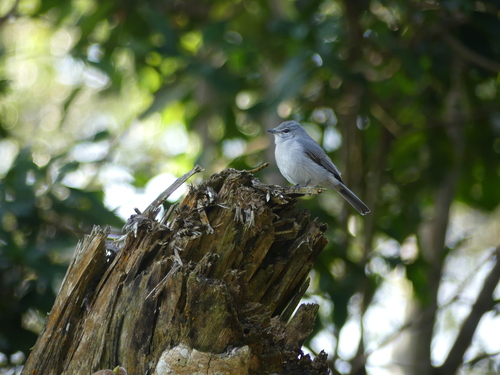
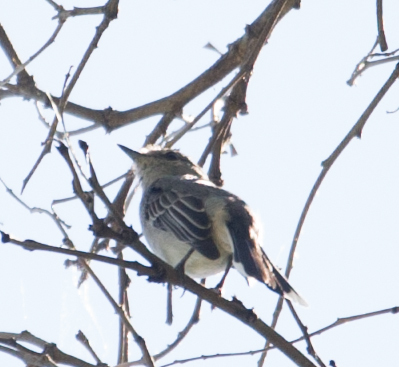
Grey Tit-Flycatcher vs Ashy Flycatcher
Fraseria plumbea versus Fraseria caerulescens
Play a quiz with Grey Tit-Flycatcher and Ashy Flycatcher
Grey Tit-Flycatcher
Ashy Flycatcher
In short
The Grey Tit-Flycatcher and Ashy Flycatcher are similar small, grey passerines, but they can be distinguished by their subtle differences in plumage and behavior. The Grey Tit-Flycatcher typically shows a darker, more uniform grey plumage, while the Ashy Flycatcher often appears paler with a more contrasting face pattern. Observing their vocalizations and habitat preferences can also aid in identification.
Identification tips
- Look for the darker, uniform grey plumage of the Grey Tit-Flycatcher. 2. Note the paler appearance and contrasting face of the Ashy Flycatcher. 3. Observe behavior: Grey Tit-Flycatcher may join mixed flocks, while Ashy Flycatcher is often solitary. 4. Listen for differences in song complexity. 5. Consider habitat: Grey Tit-Flycatcher prefers dense forests, Ashy Flycatcher is more versatile.
Size
Both species are similar in size, typical of small flycatchers.
Plumage
The Grey Tit-Flycatcher (Fraseria plumbea) generally has a darker, more uniform grey plumage. In contrast, the Ashy Flycatcher (Fraseria caerulescens) often appears paler and may exhibit a more contrasting face pattern, with a slightly lighter throat and belly.
Behaviour
Both species are active flycatchers, but the Grey Tit-Flycatcher may be seen more frequently in mixed-species flocks, while the Ashy Flycatcher often forages alone or in pairs.
Habitat
The Grey Tit-Flycatcher is typically found in dense forests and woodland areas, whereas the Ashy Flycatcher can be found in a wider range of habitats, including open woodlands and forest edges.
Voice
Vocalizations can be a key differentiator; the Grey Tit-Flycatcher has a more varied and complex song, while the Ashy Flycatcher has a simpler, more repetitive call. However, both species' calls can be quite similar, making this a less reliable field mark.