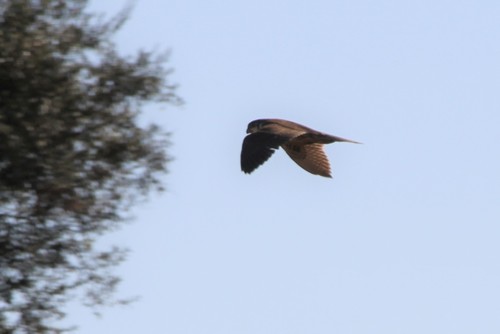
Gyr Falcon vs Prairie Falcon
Falco rusticolus versus Falco mexicanus
Play a quiz with Gyr Falcon and Prairie Falcon
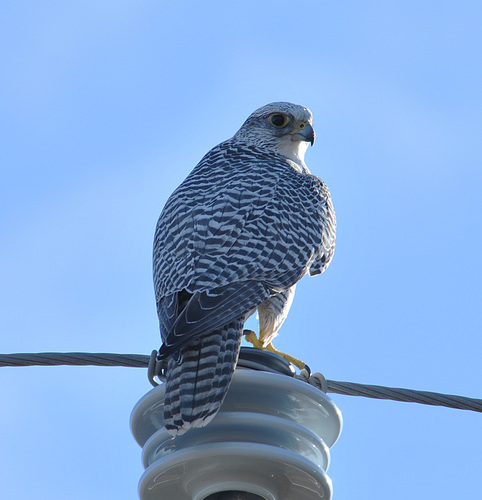
Gyr Falcon
Prairie Falcon
In short
The Gyr Falcon and Prairie Falcon can be distinguished primarily by their size and habitat preferences. The Gyr Falcon is larger and more robust, often found in Arctic and subarctic regions, while the Prairie Falcon is smaller and inhabits arid, open landscapes in western North America.
Identification tips
1. Size and Structure: Look for the larger size and bulkier build of the Gyr Falcon compared to the more slender Prairie Falcon. 2. Plumage: Note the Gyr Falcon's variable plumage, which can range from white to dark, versus the Prairie Falcon's consistent sandy-brown coloration with dark underwing patches. 3. Habitat: Consider the location; Gyr Falcons are more likely in northern, colder regions, while Prairie Falcons are found in arid, open areas. 4. Behavior: Observe hunting style; Gyr Falcons often hunt in open tundra, while Prairie Falcons are more likely to be seen hunting low over open ground. 5. Vocalization: Listen for the Prairie Falcon's shriller, more rapid call.
Size
The Gyr Falcon is noticeably larger and bulkier than the Prairie Falcon, with a wingspan that can exceed 4 feet, compared to the Prairie Falcon's more modest size.
Plumage
Gyr Falcons exhibit a wide range of plumage variations, from white to dark morphs, often with a mottled appearance. Prairie Falcons have a more uniform sandy-brown plumage with dark axillaries (armpit feathers) visible in flight.
Behaviour
Gyr Falcons are known for their powerful flight and preference for hunting ptarmigan, while Prairie Falcons are agile hunters of mammals and birds, often seen in swift, low-level flight over open terrain.
Habitat
Gyr Falcons are typically found in tundra and mountainous regions, often nesting on cliffs. Prairie Falcons prefer arid, open landscapes, such as deserts and grasslands, often nesting on cliffs or in canyons.
Voice
Both species have similar calls, but the Prairie Falcon's call is shriller and more rapid, which can be a subtle distinguishing feature.