Harlequin Duck vs Surf Scoter
Histrionicus histrionicus versus Melanitta perspicillata
Play a quiz with Harlequin Duck and Surf Scoter

Harlequin Duck
Surf Scoter
In short
Harlequin Ducks and Surf Scoters can be distinguished by their distinct plumage patterns and habitat preferences. Harlequin Ducks have a striking slate blue plumage with bold white, black, and chestnut markings, while Surf Scoters are predominantly black with distinctive white patches on the head. Both species are sea ducks, but they differ in their preferred environments and behaviors.
Identification tips
- Plumage: Look for the Harlequin Duck's slate blue with bold markings versus the Surf Scoter's black with white head patches.
- Size: Surf Scoters are larger and heavier.
- Habitat: Harlequin Ducks are often near rocky shores and rivers; Surf Scoters are on open water.
- Behavior: Note the Harlequin's unique river swimming ability and tameness compared to the Surf Scoter's flocking behavior.
Size
Surf Scoters are generally larger and heavier than Harlequin Ducks.
Plumage
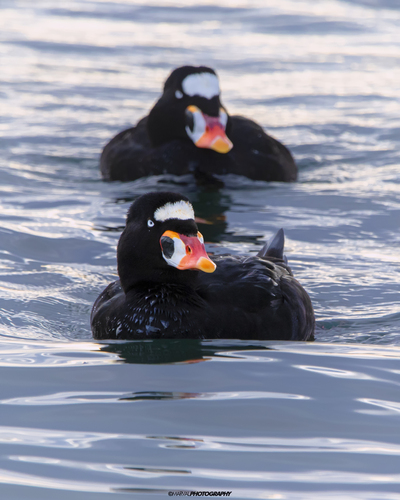
Harlequin Ducks feature a slate blue body with bold white, black, and chestnut markings. In contrast, male Surf Scoters are velvety black with a white patch on the forehead and a larger white triangle on the nape, while females are dark brown with two indistinct whitish patches on the cheeks.
Behaviour
Harlequin Ducks are known for their ability to swim and feed among boulders in raging rivers and are relatively tame. Surf Scoters are diving ducks, often seen in large flocks on open water.
Habitat
Harlequin Ducks are typically found close to shore in rocky coastal areas and fast-flowing rivers. Surf Scoters prefer open coastal waters and are often seen in large flocks.
Voice
Harlequin Ducks produce a squeaking sound, earning them the nickname 'sea mice.' Surf Scoters' vocalizations are not detailed in the sources.