Birdr

Harris's Sparrow vs Sagebrush Sparrow

Zonotrichia querula versus Artemisiospiza nevadensis

Play a quiz with Harris's Sparrow and Sagebrush Sparrow
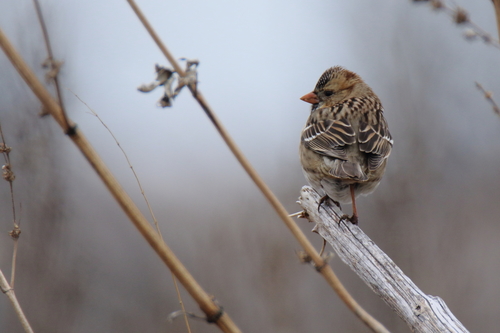
Harris's Sparrow (Zonotrichia querula) Harris's Sparrow
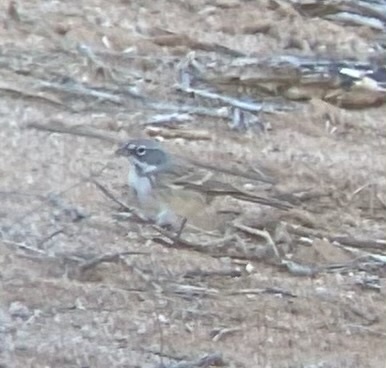
Sagebrush Sparrow (Artemisiospiza nevadensis) Sagebrush Sparrow

Media

Loading…

In short

The Sagebrush Sparrow (Artemisiospiza nevadensis) and Harris's Sparrow (Zonotrichia querula) can be distinguished by their size, plumage patterns, and behaviors. The Sagebrush Sparrow is smaller with a more uniform coloration and a tendency to stay low to the ground, while the Harris's Sparrow is larger, with distinctive black spotting on the breast and a pink bill. Their vocalizations and habitat preferences also differ, which can aid in identification.

Identification tips

  1. Birds of the World Similar-Species Diagnostics:
  2. The Harris's Sparrow “has tremendous variability in the pattern of black spotting on the breast” and is characterized by its “dark crown, breast spots, and pink bill,” which easily separates it from other Zonotrichia (source: Birds of the World). Conversely, the Sagebrush Sparrow is described as “frequently overlooked by observers because of its habit of running on the ground from shrub to shrub” (source: Birds of the World).

  3. AI Field Diagnostics:

  4. Size and Shape: Look for the larger size and bulkiness of the Harris's Sparrow compared to the smaller, more compact Sagebrush Sparrow.
  5. Plumage Patterns: Focus on the Harris's Sparrow's distinctive black breast spots and pink bill, which are absent in the Sagebrush Sparrow. The Sagebrush Sparrow's more muted brown and gray tones blend it into its environment.
  6. Behavior: Note that the Harris's Sparrow is more social and often seen in flocks, while the Sagebrush Sparrow is more solitary and secretive, typically skirting the ground between shrubs.
  7. Habitat: If you are in a sagebrush habitat, you are likely encountering the Sagebrush Sparrow. In contrast, if you are observing birds in shrubby areas of boreal forests or open fields, you are likely looking at Harris's Sparrows.
  8. Vocalization: Listen for the bell-like call of the Sagebrush Sparrow compared to the more subtle, buzzy calls of the Harris's Sparrow, which can help confirm identification from a distance.

Using these tips, birdwatchers should be able to confidently distinguish between the Sagebrush Sparrow and Harris's Sparrow in the field.

Size

Plumage

Behaviour

Habitat

Voice

Submit a better description

Use the same sections as the comparison. Your text is published immediately.

The Sagebrush Sparrow (Artemisiospiza nevadensis) and Harris's Sparrow (Zonotrichia querula) can be distinguished by their size, plumage patterns, and behaviors. The Sagebrush Sparrow is smaller with a more uniform coloration and a tendency to stay low to the ground, while the Harris's Sparrow is larger, with distinctive black spotting on the breast and a pink bill. Their vocalizations and habitat preferences also differ, which can aid in identification.

  1. Birds of the World Similar-Species Diagnostics:
  2. The Harris's Sparrow “has tremendous variability in the pattern of black spotting on the breast” and is characterized by its “dark crown, breast spots, and pink bill,” which easily separates it from other Zonotrichia (source: Birds of the World). Conversely, the Sagebrush Sparrow is described as “frequently overlooked by observers because of its habit of running on the ground from shrub to shrub” (source: Birds of the World).

  3. AI Field Diagnostics:

  4. Size and Shape: Look for the larger size and bulkiness of the Harris's Sparrow compared to the smaller, more compact Sagebrush Sparrow.
  5. Plumage Patterns: Focus on the Harris's Sparrow's distinctive black breast spots and pink bill, which are absent in the Sagebrush Sparrow. The Sagebrush Sparrow's more muted brown and gray tones blend it into its environment.
  6. Behavior: Note that the Harris's Sparrow is more social and often seen in flocks, while the Sagebrush Sparrow is more solitary and secretive, typically skirting the ground between shrubs.
  7. Habitat: If you are in a sagebrush habitat, you are likely encountering the Sagebrush Sparrow. In contrast, if you are observing birds in shrubby areas of boreal forests or open fields, you are likely looking at Harris's Sparrows.
  8. Vocalization: Listen for the bell-like call of the Sagebrush Sparrow compared to the more subtle, buzzy calls of the Harris's Sparrow, which can help confirm identification from a distance.

Using these tips, birdwatchers should be able to confidently distinguish between the Sagebrush Sparrow and Harris's Sparrow in the field.

  • Sagebrush Sparrow: Generally smaller, measuring approximately 5.5 to 6.5 inches in length. It has a compact body and a relatively short tail.
  • Harris's Sparrow: Larger, measuring around 6.5 to 8 inches in length, with a longer tail and a bulkier build compared to the Sagebrush Sparrow.
  • Sagebrush Sparrow: Exhibits a relatively plain, streaky brown and gray plumage with a light-colored throat and a subtle facial pattern. Its overall coloration helps it blend into its sagebrush habitat.
  • Harris's Sparrow: Features a striking plumage with a dark crown and distinct black spots on a white or pale gray breast. The bill is pink, and there is considerable variability in the breast spotting, especially between juveniles and adults. This contrast in coloration is a key distinguishing feature.
  • Sagebrush Sparrow: Often runs on the ground from shrub to shrub, making it relatively inconspicuous. It sings from low perches during the breeding season and is site-tenacious throughout the year.
  • Harris's Sparrow: Ground-dwelling and known to forage in flocks, it has a more social behavior compared to the Sagebrush Sparrow. The Harris's Sparrow's behavior includes a propensity to be more visible in open areas during foraging.
  • Sagebrush Sparrow: Prefers sagebrush habitats, particularly in arid regions of the western United States. It is often found in areas with low shrubs where it can easily hide and forage.
  • Harris's Sparrow: Typically inhabits the boreal forests of Canada and the northern United States, preferring shrubby areas during the breeding season and open fields or edges in winter.
  • Sagebrush Sparrow: Known for its characteristic bell-like call, which can be heard while foraging or during territorial displays in the breeding season.
  • Harris's Sparrow: Vocalizations include a series of buzzy notes, and its song is often less prominent than that of other sparrows, making it more reliant on visual identification.

Discard your changes?

You have unsaved edits. If you leave now, those changes will be lost.

Harris's Sparrow · Sagebrush Sparrow · My Tricky Birds