Birdr

Hawaiian Duck vs Mallard

Anas wyvilliana versus Anas platyrhynchos

Play a quiz with Hawaiian Duck and Mallard
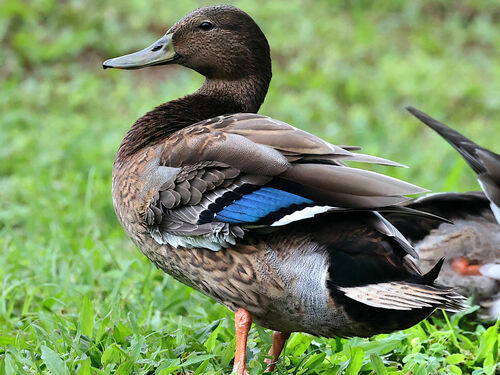
Hawaiian Duck (Anas wyvilliana) Hawaiian Duck
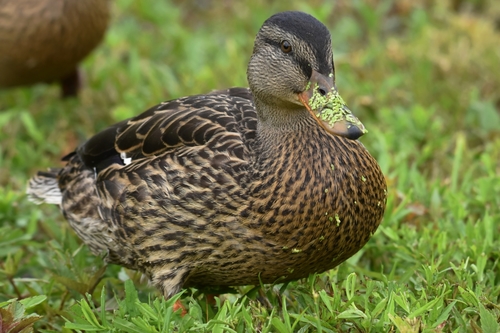
Mallard (Anas platyrhynchos) Mallard

Media

Loading…

In short

The Hawaiian Duck and Mallard are similar in appearance, but key differences in plumage and habitat can help distinguish them. Hawaiian Ducks are endemic to Hawaii and often hybridize with Mallards, complicating identification. Observing habitat and subtle plumage details are crucial for accurate identification.

Identification tips

1. Location: Hawaiian Ducks are found only in Hawaii, while Mallards are widespread. 2. Plumage: Look for the uniform brown of the Hawaiian Duck versus the bright green head of male Mallards. 3. Hybridization: Be aware of hybrid individuals in Hawaii, which may show mixed characteristics.

Size

Both species are similar in size, with the Mallard being slightly larger.

Plumage

Hawaiian Ducks have a more uniform brown plumage with less contrast between the body and head, lacking the bright iridescent green head of the male Mallard. Female Mallards have a more mottled appearance with a distinct white tail edge.

Behaviour

Both species exhibit similar dabbling behavior, but Hawaiian Ducks are less likely to be found in large flocks compared to Mallards.

Habitat

Hawaiian Ducks are restricted to wetland areas in Hawaii, while Mallards are widespread across North America and adaptable to various habitats, including urban parks.

Voice

Vocalizations are similar, with both species producing quacking sounds. However, Hawaiian Ducks may have a softer call.

Submit a better description

Use the same sections as the comparison. Your text is published immediately.

The Hawaiian Duck and Mallard are similar in appearance, but key differences in plumage and habitat can help distinguish them. Hawaiian Ducks are endemic to Hawaii and often hybridize with Mallards, complicating identification. Observing habitat and subtle plumage details are crucial for accurate identification.

1. Location: Hawaiian Ducks are found only in Hawaii, while Mallards are widespread. 2. Plumage: Look for the uniform brown of the Hawaiian Duck versus the bright green head of male Mallards. 3. Hybridization: Be aware of hybrid individuals in Hawaii, which may show mixed characteristics.

Both species are similar in size, with the Mallard being slightly larger.

Hawaiian Ducks have a more uniform brown plumage with less contrast between the body and head, lacking the bright iridescent green head of the male Mallard. Female Mallards have a more mottled appearance with a distinct white tail edge.

Both species exhibit similar dabbling behavior, but Hawaiian Ducks are less likely to be found in large flocks compared to Mallards.

Hawaiian Ducks are restricted to wetland areas in Hawaii, while Mallards are widespread across North America and adaptable to various habitats, including urban parks.

Vocalizations are similar, with both species producing quacking sounds. However, Hawaiian Ducks may have a softer call.

Discard your changes?

You have unsaved edits. If you leave now, those changes will be lost.

Hawaiian Duck · Mallard · My Tricky Birds