Birdr

Hawfinch vs Eurasian Bullfinch

Coccothraustes coccothraustes versus Pyrrhula pyrrhula

Play a quiz with Hawfinch and Eurasian Bullfinch
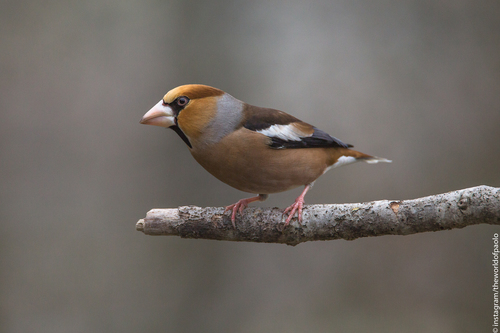
Hawfinch (Coccothraustes coccothraustes) Hawfinch
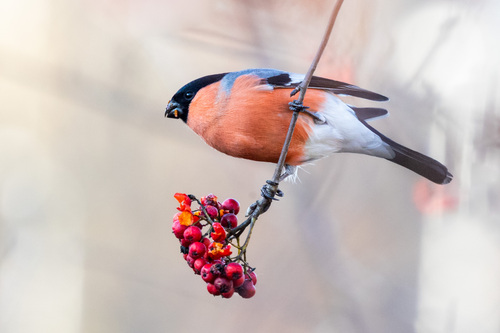
Eurasian Bullfinch (Pyrrhula pyrrhula) Eurasian Bullfinch

Media

Loading…

In short

The most reliable field mark to separate Hawfinch from Eurasian Bullfinch is the Hawfinch’s massive, conical bill and striking white wing bars visible in flight, compared to the Bullfinch’s smaller, stubbier bill and more subdued wing pattern. Adult male Bullfinches show a vivid red underpart, while Hawfinch is overall orange-brown with a black bib and eyestripe. Both are robust, bull-headed finches, but Hawfinch is noticeably larger and bulkier, with a short tail and a more powerful, deep-based bill. Juvenile Bullfinches lack the adult’s black cap and have a greyer face, while Hawfinch juveniles closely resemble adults but are paler. Both species are quiet and unobtrusive, but their calls and songs differ subtly.

Identification tips

  1. Bill size and shape (all ages): Hawfinch has a massive, deep-based, conical bill with a metallic sheen, much larger and broader than Bullfinch’s short, stubby bill. This is often the first and most obvious distinction, especially at close range or in profile.
  2. Head pattern (all ages): Hawfinch shows a strong black eyestripe and bib, with an orange-brown head and grey nape. Bullfinch adult males have a black cap and face, but juveniles have a greyish-brown face and lack the black cap, making them paler-faced than Hawfinch juveniles.
  3. Wing pattern in flight (all ages): Hawfinch displays broad white wing bars and a white tail tip, which are bold and striking in flight. Bullfinch shows a white rump and a narrower white wing bar, less extensive than Hawfinch’s. In juveniles, Bullfinch’s wing bar is still present but the cap is not black.
  4. Underpart color (adults, especially males): Adult male Bullfinch has a vivid red breast and belly; Hawfinch is orange-brown below. Female and juvenile Bullfinches are grey-buff below, but still lack the Hawfinch’s orange tones and black bib.
  5. Overall size and bulk (all ages): Hawfinch is much larger and heavier, with a thick neck and a bull-headed, short-tailed appearance. Bullfinch is smaller, more compact, and less bulky.
  6. Tail shape and length (all ages): Hawfinch’s tail is notably short and pale-tipped, contributing to its chunky, short-tailed look in flight. Bullfinch’s tail is proportionally longer and all dark.
  7. Upperpart color (all ages): Hawfinch’s upperparts are dark brown, contrasting with its orange-brown head and black wings. Bullfinch has grey upperparts and black wings, with a white rump that stands out in flight.
  8. Sex differences (Bullfinch only): Only adult male Bullfinch has the bright red underparts; females and juveniles are duller. Hawfinch sexes are similar, with females just slightly paler.
  9. Juvenile confusion: Juvenile Bullfinches lack the black cap and have a plain, greyish-brown face, while Hawfinch juveniles retain the black eyestripe and bib, helping separate them even when both are duller than adults.
  10. Leg color (all ages): Hawfinch has short, pinkish legs with a light hue; Bullfinch’s legs are not described as distinctive, so this is a minor supporting mark.
  11. Flight style: Hawfinch flies strongly and directly, appearing heavy and short-tailed. Bullfinch has a more fluttery, undulating flight, often showing the white rump.
  12. Vocalization: Listen for Hawfinch’s hard 'chick' call versus Bullfinch’s soft, whistled 'peeu.' The difference is subtle but can confirm ID if the bird is hidden.
  13. Habitat context: In mature, deciduous woodland with large trees, especially hornbeam, expect Hawfinch; in gardens, hedgerows, and smaller woods, Bullfinch is more likely.
  14. Seasonal plumage: Both species moult in late summer to early autumn, but Bullfinch males do not become duller in autumn, unlike some other finches. Hawfinch’s bill color changes seasonally: black in summer, paler in winter.
  15. Group size: Hawfinch is usually solitary or in pairs; Bullfinch may gather in small flocks, especially outside the breeding season.

Size

Hawfinch is significantly larger and heavier than Eurasian Bullfinch. Hawfinch measures about 16.5–18 cm in length and has a wingspan of 29–33 cm, with a robust build and a weight range of 46–70 g. In contrast, Eurasian Bullfinch is smaller and lighter, with a typical adult mass of about 31 g. The Hawfinch’s size is often apparent in the field, especially when seen side by side or with familiar species for scale.

Plumage

Juvenile and adult Hawfinches both show a combination of orange-brown head, black eyestripe and bib, and a short, pale tail with a white tip. Their upperparts are dark brown, and the upperwing is deep black with three distinct stripes: white, brown, and blue, which are especially noticeable in flight. The sexes are similar, though females are slightly paler. In contrast, adult male Bullfinches have a striking red breast and underparts, black cap and face, grey upperparts, black wings, and a conspicuous white rump and wing bar in flight. Females and juveniles are duller, with grey-buff underparts and a greyish-brown face and cap in juveniles. Bullfinch juveniles lack the adult’s black cap, which can be a key distinction from Hawfinch juveniles, which retain the black eyestripe and bib. Both species have white wing markings, but Hawfinch’s are broader and more contrasting, especially when the bird is in flight.

Behaviour

Both species are generally unobtrusive and often seen in pairs or small groups. Hawfinch tends to be more solitary or in very small groups, while Bullfinch can sometimes be found in slightly larger flocks, especially outside the breeding season. Hawfinch is often high in the canopy or perched quietly, sometimes dropping down to feed on the ground. Bullfinch is more likely to be seen feeding lower in bushes or trees. In flight, Hawfinch appears short-tailed and heavy, with a direct, powerful flight, while Bullfinch has a more fluttery, undulating flight pattern.

Habitat

Both species favor woodland and parkland with mature trees, but Hawfinch shows a stronger preference for large, deciduous or mixed woodlands, especially those with hornbeam. Bullfinch is more adaptable, often found in smaller woodlands, hedgerows, gardens, and orchards. If you encounter a large finch in dense, mature woodland, especially in the canopy, Hawfinch is more likely; in shrubby edges, gardens, or lower vegetation, Bullfinch is the default.

Voice

Hawfinch gives a hard, sharp 'chick' call and has a quiet, mumbled song that is rarely heard. Bullfinch’s call is a soft, melancholy whistled 'peeu' or 'pew', and its song is a weak, scratchy warble alternating with soft whistles, audible only at close range. The difference in call quality—Hawfinch’s being sharper and harder, Bullfinch’s softer and more plaintive—can be helpful if seen poorly but heard.

Submit a better description

Use the same sections as the comparison. Your text is published immediately.

The most reliable field mark to separate Hawfinch from Eurasian Bullfinch is the Hawfinch’s massive, conical bill and striking white wing bars visible in flight, compared to the Bullfinch’s smaller, stubbier bill and more subdued wing pattern. Adult male Bullfinches show a vivid red underpart, while Hawfinch is overall orange-brown with a black bib and eyestripe. Both are robust, bull-headed finches, but Hawfinch is noticeably larger and bulkier, with a short tail and a more powerful, deep-based bill. Juvenile Bullfinches lack the adult’s black cap and have a greyer face, while Hawfinch juveniles closely resemble adults but are paler. Both species are quiet and unobtrusive, but their calls and songs differ subtly.

  1. Bill size and shape (all ages): Hawfinch has a massive, deep-based, conical bill with a metallic sheen, much larger and broader than Bullfinch’s short, stubby bill. This is often the first and most obvious distinction, especially at close range or in profile.
  2. Head pattern (all ages): Hawfinch shows a strong black eyestripe and bib, with an orange-brown head and grey nape. Bullfinch adult males have a black cap and face, but juveniles have a greyish-brown face and lack the black cap, making them paler-faced than Hawfinch juveniles.
  3. Wing pattern in flight (all ages): Hawfinch displays broad white wing bars and a white tail tip, which are bold and striking in flight. Bullfinch shows a white rump and a narrower white wing bar, less extensive than Hawfinch’s. In juveniles, Bullfinch’s wing bar is still present but the cap is not black.
  4. Underpart color (adults, especially males): Adult male Bullfinch has a vivid red breast and belly; Hawfinch is orange-brown below. Female and juvenile Bullfinches are grey-buff below, but still lack the Hawfinch’s orange tones and black bib.
  5. Overall size and bulk (all ages): Hawfinch is much larger and heavier, with a thick neck and a bull-headed, short-tailed appearance. Bullfinch is smaller, more compact, and less bulky.
  6. Tail shape and length (all ages): Hawfinch’s tail is notably short and pale-tipped, contributing to its chunky, short-tailed look in flight. Bullfinch’s tail is proportionally longer and all dark.
  7. Upperpart color (all ages): Hawfinch’s upperparts are dark brown, contrasting with its orange-brown head and black wings. Bullfinch has grey upperparts and black wings, with a white rump that stands out in flight.
  8. Sex differences (Bullfinch only): Only adult male Bullfinch has the bright red underparts; females and juveniles are duller. Hawfinch sexes are similar, with females just slightly paler.
  9. Juvenile confusion: Juvenile Bullfinches lack the black cap and have a plain, greyish-brown face, while Hawfinch juveniles retain the black eyestripe and bib, helping separate them even when both are duller than adults.
  10. Leg color (all ages): Hawfinch has short, pinkish legs with a light hue; Bullfinch’s legs are not described as distinctive, so this is a minor supporting mark.
  11. Flight style: Hawfinch flies strongly and directly, appearing heavy and short-tailed. Bullfinch has a more fluttery, undulating flight, often showing the white rump.
  12. Vocalization: Listen for Hawfinch’s hard 'chick' call versus Bullfinch’s soft, whistled 'peeu.' The difference is subtle but can confirm ID if the bird is hidden.
  13. Habitat context: In mature, deciduous woodland with large trees, especially hornbeam, expect Hawfinch; in gardens, hedgerows, and smaller woods, Bullfinch is more likely.
  14. Seasonal plumage: Both species moult in late summer to early autumn, but Bullfinch males do not become duller in autumn, unlike some other finches. Hawfinch’s bill color changes seasonally: black in summer, paler in winter.
  15. Group size: Hawfinch is usually solitary or in pairs; Bullfinch may gather in small flocks, especially outside the breeding season.

Hawfinch is significantly larger and heavier than Eurasian Bullfinch. Hawfinch measures about 16.5–18 cm in length and has a wingspan of 29–33 cm, with a robust build and a weight range of 46–70 g. In contrast, Eurasian Bullfinch is smaller and lighter, with a typical adult mass of about 31 g. The Hawfinch’s size is often apparent in the field, especially when seen side by side or with familiar species for scale.

Juvenile and adult Hawfinches both show a combination of orange-brown head, black eyestripe and bib, and a short, pale tail with a white tip. Their upperparts are dark brown, and the upperwing is deep black with three distinct stripes: white, brown, and blue, which are especially noticeable in flight. The sexes are similar, though females are slightly paler. In contrast, adult male Bullfinches have a striking red breast and underparts, black cap and face, grey upperparts, black wings, and a conspicuous white rump and wing bar in flight. Females and juveniles are duller, with grey-buff underparts and a greyish-brown face and cap in juveniles. Bullfinch juveniles lack the adult’s black cap, which can be a key distinction from Hawfinch juveniles, which retain the black eyestripe and bib. Both species have white wing markings, but Hawfinch’s are broader and more contrasting, especially when the bird is in flight.

Both species are generally unobtrusive and often seen in pairs or small groups. Hawfinch tends to be more solitary or in very small groups, while Bullfinch can sometimes be found in slightly larger flocks, especially outside the breeding season. Hawfinch is often high in the canopy or perched quietly, sometimes dropping down to feed on the ground. Bullfinch is more likely to be seen feeding lower in bushes or trees. In flight, Hawfinch appears short-tailed and heavy, with a direct, powerful flight, while Bullfinch has a more fluttery, undulating flight pattern.

Both species favor woodland and parkland with mature trees, but Hawfinch shows a stronger preference for large, deciduous or mixed woodlands, especially those with hornbeam. Bullfinch is more adaptable, often found in smaller woodlands, hedgerows, gardens, and orchards. If you encounter a large finch in dense, mature woodland, especially in the canopy, Hawfinch is more likely; in shrubby edges, gardens, or lower vegetation, Bullfinch is the default.

Hawfinch gives a hard, sharp 'chick' call and has a quiet, mumbled song that is rarely heard. Bullfinch’s call is a soft, melancholy whistled 'peeu' or 'pew', and its song is a weak, scratchy warble alternating with soft whistles, audible only at close range. The difference in call quality—Hawfinch’s being sharper and harder, Bullfinch’s softer and more plaintive—can be helpful if seen poorly but heard.

Discard your changes?

You have unsaved edits. If you leave now, those changes will be lost.

Hawfinch · Eurasian Bullfinch · My Tricky Birds