Birdr

Hepatic Tanager vs Blackish-blue Seedeater

Piranga flava versus Amaurospiza moesta

Play a quiz with Hepatic Tanager and Blackish-blue Seedeater
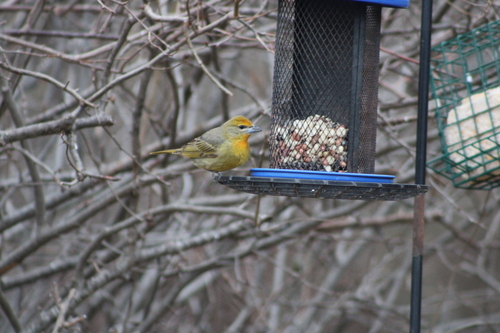
Hepatic Tanager (Piranga flava) Hepatic Tanager
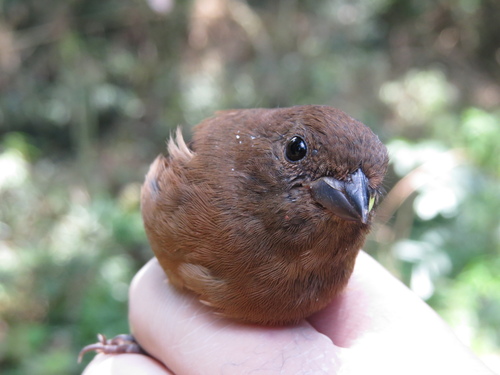
Blackish-blue Seedeater (Amaurospiza moesta) Blackish-blue Seedeater

Media

Loading…

In short

The Hepatic Tanager and Blackish-blue Seedeater are both members of the Cardinalidae family but differ significantly in appearance and habitat. The Hepatic Tanager is typically found in pine-oak forests, while the Blackish-blue Seedeater is associated with bamboo seeding events in South America. Key differences include plumage color and habitat preferences.

Identification tips

  1. Plumage: Look for the red or yellowish tones of the Hepatic Tanager versus the slaty blue or tawny-brown of the Blackish-blue Seedeater. 2. Habitat: Note the forested areas for Hepatic Tanager compared to bamboo-rich environments for Blackish-blue Seedeater. 3. Behavior: Observe flocking behavior in Hepatic Tanager and pair sightings during bamboo seeding for Blackish-blue Seedeater.

Size

The Hepatic Tanager is generally larger and more robust than the Blackish-blue Seedeater.

Plumage

Adult male Hepatic Tanagers are red with a grayish wash, while females are yellowish. In contrast, male Blackish-blue Seedeaters are slaty blue to blackish, and females are tawny-brown with white underwing coverts.

Behaviour

Hepatic Tanagers are often seen in small flocks, especially during migration, whereas Blackish-blue Seedeaters are typically observed in pairs during bamboo seeding events.

Habitat

Hepatic Tanagers inhabit montane pine-oak forests from the southwestern United States to Nicaragua. Blackish-blue Seedeaters are found in southeast Brazil, northeast Argentina, and eastern Paraguay, often in bamboo-rich areas.

Voice

Vocalizations are not well-documented for both species in the sources provided, but they likely differ given their distinct habitats and ranges.

Submit a better description

Use the same sections as the comparison. Your text is published immediately.

The Hepatic Tanager and Blackish-blue Seedeater are both members of the Cardinalidae family but differ significantly in appearance and habitat. The Hepatic Tanager is typically found in pine-oak forests, while the Blackish-blue Seedeater is associated with bamboo seeding events in South America. Key differences include plumage color and habitat preferences.

  1. Plumage: Look for the red or yellowish tones of the Hepatic Tanager versus the slaty blue or tawny-brown of the Blackish-blue Seedeater. 2. Habitat: Note the forested areas for Hepatic Tanager compared to bamboo-rich environments for Blackish-blue Seedeater. 3. Behavior: Observe flocking behavior in Hepatic Tanager and pair sightings during bamboo seeding for Blackish-blue Seedeater.

The Hepatic Tanager is generally larger and more robust than the Blackish-blue Seedeater.

Adult male Hepatic Tanagers are red with a grayish wash, while females are yellowish. In contrast, male Blackish-blue Seedeaters are slaty blue to blackish, and females are tawny-brown with white underwing coverts.

Hepatic Tanagers are often seen in small flocks, especially during migration, whereas Blackish-blue Seedeaters are typically observed in pairs during bamboo seeding events.

Hepatic Tanagers inhabit montane pine-oak forests from the southwestern United States to Nicaragua. Blackish-blue Seedeaters are found in southeast Brazil, northeast Argentina, and eastern Paraguay, often in bamboo-rich areas.

Vocalizations are not well-documented for both species in the sources provided, but they likely differ given their distinct habitats and ranges.

Discard your changes?

You have unsaved edits. If you leave now, those changes will be lost.

Hepatic Tanager · Blackish-blue Seedeater · My Tricky Birds