Birdr

Herring Gull vs Yellow-legged Gull

Larus argentatus versus Larus michahellis

Play a quiz with Herring Gull and Yellow-legged Gull

Herring Gull (Larus argentatus) Herring Gull
Yellow-legged Gull (Larus michahellis) Yellow-legged Gull

Media

Loading…

In short

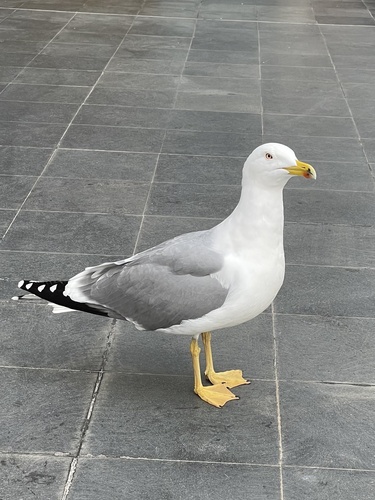
The Herring Gull and Yellow-legged Gull are similar large white-headed gulls, but can be distinguished by leg color and mantle shade. The Yellow-legged Gull typically has bright yellow legs and a darker gray mantle compared to the pinkish legs and paler gray mantle of the Herring Gull.

Identification tips

  1. Look for leg color: Yellow-legged Gulls have bright yellow legs, while Herring Gulls have pinkish legs. 2. Observe mantle color: Yellow-legged Gulls have a darker gray mantle. 3. Check for streaking on the head in non-breeding plumage, which can be more pronounced in Yellow-legged Gulls. 4. Consider location and range, as these species may overlap but have different primary ranges.

Size

Both species are similar in size, with robust bodies and strong bills, making size a less reliable distinguishing feature.

Plumage

The Yellow-legged Gull has a darker gray mantle compared to the paler gray of the Herring Gull. Both species have white heads, but the Yellow-legged Gull may show a more pronounced streaking in non-breeding plumage.

Behaviour

Both species are opportunistic feeders and can be found scavenging in similar environments, showing similar behaviors such as kleptoparasitism.

Habitat

Both gulls are highly adaptable and can be found in coastal areas, urban environments, and near human activity. They often nest on rooftops and other man-made structures.

Voice

Vocalizations are similar and not a reliable field mark for distinguishing these two species.

Submit a better description

Use the same sections as the comparison. Your text is published immediately.

The Herring Gull and Yellow-legged Gull are similar large white-headed gulls, but can be distinguished by leg color and mantle shade. The Yellow-legged Gull typically has bright yellow legs and a darker gray mantle compared to the pinkish legs and paler gray mantle of the Herring Gull.

  1. Look for leg color: Yellow-legged Gulls have bright yellow legs, while Herring Gulls have pinkish legs. 2. Observe mantle color: Yellow-legged Gulls have a darker gray mantle. 3. Check for streaking on the head in non-breeding plumage, which can be more pronounced in Yellow-legged Gulls. 4. Consider location and range, as these species may overlap but have different primary ranges.

Both species are similar in size, with robust bodies and strong bills, making size a less reliable distinguishing feature.

The Yellow-legged Gull has a darker gray mantle compared to the paler gray of the Herring Gull. Both species have white heads, but the Yellow-legged Gull may show a more pronounced streaking in non-breeding plumage.

Both species are opportunistic feeders and can be found scavenging in similar environments, showing similar behaviors such as kleptoparasitism.

Both gulls are highly adaptable and can be found in coastal areas, urban environments, and near human activity. They often nest on rooftops and other man-made structures.

Vocalizations are similar and not a reliable field mark for distinguishing these two species.

Discard your changes?

You have unsaved edits. If you leave now, those changes will be lost.

Herring Gull · Yellow-legged Gull · My Tricky Birds