Birdr

Hill Blue Flycatcher vs Ultramarine Flycatcher

Cyornis whitei versus Ficedula superciliaris

Play a quiz with Hill Blue Flycatcher and Ultramarine Flycatcher
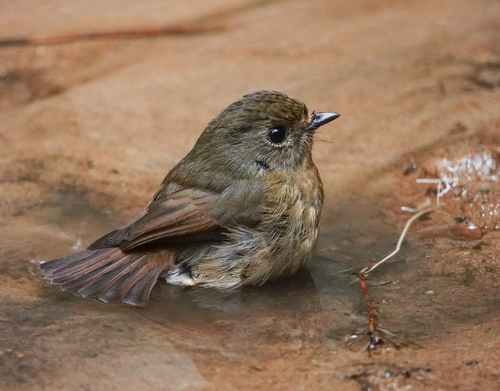
Hill Blue Flycatcher (Cyornis whitei) Hill Blue Flycatcher
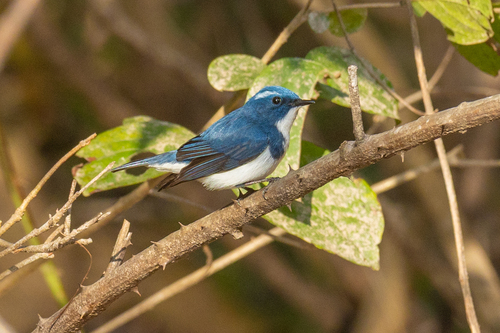
Ultramarine Flycatcher (Ficedula superciliaris) Ultramarine Flycatcher

Media

Loading…

In short

The Hill Blue Flycatcher and the Ultramarine Flycatcher are both small, colorful flycatchers, but they can be distinguished by their plumage and habitat preferences. The Hill Blue Flycatcher is notable for its deep blue upperparts and rufous-orange throat in males, while the Ultramarine Flycatcher features a striking blue-and-white pattern with a prominent white supercilium.

Identification tips

Look for the rufous-orange throat in male Hill Blue Flycatchers and the white supercilium in Ultramarine Flycatchers. Consider habitat: Hill Blue prefers lowland forests, while Ultramarine is more montane. Listen for the Hill Blue's melodious whistles if unsure.

Size

Both species are similar in size, typical of small flycatchers.

Plumage

The male Hill Blue Flycatcher has deep blue upperparts with a bright rufous-orange throat and breast, while females are grayish brown with a rufous tail. In contrast, the Ultramarine Flycatcher has a blue-and-white plumage with a distinct white supercilium and a more uniform blue back.

Behaviour

Both species exhibit typical flycatcher behavior, often perching quietly before darting out to catch insects.

Habitat

The Hill Blue Flycatcher is common across much of mainland Southeast Asia, favoring forested areas. The Ultramarine Flycatcher is often found in montane forests and is more range-restricted.

Voice

The Hill Blue Flycatcher is detected by its harsh calls and melodious whistles, while specific vocalization details for the Ultramarine Flycatcher are less documented.

Submit a better description

Use the same sections as the comparison. Your text is published immediately.

The Hill Blue Flycatcher and the Ultramarine Flycatcher are both small, colorful flycatchers, but they can be distinguished by their plumage and habitat preferences. The Hill Blue Flycatcher is notable for its deep blue upperparts and rufous-orange throat in males, while the Ultramarine Flycatcher features a striking blue-and-white pattern with a prominent white supercilium.

Look for the rufous-orange throat in male Hill Blue Flycatchers and the white supercilium in Ultramarine Flycatchers. Consider habitat: Hill Blue prefers lowland forests, while Ultramarine is more montane. Listen for the Hill Blue's melodious whistles if unsure.

Both species are similar in size, typical of small flycatchers.

The male Hill Blue Flycatcher has deep blue upperparts with a bright rufous-orange throat and breast, while females are grayish brown with a rufous tail. In contrast, the Ultramarine Flycatcher has a blue-and-white plumage with a distinct white supercilium and a more uniform blue back.

Both species exhibit typical flycatcher behavior, often perching quietly before darting out to catch insects.

The Hill Blue Flycatcher is common across much of mainland Southeast Asia, favoring forested areas. The Ultramarine Flycatcher is often found in montane forests and is more range-restricted.

The Hill Blue Flycatcher is detected by its harsh calls and melodious whistles, while specific vocalization details for the Ultramarine Flycatcher are less documented.

Discard your changes?

You have unsaved edits. If you leave now, those changes will be lost.

Hill Blue Flycatcher · Ultramarine Flycatcher · My Tricky Birds