Himalayan Cutia vs Long-tailed Sibia
Cutia nipalensis versus Heterophasia picaoides
Play a quiz with Himalayan Cutia and Long-tailed Sibia
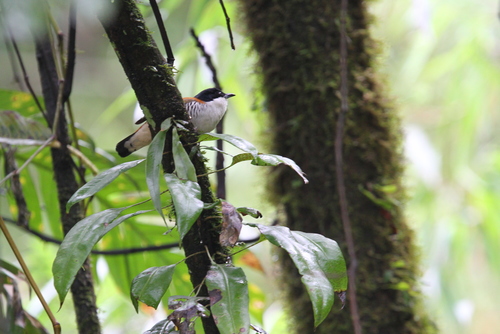
Himalayan Cutia
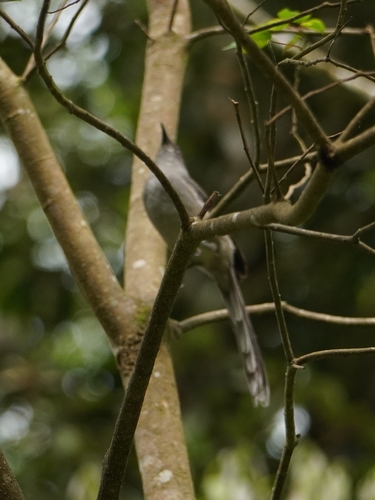
Long-tailed Sibia
In short
The Himalayan Cutia and Long-tailed Sibia are both members of the Laughingthrushes family, but they can be distinguished by their structure and plumage. The Himalayan Cutia has a more compact body and a shorter tail, while the Long-tailed Sibia is more elongated with a notably long tail. Plumage differences include the Cutia's striking black-and-white pattern on the wings and back, contrasting with the Sibia's more uniform gray and white coloration.
Identification tips
- Look for the striking black-and-white wing pattern on the Himalayan Cutia. 2. Note the long tail of the Long-tailed Sibia. 3. Listen for the more musical calls of the Long-tailed Sibia. 4. Observe flock behavior; the Long-tailed Sibia is more likely to be in mixed-species flocks.
Size
The Himalayan Cutia is more compact with a shorter tail compared to the more elongated Long-tailed Sibia, which has a notably long tail.
Plumage
The Himalayan Cutia features a striking black-and-white pattern on the wings and back, whereas the Long-tailed Sibia has a more uniform gray and white coloration.
Behaviour
Both species are social and often seen in flocks, but the Long-tailed Sibia is more likely to be seen in mixed-species flocks.
Habitat
Both species inhabit montane forests, but the Long-tailed Sibia is more often found at higher elevations and in more open forest areas.
Voice
The vocalizations of both species are complex, but the Long-tailed Sibia's calls are generally more musical and varied.