Birdr

Hooded Gnateater vs Rufous Gnateater

Conopophaga roberti versus Conopophaga lineata

Play a quiz with Hooded Gnateater and Rufous Gnateater
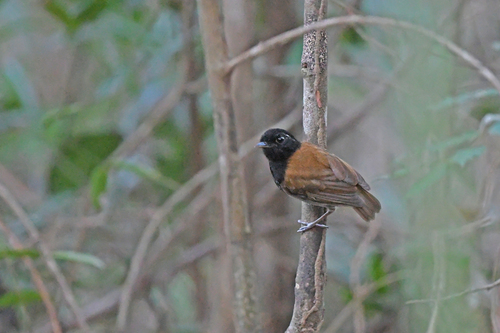
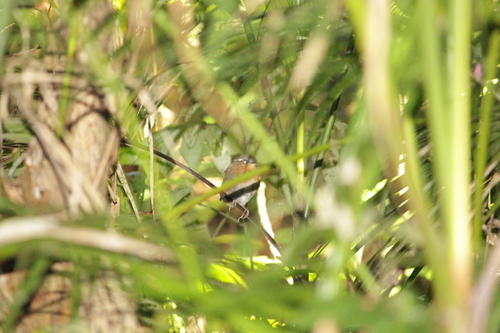
Hooded Gnateater (Conopophaga roberti) Hooded Gnateater
Rufous Gnateater (Conopophaga lineata) Rufous Gnateater

Media

Loading…

In short

The Hooded Gnateater (Conopophaga roberti) and Rufous Gnateater (Conopophaga lineata) can be distinguished by plumage differences and habitat preferences. The Hooded Gnateater male is notably black with a 'hooded' appearance, while the Rufous Gnateater is more uniformly rufous with a white belly.

Identification tips

Look for the black hood and white postocular tufts in male Hooded Gnateaters. In contrast, note the uniform rufous coloration and white belly of the Rufous Gnateater. Habitat can also provide clues: dense vegetation for Hooded, and humid or drier forests for Rufous.

Size

Both species are similar in size, typical of gnateaters, and size is not a reliable distinguishing feature.

Plumage

Male Hooded Gnateaters have a striking black plumage with thin white postocular tufts, while females are rufous brown with a gray face. Rufous Gnateaters have dull brown upperparts, a tawny throat, breast, and flanks, and a white belly.

Behaviour

Both species forage for insects on or near the ground, often in dense vegetation, making behavior a less reliable distinguishing feature.

Habitat

Hooded Gnateaters prefer densely vegetated areas close to the ground, while Rufous Gnateaters are found in the understory of humid and gallery forests, extending into drier forests in south-central Brazil.

Submit a better description

Use the same sections as the comparison. Your text is published immediately.

The Hooded Gnateater (Conopophaga roberti) and Rufous Gnateater (Conopophaga lineata) can be distinguished by plumage differences and habitat preferences. The Hooded Gnateater male is notably black with a 'hooded' appearance, while the Rufous Gnateater is more uniformly rufous with a white belly.

Look for the black hood and white postocular tufts in male Hooded Gnateaters. In contrast, note the uniform rufous coloration and white belly of the Rufous Gnateater. Habitat can also provide clues: dense vegetation for Hooded, and humid or drier forests for Rufous.

Both species are similar in size, typical of gnateaters, and size is not a reliable distinguishing feature.

Male Hooded Gnateaters have a striking black plumage with thin white postocular tufts, while females are rufous brown with a gray face. Rufous Gnateaters have dull brown upperparts, a tawny throat, breast, and flanks, and a white belly.

Both species forage for insects on or near the ground, often in dense vegetation, making behavior a less reliable distinguishing feature.

Hooded Gnateaters prefer densely vegetated areas close to the ground, while Rufous Gnateaters are found in the understory of humid and gallery forests, extending into drier forests in south-central Brazil.

Discard your changes?

You have unsaved edits. If you leave now, those changes will be lost.

Hooded Gnateater · Rufous Gnateater · My Tricky Birds