Hooded Oriole vs Audubon's Oriole
Icterus cucullatus versus Icterus graduacauda
Play a quiz with Hooded Oriole and Audubon's Oriole
Hooded Oriole
Audubon's Oriole
In short
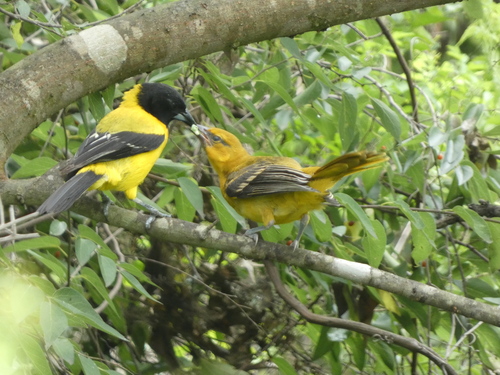
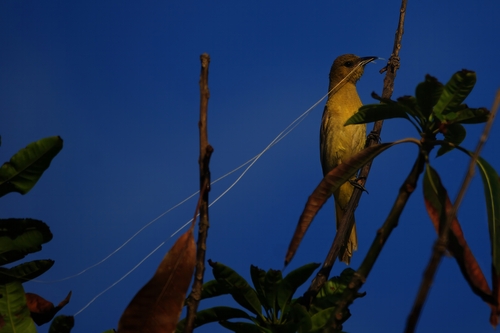
Hooded Oriole and Audubon's Oriole can be distinguished by their head and body coloration. The Hooded Oriole has a bright orange-yellow body with a black face mask, while Audubon's Oriole is characterized by its entirely black head and breast, contrasting with its yellow body. Both species are similar in size, but their distinct head coloration is the most reliable field mark.
Identification tips
1. Head Coloration: Look for the entirely black head and breast of Audubon's Oriole versus the black face mask on the bright orange-yellow body of the Hooded Oriole. 2. Habitat: Consider the habitat; Hooded Orioles are more common in open areas with palms, while Audubon's prefers denser, more secluded habitats. 3. Vocalization: Listen for Audubon's Oriole's slow, mellow whistle if seen in its range.
Size
Both species are similar in size, typical of medium-sized orioles.
Plumage
Hooded Oriole has a bright orange-yellow body with a black face mask. In contrast, Audubon's Oriole has an entirely black head and breast, with the rest of the body being yellow. This black head is a key distinguishing feature.
Behaviour
Both species may exhibit similar behaviors typical of orioles, such as foraging in trees and shrubs. Audubon's Oriole is known for being more secretive, often singing from inconspicuous perches.
Habitat
Hooded Orioles are often found in open woodlands and suburban areas with palm trees, while Audubon's Orioles prefer denser habitats and are more restricted to southern Texas and northeastern Mexico.
Voice
Audubon's Oriole has a slow, mellow whistle, longer and less complex than the Baltimore Oriole's song. Hooded Oriole's vocalizations are not detailed in the sources, but they are generally more typical of orioles.