Birdr

Hooded Tanager vs Orange-headed Tanager

Nemosia pileata versus Thlypopsis sordida

Play a quiz with Hooded Tanager and Orange-headed Tanager
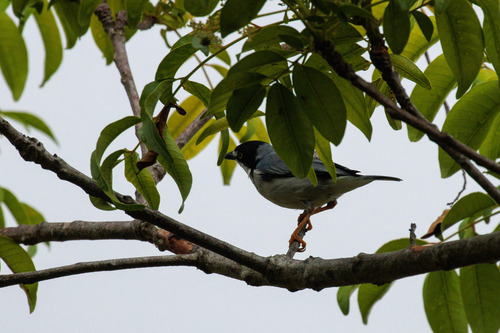
Hooded Tanager (Nemosia pileata) Hooded Tanager
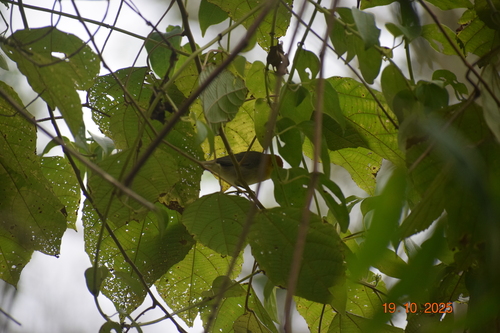
Orange-headed Tanager (Thlypopsis sordida) Orange-headed Tanager

Media

Loading…

In short

The Hooded Tanager and Orange-headed Tanager can be distinguished by their head coloration and overall plumage patterns. The Hooded Tanager has a distinctive black hood, while the Orange-headed Tanager features a bright orange head. Both are small tanagers, but their coloration provides the most reliable field marks.

Identification tips

  1. Look for the black hood on the Hooded Tanager versus the orange head on the Orange-headed Tanager. 2. Note the blue-gray back of the Hooded Tanager compared to the olive-brown upperparts of the Orange-headed Tanager. 3. Observe behavior: both are active, but the Orange-headed Tanager is more warblerlike in movement.

Size

Both species are small tanagers with similar body sizes.

Plumage

The Hooded Tanager has a striking black hood and white underparts, contrasting with its blue-gray back. The Orange-headed Tanager, on the other hand, has a bright orange head, with olive-brown upperparts and paler underparts. The head coloration is the most noticeable difference.

Behaviour

Both species are active and often seen foraging in the mid-levels of trees. The Orange-headed Tanager is described as warblerlike in its movements, hopping and fluttering through foliage.

Habitat

Both species inhabit similar environments, typically found in forest edges and secondary growth. However, specific habitat preferences may vary regionally.

Voice

There is limited information on distinctive vocalizations for these species, and they may not be the best field marks for identification.

Submit a better description

Use the same sections as the comparison. Your text is published immediately.

The Hooded Tanager and Orange-headed Tanager can be distinguished by their head coloration and overall plumage patterns. The Hooded Tanager has a distinctive black hood, while the Orange-headed Tanager features a bright orange head. Both are small tanagers, but their coloration provides the most reliable field marks.

  1. Look for the black hood on the Hooded Tanager versus the orange head on the Orange-headed Tanager. 2. Note the blue-gray back of the Hooded Tanager compared to the olive-brown upperparts of the Orange-headed Tanager. 3. Observe behavior: both are active, but the Orange-headed Tanager is more warblerlike in movement.

Both species are small tanagers with similar body sizes.

The Hooded Tanager has a striking black hood and white underparts, contrasting with its blue-gray back. The Orange-headed Tanager, on the other hand, has a bright orange head, with olive-brown upperparts and paler underparts. The head coloration is the most noticeable difference.

Both species are active and often seen foraging in the mid-levels of trees. The Orange-headed Tanager is described as warblerlike in its movements, hopping and fluttering through foliage.

Both species inhabit similar environments, typically found in forest edges and secondary growth. However, specific habitat preferences may vary regionally.

There is limited information on distinctive vocalizations for these species, and they may not be the best field marks for identification.

Discard your changes?

You have unsaved edits. If you leave now, those changes will be lost.

Hooded Tanager · Orange-headed Tanager · My Tricky Birds