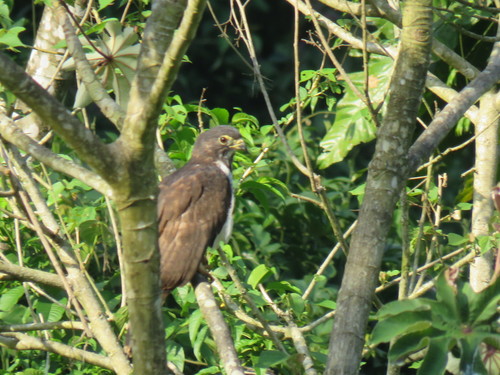
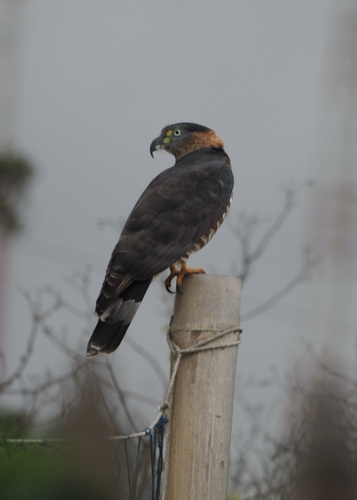
Hook-billed Kite vs Double-toothed Kite
Chondrohierax uncinatus versus Harpagus bidentatus
Play a quiz with Hook-billed Kite and Double-toothed Kite
Hook-billed Kite
Double-toothed Kite
In short
The Hook-billed Kite and Double-toothed Kite can be distinguished by their bill structure and plumage details. The Hook-billed Kite has a notably variable bill size, adapted for feeding on tree snails, while the Double-toothed Kite features a distinctive double-toothed bill. Both species share a similar range in the Neotropics but differ in behavior and habitat preferences.
Identification tips
- Look for the bill structure: Hook-billed Kite has a larger, more variable bill; Double-toothed Kite has a double-toothed bill. 2. Check for plumage details: Hook-billed Kite's plumage is variable; Double-toothed Kite has white leg tufts and a dark throat line. 3. Observe behavior: Double-toothed Kite often follows monkey troops; Hook-billed Kite is more solitary. 4. Consider habitat: Double-toothed Kite is often with mixed-species flocks; Hook-billed Kite is more widespread in forested areas.
Size
Both species are small to medium-sized raptors, but the Hook-billed Kite may appear bulkier due to its larger bill in some individuals.
Plumage
The Hook-billed Kite exhibits highly variable plumage, often banded rufous or gray below, with a gray head and brown or gray back. In contrast, the Double-toothed Kite has more consistent plumage with white leg tufts and a dark line down the throat.
Behaviour
The Double-toothed Kite is known for its association with monkey troops, waiting for prey to flush, while the Hook-billed Kite is more solitary and unobtrusive.
Habitat
Both species inhabit the Neotropics, but the Hook-billed Kite is more adaptable, found in a variety of forested environments, whereas the Double-toothed Kite is often seen in association with mixed-species flocks.