Birdr

Hook-billed Kite vs Grey-headed Kite

Chondrohierax uncinatus versus Leptodon cayanensis

Play a quiz with Hook-billed Kite and Grey-headed Kite
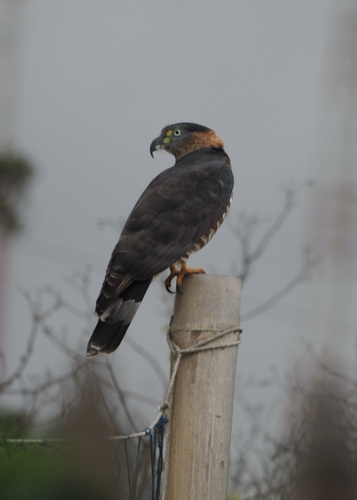
Hook-billed Kite (Chondrohierax uncinatus) Hook-billed Kite
Grey-headed Kite (Leptodon cayanensis) Grey-headed Kite

Media

Loading…

In short

The Hook-billed Kite and Grey-headed Kite can be distinguished primarily by their bill and head coloration. The Hook-billed Kite has a notably large, hooked bill and a variable plumage, while the Grey-headed Kite features a more consistent grey head and a less pronounced bill. Both species share a similar size and habitat range, but their feeding habits and behaviors differ.

Identification tips

  1. Look for the bill size: Hook-billed Kite has a larger, more pronounced hooked bill. 2. Check the head color: Grey-headed Kite has a consistent grey head, while the Hook-billed Kite's head is more variable. 3. Observe plumage patterns: Hook-billed Kite has banded rufous or gray underparts, whereas Grey-headed Kite has white underparts. 4. Note behavior: Grey-headed Kite may display fluttering wingbeats during courtship.

Size

Both species are similar in size, typical of medium-sized kites.

Plumage

The Hook-billed Kite's plumage is highly variable, often banded rufous or gray below with a gray head and brown or gray back. In contrast, the Grey-headed Kite has a more consistent grey head and white underparts, with a blackish back and wings.

Behaviour

The Hook-billed Kite is unobtrusive and often sedentary, while the Grey-headed Kite is more active, known for its courtship display involving rapid, fluttering wingbeats.

Habitat

Both species inhabit similar ranges across Central and South America, but the Hook-billed Kite is more specialized in forested areas with tree snails, while the Grey-headed Kite is more adaptable, feeding on a broader range of prey.

Submit a better description

Use the same sections as the comparison. Your text is published immediately.

The Hook-billed Kite and Grey-headed Kite can be distinguished primarily by their bill and head coloration. The Hook-billed Kite has a notably large, hooked bill and a variable plumage, while the Grey-headed Kite features a more consistent grey head and a less pronounced bill. Both species share a similar size and habitat range, but their feeding habits and behaviors differ.

  1. Look for the bill size: Hook-billed Kite has a larger, more pronounced hooked bill. 2. Check the head color: Grey-headed Kite has a consistent grey head, while the Hook-billed Kite's head is more variable. 3. Observe plumage patterns: Hook-billed Kite has banded rufous or gray underparts, whereas Grey-headed Kite has white underparts. 4. Note behavior: Grey-headed Kite may display fluttering wingbeats during courtship.

Both species are similar in size, typical of medium-sized kites.

The Hook-billed Kite's plumage is highly variable, often banded rufous or gray below with a gray head and brown or gray back. In contrast, the Grey-headed Kite has a more consistent grey head and white underparts, with a blackish back and wings.

The Hook-billed Kite is unobtrusive and often sedentary, while the Grey-headed Kite is more active, known for its courtship display involving rapid, fluttering wingbeats.

Both species inhabit similar ranges across Central and South America, but the Hook-billed Kite is more specialized in forested areas with tree snails, while the Grey-headed Kite is more adaptable, feeding on a broader range of prey.

Discard your changes?

You have unsaved edits. If you leave now, those changes will be lost.

Hook-billed Kite · Grey-headed Kite · My Tricky Birds