Birdr

Horus Swift vs White-rumped Swift

Apus horus versus Apus caffer

Play a quiz with Horus Swift and White-rumped Swift
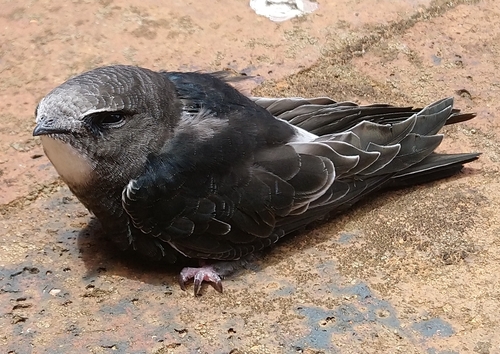
Horus Swift (Apus horus) Horus Swift
White-rumped Swift (Apus caffer) White-rumped Swift

Media

Loading…

In short

The white rump is the most reliable field mark to distinguish the Horus Swift from the White-rumped Swift. Both species have similar overall dark plumage and swift-like shape, but the White-rumped Swift has a more distinct and larger white rump patch.

Identification tips

  1. Look for the white rump: more distinct and larger in the White-rumped Swift. 2. Observe plumage: both are dark, but the White-rumped Swift's rump patch is more prominent. 3. Consider habitat: Horus Swift may be more frequently found near rivers. 4. Flight style is similar; focus on plumage for identification.

Size

Both species are similar in size, typical of small swifts, making size an unreliable distinguishing feature.

Plumage

The Horus Swift has a smaller and less distinct white rump compared to the White-rumped Swift, whose white rump is more prominent and extends further down the sides. Both have dark brown to blackish plumage otherwise.

Behaviour

Both species exhibit similar swift-like flight patterns, characterized by rapid and agile flight with quick wingbeats and gliding.

Habitat

Both species can be found in similar open habitats, often near water, but the Horus Swift is more commonly associated with riverine environments.

Voice

Vocalizations are not a reliable distinguishing feature as both species have similar high-pitched calls typical of swifts.

Submit a better description

Use the same sections as the comparison. Your text is published immediately.

The white rump is the most reliable field mark to distinguish the Horus Swift from the White-rumped Swift. Both species have similar overall dark plumage and swift-like shape, but the White-rumped Swift has a more distinct and larger white rump patch.

  1. Look for the white rump: more distinct and larger in the White-rumped Swift. 2. Observe plumage: both are dark, but the White-rumped Swift's rump patch is more prominent. 3. Consider habitat: Horus Swift may be more frequently found near rivers. 4. Flight style is similar; focus on plumage for identification.

Both species are similar in size, typical of small swifts, making size an unreliable distinguishing feature.

The Horus Swift has a smaller and less distinct white rump compared to the White-rumped Swift, whose white rump is more prominent and extends further down the sides. Both have dark brown to blackish plumage otherwise.

Both species exhibit similar swift-like flight patterns, characterized by rapid and agile flight with quick wingbeats and gliding.

Both species can be found in similar open habitats, often near water, but the Horus Swift is more commonly associated with riverine environments.

Vocalizations are not a reliable distinguishing feature as both species have similar high-pitched calls typical of swifts.

Discard your changes?

You have unsaved edits. If you leave now, those changes will be lost.

Horus Swift · White-rumped Swift · My Tricky Birds