Huia vs Tomtit
Heteralocha acutirostris versus Petroica macrocephala
Play a quiz with Huia and Tomtit
Huia
Tomtit
In short
The Huia and Tomtit are distinct in appearance and behavior, with the Huia being extinct and known for its unique sexual dimorphism in bill shape. The Tomtit is a small, active bird commonly found in New Zealand forests, with a distinctive black and white plumage.
Identification tips
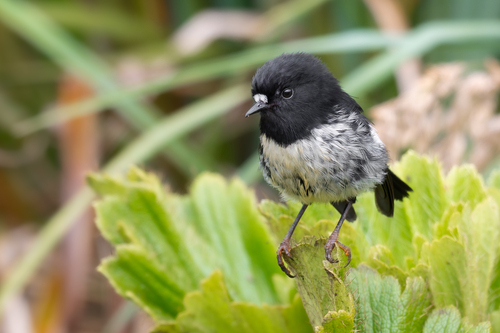
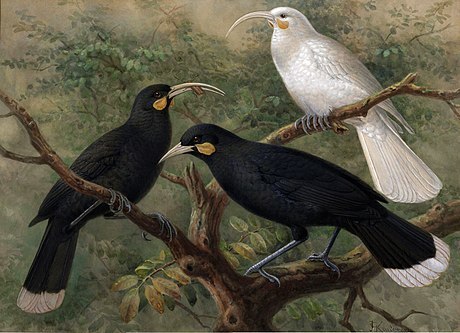
Look for the orange wattles and distinctive bill shape in historical illustrations of the Huia. For the Tomtit, note the black and white plumage and active, flitting behavior in trees. The Huia is extinct, so any sightings are likely misidentifications.
Size
The Huia was significantly larger than the Tomtit, with a more robust body and longer tail.
Plumage
The Huia had a glossy black plumage with striking orange wattles at the base of the bill, while the Tomtit has a black head and back with a white belly and a small white wing bar.
Behaviour
The Huia was known for its ground-feeding behavior, often foraging in leaf litter, whereas the Tomtit is more arboreal, frequently seen flitting through trees and catching insects mid-air.
Habitat
The Huia inhabited dense native forests, particularly in the North Island of New Zealand, whereas the Tomtit is more adaptable, found in a variety of forested habitats across New Zealand.
Voice
The Huia's calls are not well-documented due to its extinction, while the Tomtit has a high-pitched, repetitive song and call.