Birdr

Hume's Lark vs Sand Lark

Calandrella acutirostris versus Alaudala raytal

Play a quiz with Hume's Lark and Sand Lark
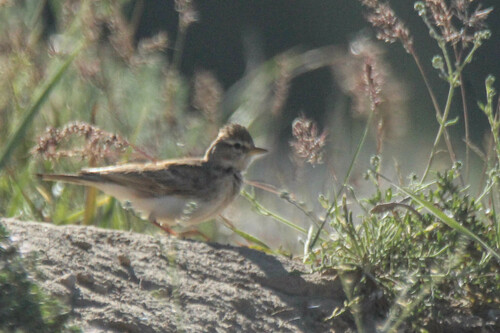
Hume's Lark (Calandrella acutirostris) Hume's Lark
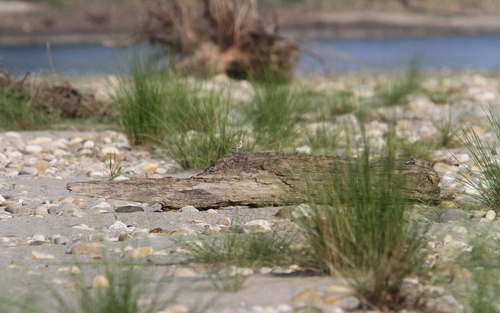
Sand Lark (Alaudala raytal) Sand Lark

Media

Loading…

In short

Hume's Lark and Sand Lark are both small, cryptically colored larks that can be challenging to distinguish in the field. The most reliable difference is their habitat preference: Hume's Lark is typically found in high-altitude, arid regions, while Sand Lark favors sandy riverbanks and coastal areas. Structural differences such as bill shape and primary projection may also aid identification.

Identification tips

  1. Habitat: Check the environment; Hume's Lark prefers high-altitude, arid areas, while Sand Lark is found in sandy riverbanks and coastal regions. 2. Bill Shape: Hume's Lark has a thicker bill compared to the more slender bill of the Sand Lark. 3. Primary Projection: Look for differences in wing structure, although this may require close observation. 4. Plumage Tone: Note any slight differences in overall darkness, with Hume's Lark potentially appearing darker.

Size

Both species are small larks, but Hume's Lark tends to have a slightly more robust appearance due to its thicker bill.

Plumage

Plumage is generally similar, with both species showing streaked upperparts and paler underparts. However, Hume's Lark may appear slightly darker overall.

Behaviour

Both species exhibit typical lark behavior, such as ground foraging and short flights. Specific behavioral differences are not well-documented.

Habitat

Hume's Lark is found in high-altitude, arid regions, while Sand Lark is more common in sandy riverbanks and coastal areas.

Voice

Vocalizations are not well-documented for field differentiation, but any differences in song or call would be subtle and require experience to discern.

Submit a better description

Use the same sections as the comparison. Your text is published immediately.

Hume's Lark and Sand Lark are both small, cryptically colored larks that can be challenging to distinguish in the field. The most reliable difference is their habitat preference: Hume's Lark is typically found in high-altitude, arid regions, while Sand Lark favors sandy riverbanks and coastal areas. Structural differences such as bill shape and primary projection may also aid identification.

  1. Habitat: Check the environment; Hume's Lark prefers high-altitude, arid areas, while Sand Lark is found in sandy riverbanks and coastal regions. 2. Bill Shape: Hume's Lark has a thicker bill compared to the more slender bill of the Sand Lark. 3. Primary Projection: Look for differences in wing structure, although this may require close observation. 4. Plumage Tone: Note any slight differences in overall darkness, with Hume's Lark potentially appearing darker.

Both species are small larks, but Hume's Lark tends to have a slightly more robust appearance due to its thicker bill.

Plumage is generally similar, with both species showing streaked upperparts and paler underparts. However, Hume's Lark may appear slightly darker overall.

Both species exhibit typical lark behavior, such as ground foraging and short flights. Specific behavioral differences are not well-documented.

Hume's Lark is found in high-altitude, arid regions, while Sand Lark is more common in sandy riverbanks and coastal areas.

Vocalizations are not well-documented for field differentiation, but any differences in song or call would be subtle and require experience to discern.

Discard your changes?

You have unsaved edits. If you leave now, those changes will be lost.

Hume's Lark · Sand Lark · My Tricky Birds