Birdr

Hume's Lark vs Tawny Pipit

Calandrella acutirostris versus Anthus campestris

Play a quiz with Hume's Lark and Tawny Pipit
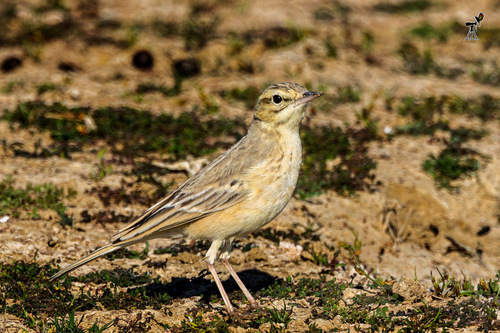
Hume's Lark (Calandrella acutirostris) Hume's Lark
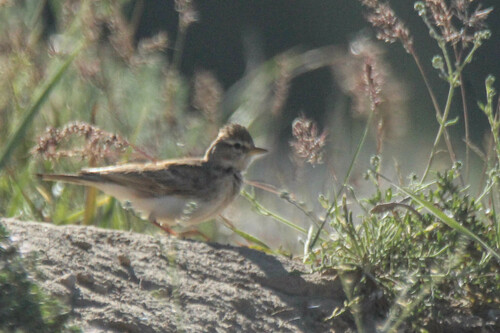
Tawny Pipit (Anthus campestris) Tawny Pipit

Media

Loading…

In short

To distinguish Hume's Lark from the Tawny Pipit, focus on the bill and overall structure. Hume's Lark has a shorter, stubbier bill and a more compact body, while the Tawny Pipit is more slender with a longer, finer bill. Both species can appear similar in coloration, so structural differences are key.

Identification tips

  1. Bill shape: Hume's Lark has a shorter, stubbier bill; Tawny Pipit has a longer, finer bill. 2. Overall structure: Hume's Lark is more compact; Tawny Pipit is slender and elongated. 3. Habitat preference: Note the surrounding environment; Hume's Lark prefers arid areas, while Tawny Pipit is often in grasslands. 4. Vocalizations: Listen for the more complex song of Hume's Lark compared to the simpler song of Tawny Pipit.

Size

Hume's Lark is generally more compact and slightly smaller than the Tawny Pipit, which has a more elongated and slender appearance.

Plumage

Both species have similar sandy-brown plumage, but Hume's Lark may appear slightly more uniform in color. The Tawny Pipit often shows more contrast between its lighter underparts and darker upperparts.

Behaviour

Tawny Pipits are more likely to be seen walking or running on the ground in open areas, while Hume's Larks may exhibit more hopping behavior.

Habitat

Hume's Lark typically inhabits arid, open landscapes with sparse vegetation, whereas Tawny Pipits prefer more open, grassy areas and can also be found in cultivated lands.

Voice

Vocalizations can be a useful differentiator, as Hume's Lark has a more varied and complex song compared to the simpler, more repetitive song of the Tawny Pipit.

Submit a better description

Use the same sections as the comparison. Your text is published immediately.

To distinguish Hume's Lark from the Tawny Pipit, focus on the bill and overall structure. Hume's Lark has a shorter, stubbier bill and a more compact body, while the Tawny Pipit is more slender with a longer, finer bill. Both species can appear similar in coloration, so structural differences are key.

  1. Bill shape: Hume's Lark has a shorter, stubbier bill; Tawny Pipit has a longer, finer bill. 2. Overall structure: Hume's Lark is more compact; Tawny Pipit is slender and elongated. 3. Habitat preference: Note the surrounding environment; Hume's Lark prefers arid areas, while Tawny Pipit is often in grasslands. 4. Vocalizations: Listen for the more complex song of Hume's Lark compared to the simpler song of Tawny Pipit.

Hume's Lark is generally more compact and slightly smaller than the Tawny Pipit, which has a more elongated and slender appearance.

Both species have similar sandy-brown plumage, but Hume's Lark may appear slightly more uniform in color. The Tawny Pipit often shows more contrast between its lighter underparts and darker upperparts.

Tawny Pipits are more likely to be seen walking or running on the ground in open areas, while Hume's Larks may exhibit more hopping behavior.

Hume's Lark typically inhabits arid, open landscapes with sparse vegetation, whereas Tawny Pipits prefer more open, grassy areas and can also be found in cultivated lands.

Vocalizations can be a useful differentiator, as Hume's Lark has a more varied and complex song compared to the simpler, more repetitive song of the Tawny Pipit.

Discard your changes?

You have unsaved edits. If you leave now, those changes will be lost.

Hume's Lark · Tawny Pipit · My Tricky Birds