Birdr

Hume's Warbler vs Radde's Warbler

Phylloscopus humei versus Phylloscopus schwarzi

Play a quiz with Hume's Warbler and Radde's Warbler
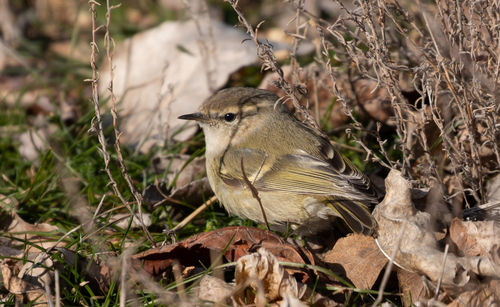
Hume's Warbler (Phylloscopus humei) Hume's Warbler
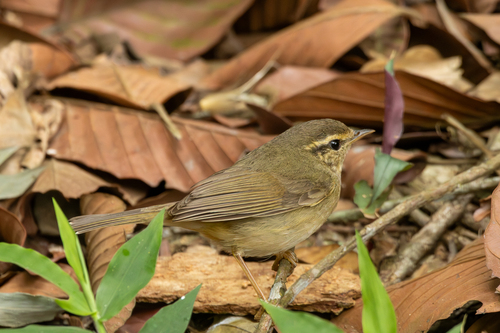
Radde's Warbler (Phylloscopus schwarzi) Radde's Warbler

Media

Loading…

In short

Hume's Warbler and Radde's Warbler can be tricky to distinguish, but key differences in structure and plumage provide reliable clues. Hume's Warbler typically shows a more prominent wing bar and a shorter, more rounded tail, while Radde's Warbler has a longer tail and a more robust appearance. Vocalizations also differ significantly between the two species.

Identification tips

Look for Hume's Warbler's prominent wing bar and shorter tail. Radde's Warbler is more robust with a longer tail and clearer supercilium. Listen for Hume's repetitive call versus Radde's varied song. Consider habitat: Hume's in montane forests, Radde's in open taiga.

Size

Radde's Warbler is generally more robust and slightly larger than Hume's Warbler.

Plumage

Hume's Warbler often displays a more pronounced wing bar and a less distinct supercilium compared to Radde's Warbler, which has a more uniform olive-brown plumage and a clearer supercilium.

Behaviour

Both species are active foragers, but Radde's Warbler may appear more deliberate in its movements compared to the often more flitting Hume's Warbler.

Habitat

Hume's Warbler is typically found in montane forests and scrub, while Radde's Warbler prefers open taiga forests and dense undergrowth in its breeding range.

Voice

Hume's Warbler has a distinctive, repetitive call, while Radde's Warbler's song is more varied and less repetitive.

Submit a better description

Use the same sections as the comparison. Your text is published immediately.

Hume's Warbler and Radde's Warbler can be tricky to distinguish, but key differences in structure and plumage provide reliable clues. Hume's Warbler typically shows a more prominent wing bar and a shorter, more rounded tail, while Radde's Warbler has a longer tail and a more robust appearance. Vocalizations also differ significantly between the two species.

Look for Hume's Warbler's prominent wing bar and shorter tail. Radde's Warbler is more robust with a longer tail and clearer supercilium. Listen for Hume's repetitive call versus Radde's varied song. Consider habitat: Hume's in montane forests, Radde's in open taiga.

Radde's Warbler is generally more robust and slightly larger than Hume's Warbler.

Hume's Warbler often displays a more pronounced wing bar and a less distinct supercilium compared to Radde's Warbler, which has a more uniform olive-brown plumage and a clearer supercilium.

Both species are active foragers, but Radde's Warbler may appear more deliberate in its movements compared to the often more flitting Hume's Warbler.

Hume's Warbler is typically found in montane forests and scrub, while Radde's Warbler prefers open taiga forests and dense undergrowth in its breeding range.

Hume's Warbler has a distinctive, repetitive call, while Radde's Warbler's song is more varied and less repetitive.

Discard your changes?

You have unsaved edits. If you leave now, those changes will be lost.

Hume's Warbler · Radde's Warbler · My Tricky Birds