Birdr

Icterine Warbler vs Sedge Warbler

Hippolais icterina versus Acrocephalus schoenobaenus

Play a quiz with Icterine Warbler and Sedge Warbler
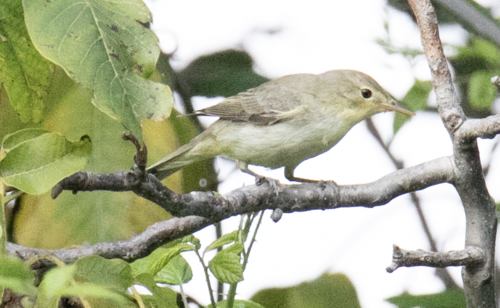
Icterine Warbler (Hippolais icterina) Icterine Warbler
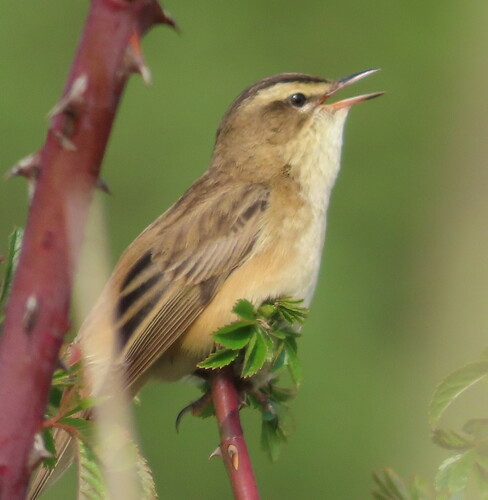
Sedge Warbler (Acrocephalus schoenobaenus) Sedge Warbler

Media

Loading…

In short

The Icterine Warbler and Sedge Warbler are both small, insectivorous birds found in Europe, but they can be distinguished by their structure and plumage. The Icterine Warbler has a longer primary projection and a more uniform yellowish-green plumage, while the Sedge Warbler is more streaked and has a prominent white supercilium.

Identification tips

  1. Look for the Icterine Warbler's longer primary projection and more uniform yellowish-green plumage. 2. Note the Sedge Warbler's prominent white supercilium and streaked back. 3. Listen for the Icterine Warbler's melodic song with mimicry versus the Sedge Warbler's fast, chattering song. 4. Consider habitat: Icterine Warblers are in open woodlands, Sedge Warblers in reed beds.

Size

Both species are similar in size, but the Icterine Warbler appears slightly larger due to its longer wings and tail.

Plumage

The Icterine Warbler has a more uniform yellowish-green plumage with a less distinct supercilium, whereas the Sedge Warbler is browner with heavy streaking on the back and a prominent white supercilium.

Behaviour

Both species are active and often seen flitting through foliage, but the Sedge Warbler is more likely to be seen in dense reed beds.

Habitat

The Icterine Warbler prefers open woodlands and gardens, while the Sedge Warbler is typically found in wetlands and reed beds.

Voice

The Icterine Warbler's song is more melodic and varied, often including mimicry, whereas the Sedge Warbler's song is a fast, chattering series of notes.

Submit a better description

Use the same sections as the comparison. Your text is published immediately.

The Icterine Warbler and Sedge Warbler are both small, insectivorous birds found in Europe, but they can be distinguished by their structure and plumage. The Icterine Warbler has a longer primary projection and a more uniform yellowish-green plumage, while the Sedge Warbler is more streaked and has a prominent white supercilium.

  1. Look for the Icterine Warbler's longer primary projection and more uniform yellowish-green plumage. 2. Note the Sedge Warbler's prominent white supercilium and streaked back. 3. Listen for the Icterine Warbler's melodic song with mimicry versus the Sedge Warbler's fast, chattering song. 4. Consider habitat: Icterine Warblers are in open woodlands, Sedge Warblers in reed beds.

Both species are similar in size, but the Icterine Warbler appears slightly larger due to its longer wings and tail.

The Icterine Warbler has a more uniform yellowish-green plumage with a less distinct supercilium, whereas the Sedge Warbler is browner with heavy streaking on the back and a prominent white supercilium.

Both species are active and often seen flitting through foliage, but the Sedge Warbler is more likely to be seen in dense reed beds.

The Icterine Warbler prefers open woodlands and gardens, while the Sedge Warbler is typically found in wetlands and reed beds.

The Icterine Warbler's song is more melodic and varied, often including mimicry, whereas the Sedge Warbler's song is a fast, chattering series of notes.

Discard your changes?

You have unsaved edits. If you leave now, those changes will be lost.

Icterine Warbler · Sedge Warbler · My Tricky Birds