Birdr

Indian Cuckoo vs Himalayan Cuckoo

Cuculus micropterus versus Cuculus saturatus

Play a quiz with Indian Cuckoo and Himalayan Cuckoo
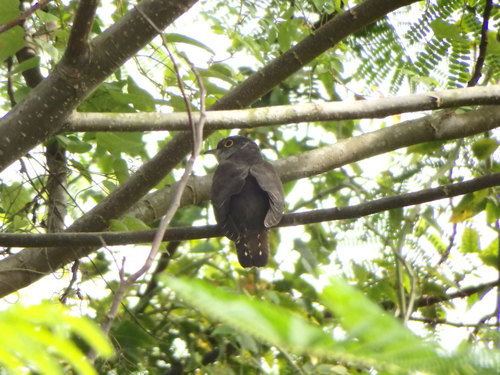
Indian Cuckoo (Cuculus micropterus) Indian Cuckoo
Himalayan Cuckoo (Cuculus saturatus) Himalayan Cuckoo

Media

Loading…

In short

The Indian Cuckoo and the Himalayan Cuckoo are similar in appearance, both belonging to the Cuculidae family. Key differences lie in their vocalizations and subtle plumage variations. Observing their calls and slight differences in tail patterning can aid in identification.

Identification tips

  1. Listen for calls: Indian Cuckoo's 'bo-ko-ta-ko' vs. Himalayan Cuckoo's repetitive 'po-po-po.' 2. Check tail patterns: Indian Cuckoo has less prominent white tips. 3. Observe plumage: Look for more pronounced barring on the Himalayan Cuckoo. 4. Consider elevation: Himalayan Cuckoo is more likely at higher altitudes.

Size

Both species are similar in size, typical of medium-sized cuckoos.

Plumage

The Indian Cuckoo generally has a more uniform greyish-brown plumage with less distinct barring on the underparts compared to the Himalayan Cuckoo, which may show more pronounced barring. Tail patterns can also differ slightly, with the Indian Cuckoo having less prominent white tips.

Behaviour

Both species exhibit similar behaviors, such as perching quietly in trees and being more often heard than seen.

Habitat

Both species occupy similar habitats, including forests and wooded areas. However, the Himalayan Cuckoo is more likely to be found at higher elevations.

Voice

The Indian Cuckoo has a distinctive four-note call often transcribed as 'bo-ko-ta-ko,' while the Himalayan Cuckoo's call is a more repetitive 'po-po-po' or 'pu-pu-pu.' These vocal differences are crucial for identification.

Submit a better description

Use the same sections as the comparison. Your text is published immediately.

The Indian Cuckoo and the Himalayan Cuckoo are similar in appearance, both belonging to the Cuculidae family. Key differences lie in their vocalizations and subtle plumage variations. Observing their calls and slight differences in tail patterning can aid in identification.

  1. Listen for calls: Indian Cuckoo's 'bo-ko-ta-ko' vs. Himalayan Cuckoo's repetitive 'po-po-po.' 2. Check tail patterns: Indian Cuckoo has less prominent white tips. 3. Observe plumage: Look for more pronounced barring on the Himalayan Cuckoo. 4. Consider elevation: Himalayan Cuckoo is more likely at higher altitudes.

Both species are similar in size, typical of medium-sized cuckoos.

The Indian Cuckoo generally has a more uniform greyish-brown plumage with less distinct barring on the underparts compared to the Himalayan Cuckoo, which may show more pronounced barring. Tail patterns can also differ slightly, with the Indian Cuckoo having less prominent white tips.

Both species exhibit similar behaviors, such as perching quietly in trees and being more often heard than seen.

Both species occupy similar habitats, including forests and wooded areas. However, the Himalayan Cuckoo is more likely to be found at higher elevations.

The Indian Cuckoo has a distinctive four-note call often transcribed as 'bo-ko-ta-ko,' while the Himalayan Cuckoo's call is a more repetitive 'po-po-po' or 'pu-pu-pu.' These vocal differences are crucial for identification.

Discard your changes?

You have unsaved edits. If you leave now, those changes will be lost.

Indian Cuckoo · Himalayan Cuckoo · My Tricky Birds