Birdr

Indian Pond Heron vs Chinese Pond Heron

Ardeola grayii versus Ardeola bacchus

Play a quiz with Indian Pond Heron and Chinese Pond Heron
Indian Pond Heron (Ardeola grayii) Indian Pond Heron
Chinese Pond Heron (Ardeola bacchus) Chinese Pond Heron

Media

Loading…

In short

The most reliable way to separate Indian Pond Heron from Chinese Pond Heron is by focusing on their breeding plumage: Chinese Pond Heron adults show bold red, blue, and white colors, while Indian Pond Heron adults remain buff-brown with only subtle neck plumes. Both species are cryptic and streaky brown when not breeding, but in flight, their white wings stand out. Structural differences are subtle, so context and close attention to seasonal plumage are key. Range is often the best clue, but in overlap zones or with vagrants, careful observation of breeding colors is essential.

Identification tips

  1. Breeding plumage is the key separator: In spring and summer, look for the Chinese Pond Heron's vivid red (chestnut), blue, and white plumage—especially the deep red head and neck and bluish back. Indian Pond Heron never shows these colors, remaining buff-brown with elongated neck plumes at most.
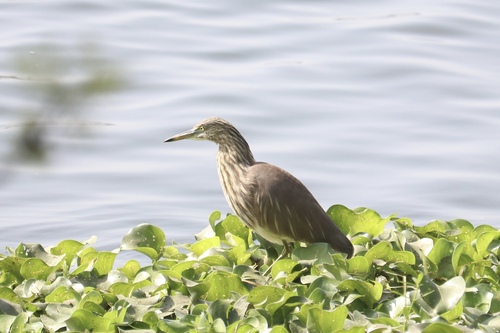
  2. Non-breeding birds are extremely similar: Both appear streaky brown above with white wings in flight. There are no reliable plumage differences in basic or juvenile plumage, so identification is very difficult outside the breeding season.
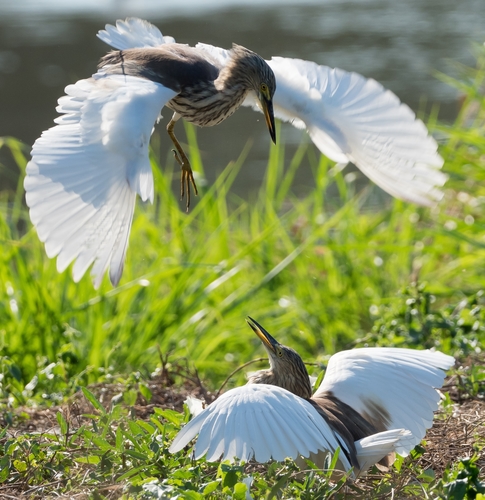
  3. Flight views: Both species show a dramatic contrast between cryptic brown body and bright white wings when flushed. This is not a separator, but is useful for confirming pond heron identity.
  4. Bill and leg color: Both have yellow bills with a black tip and yellow legs in non-breeding plumage. Indian Pond Heron may rarely show red legs in breeding season, but this is not consistent or diagnostic.
  5. Neck plumes: Breeding Indian Pond Herons have elongated neck feathers, but these are subtle compared to the bold color changes in Chinese Pond Heron.
  6. Structure: Both are stocky, short-necked, and thick-billed. There are no reliable differences in shape or size in the field.
  7. Habitat and range: Indian Pond Heron is common in the Indian subcontinent, while Chinese Pond Heron is found in East Asia. In areas where only one species is expected, range is a strong clue, but be cautious in overlap zones or with possible vagrants.
  8. Perched vs. in flight: Both species are best identified when perched during the breeding season. In flight, white wings are shared by both and do not help separation.
  9. Juvenile and immature birds: No distinctive age-specific upperwing or body marks are described for either species, so young birds are not separable by plumage.
  10. Vocalizations: Calls are infrequent and not distinctive enough for field separation.
  11. Mixed heronries: Chinese Pond Heron often nests in mixed-species colonies, but this is not a reliable field clue unless both species are present.
  12. Red-legged Indian Pond Herons: Rare individuals may show red legs in breeding season, but this is not a consistent or diagnostic feature.
  13. Erythristic or variant plumages: Rare color variants (e.g., erythristic Indian Pond Herons) can cause confusion but are exceptional.
  14. Context: If you see a boldly colored pond heron (red/blue/white) in breeding season in East Asia, it is Chinese Pond Heron. If the bird is dull brown with only subtle plumes, it is Indian Pond Heron.
  15. When in doubt: Outside the breeding season, or with distant/immature birds, identification may not be possible without range context.

Size

Indian Pond Heron averages about 255 g in body mass, but no direct mass data is available for Chinese Pond Heron. Both are small, stocky herons with short necks and thick bills, and there is no clear size difference in the field. Length is similar (Chinese Pond Heron: ~47 cm), so size is not a reliable separator.

Plumage

In non-breeding (basic) plumage, both species are streaky brown above with white wings that flash in flight, making them very similar and hard to distinguish. Juvenile and immature birds are not described as having distinctive upperwing patterns or age-specific marks that separate the two. In breeding (alternate) plumage, Chinese Pond Heron adults develop striking red, blue, and white colors, with the head and neck turning deep chestnut-red, back bluish, and wings remaining white. Indian Pond Heron adults in breeding season are more subdued, with buff-brown backs and only some elongated neck feathers; they do not develop the rich red or blue tones. Occasional Indian Pond Herons may show red legs in breeding season, but this is rare and not a consistent field mark. Both species are transformed in flight by their white wings, but perched birds are best separated by the presence or absence of bold breeding colors.

Behaviour

Both species are typically solitary or loosely gregarious, stalking prey at the edges of water bodies and often remaining motionless for long periods. Their cryptic plumage allows close approach before flushing. In flight, both show a dramatic switch from dull, camouflaged plumage to bright white wings. There are no strong behavioral differences noted between the two.

Habitat

Indian Pond Heron is widespread in the Indian subcontinent, southern Iran, Burma, and Sri Lanka, while Chinese Pond Heron is found in China and adjacent East Asia, favoring shallow freshwater and saltwater wetlands. Both occur in lowland wetlands, ponds, and rice paddies, and both can be found near human habitation. In areas where their ranges meet, habitat alone is not diagnostic, but outside the overlap, range is a strong clue.

Voice

Both species are usually silent, but Indian Pond Heron may give a harsh croak when alarmed or near the nest. No distinctive vocal differences are described, and calls are not a reliable field mark for separation.

Submit a better description

Use the same sections as the comparison. Your text is published immediately.

The most reliable way to separate Indian Pond Heron from Chinese Pond Heron is by focusing on their breeding plumage: Chinese Pond Heron adults show bold red, blue, and white colors, while Indian Pond Heron adults remain buff-brown with only subtle neck plumes. Both species are cryptic and streaky brown when not breeding, but in flight, their white wings stand out. Structural differences are subtle, so context and close attention to seasonal plumage are key. Range is often the best clue, but in overlap zones or with vagrants, careful observation of breeding colors is essential.

  1. Breeding plumage is the key separator: In spring and summer, look for the Chinese Pond Heron's vivid red (chestnut), blue, and white plumage—especially the deep red head and neck and bluish back. Indian Pond Heron never shows these colors, remaining buff-brown with elongated neck plumes at most.
  2. Non-breeding birds are extremely similar: Both appear streaky brown above with white wings in flight. There are no reliable plumage differences in basic or juvenile plumage, so identification is very difficult outside the breeding season.
  3. Flight views: Both species show a dramatic contrast between cryptic brown body and bright white wings when flushed. This is not a separator, but is useful for confirming pond heron identity.
  4. Bill and leg color: Both have yellow bills with a black tip and yellow legs in non-breeding plumage. Indian Pond Heron may rarely show red legs in breeding season, but this is not consistent or diagnostic.
  5. Neck plumes: Breeding Indian Pond Herons have elongated neck feathers, but these are subtle compared to the bold color changes in Chinese Pond Heron.
  6. Structure: Both are stocky, short-necked, and thick-billed. There are no reliable differences in shape or size in the field.
  7. Habitat and range: Indian Pond Heron is common in the Indian subcontinent, while Chinese Pond Heron is found in East Asia. In areas where only one species is expected, range is a strong clue, but be cautious in overlap zones or with possible vagrants.
  8. Perched vs. in flight: Both species are best identified when perched during the breeding season. In flight, white wings are shared by both and do not help separation.
  9. Juvenile and immature birds: No distinctive age-specific upperwing or body marks are described for either species, so young birds are not separable by plumage.
  10. Vocalizations: Calls are infrequent and not distinctive enough for field separation.
  11. Mixed heronries: Chinese Pond Heron often nests in mixed-species colonies, but this is not a reliable field clue unless both species are present.
  12. Red-legged Indian Pond Herons: Rare individuals may show red legs in breeding season, but this is not a consistent or diagnostic feature.
  13. Erythristic or variant plumages: Rare color variants (e.g., erythristic Indian Pond Herons) can cause confusion but are exceptional.
  14. Context: If you see a boldly colored pond heron (red/blue/white) in breeding season in East Asia, it is Chinese Pond Heron. If the bird is dull brown with only subtle plumes, it is Indian Pond Heron.
  15. When in doubt: Outside the breeding season, or with distant/immature birds, identification may not be possible without range context.

Indian Pond Heron averages about 255 g in body mass, but no direct mass data is available for Chinese Pond Heron. Both are small, stocky herons with short necks and thick bills, and there is no clear size difference in the field. Length is similar (Chinese Pond Heron: ~47 cm), so size is not a reliable separator.

In non-breeding (basic) plumage, both species are streaky brown above with white wings that flash in flight, making them very similar and hard to distinguish. Juvenile and immature birds are not described as having distinctive upperwing patterns or age-specific marks that separate the two. In breeding (alternate) plumage, Chinese Pond Heron adults develop striking red, blue, and white colors, with the head and neck turning deep chestnut-red, back bluish, and wings remaining white. Indian Pond Heron adults in breeding season are more subdued, with buff-brown backs and only some elongated neck feathers; they do not develop the rich red or blue tones. Occasional Indian Pond Herons may show red legs in breeding season, but this is rare and not a consistent field mark. Both species are transformed in flight by their white wings, but perched birds are best separated by the presence or absence of bold breeding colors.

Both species are typically solitary or loosely gregarious, stalking prey at the edges of water bodies and often remaining motionless for long periods. Their cryptic plumage allows close approach before flushing. In flight, both show a dramatic switch from dull, camouflaged plumage to bright white wings. There are no strong behavioral differences noted between the two.

Indian Pond Heron is widespread in the Indian subcontinent, southern Iran, Burma, and Sri Lanka, while Chinese Pond Heron is found in China and adjacent East Asia, favoring shallow freshwater and saltwater wetlands. Both occur in lowland wetlands, ponds, and rice paddies, and both can be found near human habitation. In areas where their ranges meet, habitat alone is not diagnostic, but outside the overlap, range is a strong clue.

Both species are usually silent, but Indian Pond Heron may give a harsh croak when alarmed or near the nest. No distinctive vocal differences are described, and calls are not a reliable field mark for separation.

Discard your changes?

You have unsaved edits. If you leave now, those changes will be lost.

Indian Pond Heron · Chinese Pond Heron · My Tricky Birds