Birdr

Indian Thick-knee vs Black-winged Stilt

Burhinus indicus versus Himantopus himantopus

Play a quiz with Indian Thick-knee and Black-winged Stilt
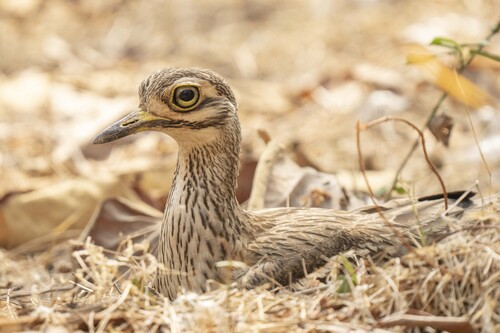
Indian Thick-knee (Burhinus indicus) Indian Thick-knee
Black-winged Stilt (Himantopus himantopus) Black-winged Stilt

Media

Loading…

In short

The Indian Thick-knee and Black-winged Stilt are distinct in both structure and habitat. The Thick-knee is a robust, cryptically colored bird often found in dry, open areas, while the Stilt is slender, with striking black and white plumage, typically seen in wetlands.

Identification tips

1. Structure: Look for the Thick-knee's robust body and large eyes versus the Stilt's long legs and neck. 2. Plumage: Note the Thick-knee's cryptic browns against the Stilt's stark black and white. 3. Habitat: Observe the environment; Thick-knees in dry areas, Stilts in wetlands. 4. Behavior: Thick-knees are more solitary and camouflaged, Stilts are social and active. 5. Calls: Listen for the Thick-knee's wailing call at night and the Stilt's daytime 'kek' calls.

Size

The Indian Thick-knee is stockier and shorter-legged compared to the tall and slender Black-winged Stilt.

Plumage

Indian Thick-knee has cryptic, brownish plumage with bold eye stripes, whereas the Black-winged Stilt is strikingly black and white with long pink legs.

Behaviour

Indian Thick-knee is often solitary or in small groups, using camouflage to avoid detection. In contrast, the Black-winged Stilt is social, often seen in flocks and is more conspicuous due to its active foraging in open water.

Habitat

Indian Thick-knee prefers dry, open landscapes like grasslands and scrub, while Black-winged Stilt is found in freshwater wetlands, including marshes and lake edges.

Voice

The Thick-knee has a haunting, wailing call, often heard at night, whereas the Stilt's call is a nasal, staccato 'kek...kek...kek'.

Submit a better description

Use the same sections as the comparison. Your text is published immediately.

The Indian Thick-knee and Black-winged Stilt are distinct in both structure and habitat. The Thick-knee is a robust, cryptically colored bird often found in dry, open areas, while the Stilt is slender, with striking black and white plumage, typically seen in wetlands.

1. Structure: Look for the Thick-knee's robust body and large eyes versus the Stilt's long legs and neck. 2. Plumage: Note the Thick-knee's cryptic browns against the Stilt's stark black and white. 3. Habitat: Observe the environment; Thick-knees in dry areas, Stilts in wetlands. 4. Behavior: Thick-knees are more solitary and camouflaged, Stilts are social and active. 5. Calls: Listen for the Thick-knee's wailing call at night and the Stilt's daytime 'kek' calls.

The Indian Thick-knee is stockier and shorter-legged compared to the tall and slender Black-winged Stilt.

Indian Thick-knee has cryptic, brownish plumage with bold eye stripes, whereas the Black-winged Stilt is strikingly black and white with long pink legs.

Indian Thick-knee is often solitary or in small groups, using camouflage to avoid detection. In contrast, the Black-winged Stilt is social, often seen in flocks and is more conspicuous due to its active foraging in open water.

Indian Thick-knee prefers dry, open landscapes like grasslands and scrub, while Black-winged Stilt is found in freshwater wetlands, including marshes and lake edges.

The Thick-knee has a haunting, wailing call, often heard at night, whereas the Stilt's call is a nasal, staccato 'kek...kek...kek'.

Discard your changes?

You have unsaved edits. If you leave now, those changes will be lost.

Indian Thick-knee · Black-winged Stilt · My Tricky Birds