Birdr

Indigo Bunting vs Varied Bunting

Passerina cyanea versus Passerina versicolor

Play a quiz with Indigo Bunting and Varied Bunting
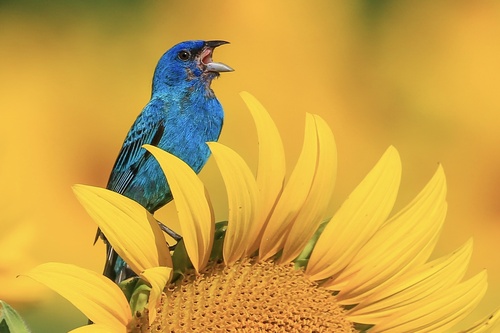
Indigo Bunting (Passerina cyanea) Indigo Bunting
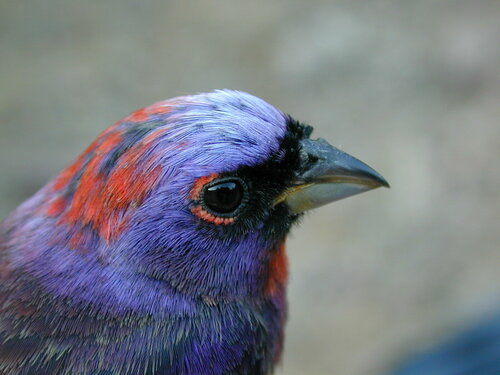
Varied Bunting (Passerina versicolor) Varied Bunting

Media

Loading…

In short

Indigo Bunting and Varied Bunting can be distinguished by their plumage and bill shape. The Indigo Bunting male is uniformly blue, while the Varied Bunting male has a more varied plumage with purples and reds. Females and first-year males of both species are more challenging to differentiate, but the Varied Bunting typically lacks wing bars and has a more curved culmen.

Identification tips

Males: Look for uniform blue in Indigo Buntings versus varied purple and red in Varied Buntings. Females/First-year Males: Check for wing bars; Indigo Buntings may have them, Varied Buntings do not. Note the bill shape; Varied Buntings have a more curved culmen.

Size

Both species are small buntings, similar in size.

Plumage

Male Indigo Buntings are all blue, while male Varied Buntings have a mix of purple, red, and blue. Female and first-year male Indigo Buntings are light brown with possible blue tinges and buff wing bars, whereas Varied Buntings are more uniformly brown and lack wing bars.

Behaviour

Both species share similar song structures, but Varied Buntings have larger syllable repertoires and their singing is influenced by rainfall.

Habitat

Indigo Buntings are more adaptable to various habitats, while Varied Buntings prefer arid thorn brush and scrubby woodland, often near riparian edges.

Voice

Songs are similar, but Varied Buntings have a larger syllable repertoire and their singing activity is influenced by rainfall.

Submit a better description

Use the same sections as the comparison. Your text is published immediately.

Indigo Bunting and Varied Bunting can be distinguished by their plumage and bill shape. The Indigo Bunting male is uniformly blue, while the Varied Bunting male has a more varied plumage with purples and reds. Females and first-year males of both species are more challenging to differentiate, but the Varied Bunting typically lacks wing bars and has a more curved culmen.

Males: Look for uniform blue in Indigo Buntings versus varied purple and red in Varied Buntings. Females/First-year Males: Check for wing bars; Indigo Buntings may have them, Varied Buntings do not. Note the bill shape; Varied Buntings have a more curved culmen.

Both species are small buntings, similar in size.

Male Indigo Buntings are all blue, while male Varied Buntings have a mix of purple, red, and blue. Female and first-year male Indigo Buntings are light brown with possible blue tinges and buff wing bars, whereas Varied Buntings are more uniformly brown and lack wing bars.

Both species share similar song structures, but Varied Buntings have larger syllable repertoires and their singing is influenced by rainfall.

Indigo Buntings are more adaptable to various habitats, while Varied Buntings prefer arid thorn brush and scrubby woodland, often near riparian edges.

Songs are similar, but Varied Buntings have a larger syllable repertoire and their singing activity is influenced by rainfall.

Discard your changes?

You have unsaved edits. If you leave now, those changes will be lost.

Indigo Bunting · Varied Bunting · My Tricky Birds