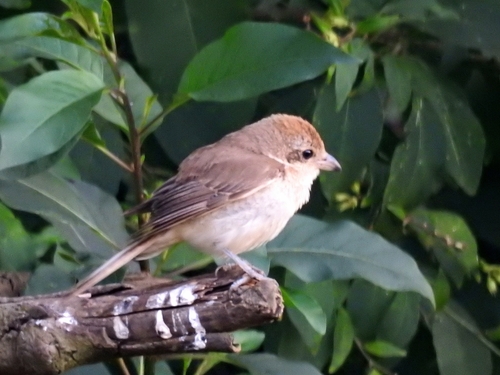
Isabelline Shrike vs Brown Shrike
Lanius isabellinus versus Lanius cristatus
Play a quiz with Isabelline Shrike and Brown Shrike
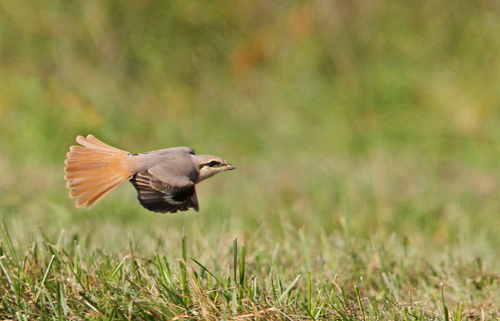
Isabelline Shrike
Brown Shrike
In short
The Brown Shrike (Lanius cristatus) and the Isabelline Shrike (Lanius isabellinus) are both part of the shrike family but can be distinguished by their size, plumage coloration, and vocalizations. The Brown Shrike typically exhibits a browner coloration and a distinct black mask, while the Isabelline Shrike has a more uniform pale or isabelline hue with a subtler mask. Additionally, their preferred habitats and breeding behaviors differ, influencing their distribution patterns.
Identification tips
- Birds of the World Similar-Species Diagnostics:
-
The Brown Shrike is noted for its robust build and more pronounced black mask compared to the Isabelline Shrike, which has a more subtle facial marking and generally paler plumage. The Brown Shrike "has a more aggressive posture and is often found perched conspicuously" (Birds of the World). The Isabelline Shrike, in contrast, is typically "less aggressive and prefers open grasslands" (Birds of the World).
-
AI Field Diagnostics:
- Size and Shape: When you observe these birds, look for the Brown Shrike’s larger size and stockier build compared to the sleeker Isabelline Shrike.
- Plumage Color: Focus on plumage color; the Brown Shrike has a more pronounced brown and black coloration, while the Isabelline Shrike is generally lighter and more uniform in color.
- Behavior: If you see a shrike perched prominently on a fence or post, it’s likely a Brown Shrike. The Isabelline Shrike may be found lower in vegetation, often hunting silently.
- Vocalizations: Pay attention to their calls; the Brown Shrike will sound more melodic and varied, while the Isabelline will have harsher and shorter calls.
- Habitat: Note the habitat—if you’re in a dry, open area, it’s more likely to be the Isabelline Shrike, whereas the Brown Shrike can adapt to various environments, including more lush areas.
By keeping these characteristics in mind, birdwatchers can more easily differentiate between the Brown Shrike and the Isabelline Shrike in the field.
Size
- Brown Shrike: Typically measures around 20-23 cm in length, with a wingspan of about 30-35 cm. It has a more robust build.
- Isabelline Shrike: Slightly smaller, ranging from 18-21 cm in length, and has a wingspan of approximately 25-30 cm. It features a sleeker body compared to the Brown Shrike.
Plumage
- Brown Shrike: Characterized by a brownish upper body with a prominent black mask that extends from the beak through the eyes to the nape. The underparts are whitish with a hint of buff. The tail is long and slightly notched.
- Isabelline Shrike: Exhibits a more uniform pale, sandy-brown or isabelline coloration. It has a less pronounced facial mask, which is more subtle than that of the Brown Shrike. The underparts are generally paler, and the tail is also long but lacks the darker contrasts seen in the Brown Shrike.
Behaviour
- Brown Shrike: Typically more aggressive and territorial, often seen perched conspicuously on fences or posts. It is known for its active hunting behavior, often impaling prey on thorns or barbed wire.
- Isabelline Shrike: Generally less aggressive, preferring open grasslands and shrubby areas. It also hunts but tends to rely more on stealth rather than conspicuous perching.
Habitat
- Brown Shrike: Prefers a variety of habitats including open fields, farmlands, and scrubby areas. It is widely distributed across Asia, particularly in temperate regions during the breeding season.
- Isabelline Shrike: Favours drier habitats, such as steppes and arid plains, and is often found in more open areas compared to the Brown Shrike. It has a broader range across Central Asia and parts of Eastern Europe.
Voice
- Brown Shrike: Produces a series of sharp, clear notes often described as "cheer-cheer," with a slightly more melodic quality. Vocalizations are varied and can be quite distinct.
- Isabelline Shrike: Its calls are generally harsher and more abrupt, often resembling a "chack-chack" sound. It has fewer variations in its calls compared to the Brown Shrike.