Birdr

Jack Snipe vs Great Snipe

Lymnocryptes minimus versus Gallinago media

Play a quiz with Jack Snipe and Great Snipe
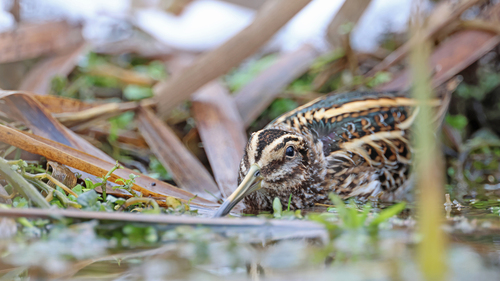
Jack Snipe (Lymnocryptes minimus) Jack Snipe
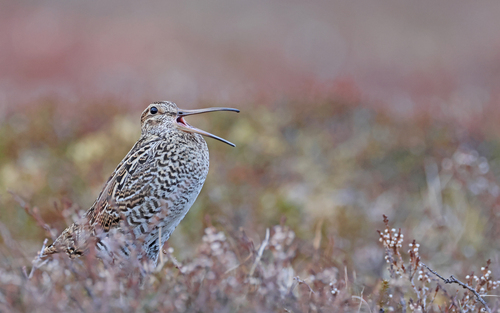
Great Snipe (Gallinago media) Great Snipe

Media

Loading…

In short

The Jack Snipe is notably smaller and more compact than the Great Snipe, with a shorter bill and a distinctive bobbing behavior when feeding. In flight, the Jack Snipe shows a more rounded wing shape compared to the Great Snipe's longer, more pointed wings.

Identification tips

  1. Size and Structure: Note the smaller size and shorter bill of the Jack Snipe. 2. Behavior: Look for the Jack Snipe's bobbing motion when feeding. 3. Flight Pattern: Observe the Jack Snipe's low, erratic flight compared to the Great Snipe's higher, more direct flight. 4. Habitat: Consider the habitat; Jack Snipe is more likely in marshy areas, while Great Snipe prefers open grasslands. 5. Plumage: Check for the Jack Snipe's golden back stripe versus the Great Snipe's barred flanks.

Size

The Jack Snipe is significantly smaller and more compact than the Great Snipe.

Plumage

Jack Snipe has a more cryptic plumage with a prominent golden stripe down the back, while the Great Snipe has a more barred appearance on the flanks and a less distinct back pattern.

Behaviour

Jack Snipe is known for its unique bobbing motion when feeding, which the Great Snipe does not exhibit. In flight, Jack Snipe tends to fly low and erratically, while Great Snipe flies higher and more directly.

Habitat

Jack Snipe prefers wetter, marshy habitats and is often found in dense vegetation. Great Snipe is more likely to be found in drier, open grasslands or moorlands.

Voice

Jack Snipe is generally silent outside the breeding season, while Great Snipe may be heard performing its distinctive 'drumming' display flight during the breeding season.

Submit a better description

Use the same sections as the comparison. Your text is published immediately.

The Jack Snipe is notably smaller and more compact than the Great Snipe, with a shorter bill and a distinctive bobbing behavior when feeding. In flight, the Jack Snipe shows a more rounded wing shape compared to the Great Snipe's longer, more pointed wings.

  1. Size and Structure: Note the smaller size and shorter bill of the Jack Snipe. 2. Behavior: Look for the Jack Snipe's bobbing motion when feeding. 3. Flight Pattern: Observe the Jack Snipe's low, erratic flight compared to the Great Snipe's higher, more direct flight. 4. Habitat: Consider the habitat; Jack Snipe is more likely in marshy areas, while Great Snipe prefers open grasslands. 5. Plumage: Check for the Jack Snipe's golden back stripe versus the Great Snipe's barred flanks.

The Jack Snipe is significantly smaller and more compact than the Great Snipe.

Jack Snipe has a more cryptic plumage with a prominent golden stripe down the back, while the Great Snipe has a more barred appearance on the flanks and a less distinct back pattern.

Jack Snipe is known for its unique bobbing motion when feeding, which the Great Snipe does not exhibit. In flight, Jack Snipe tends to fly low and erratically, while Great Snipe flies higher and more directly.

Jack Snipe prefers wetter, marshy habitats and is often found in dense vegetation. Great Snipe is more likely to be found in drier, open grasslands or moorlands.

Jack Snipe is generally silent outside the breeding season, while Great Snipe may be heard performing its distinctive 'drumming' display flight during the breeding season.

Discard your changes?

You have unsaved edits. If you leave now, those changes will be lost.

Jack Snipe · Great Snipe · My Tricky Birds