Birdr

Japanese Robin vs Izu Robin

Larvivora akahige versus Larvivora tanensis

Play a quiz with Japanese Robin and Izu Robin
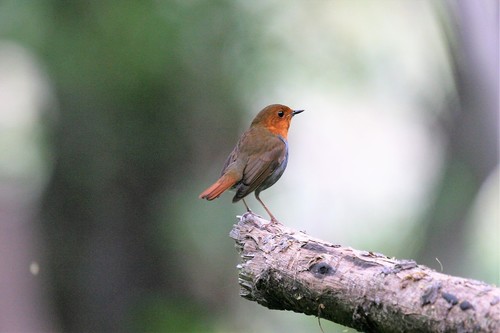
Japanese Robin (Larvivora akahige) Japanese Robin
Izu Robin (Larvivora tanensis) Izu Robin

Media

Loading…

In short

The Japanese Robin and Izu Robin are closely related, both belonging to the Old World Flycatchers family. They are best distinguished by their geographic range and subtle plumage differences. Observers should focus on head coloration and habitat preferences for accurate identification.

Identification tips

  1. Check location: Japanese Robin is widespread in Japan, while Izu Robin is confined to the Izu Islands. 2. Observe head color: Japanese Robin has a brighter rufous-orange head. 3. Consider habitat: Izu Robin prefers dense forest undergrowth on the Izu Islands.

Size

Both species are similar in size, typical of small robins, and size is not a reliable distinguishing feature.

Plumage

The Japanese Robin has a more pronounced rufous-orange head and throat, while the Izu Robin's head is less vibrant, appearing more subdued in color. Both have similar underparts, but the Japanese Robin may show slightly brighter tones overall.

Behaviour

Both species exhibit similar behaviors typical of robins, such as ground foraging and perching in low vegetation. Behavior is not a key distinguishing factor.

Habitat

The Japanese Robin is found in a wider range of habitats, including forests and shrubby areas across Japan. In contrast, the Izu Robin is more restricted to the Izu Islands, favoring dense forest undergrowth.

Voice

Vocalizations are similar, with both species producing melodious songs. However, specific differences in song structure might be discernible to experienced listeners.

Submit a better description

Use the same sections as the comparison. Your text is published immediately.

The Japanese Robin and Izu Robin are closely related, both belonging to the Old World Flycatchers family. They are best distinguished by their geographic range and subtle plumage differences. Observers should focus on head coloration and habitat preferences for accurate identification.

  1. Check location: Japanese Robin is widespread in Japan, while Izu Robin is confined to the Izu Islands. 2. Observe head color: Japanese Robin has a brighter rufous-orange head. 3. Consider habitat: Izu Robin prefers dense forest undergrowth on the Izu Islands.

Both species are similar in size, typical of small robins, and size is not a reliable distinguishing feature.

The Japanese Robin has a more pronounced rufous-orange head and throat, while the Izu Robin's head is less vibrant, appearing more subdued in color. Both have similar underparts, but the Japanese Robin may show slightly brighter tones overall.

Both species exhibit similar behaviors typical of robins, such as ground foraging and perching in low vegetation. Behavior is not a key distinguishing factor.

The Japanese Robin is found in a wider range of habitats, including forests and shrubby areas across Japan. In contrast, the Izu Robin is more restricted to the Izu Islands, favoring dense forest undergrowth.

Vocalizations are similar, with both species producing melodious songs. However, specific differences in song structure might be discernible to experienced listeners.

Discard your changes?

You have unsaved edits. If you leave now, those changes will be lost.

Japanese Robin · Izu Robin · My Tricky Birds