Birdr

Japanese Sparrowhawk vs Besra

Tachyspiza gularis versus Tachyspiza virgata

Play a quiz with Japanese Sparrowhawk and Besra
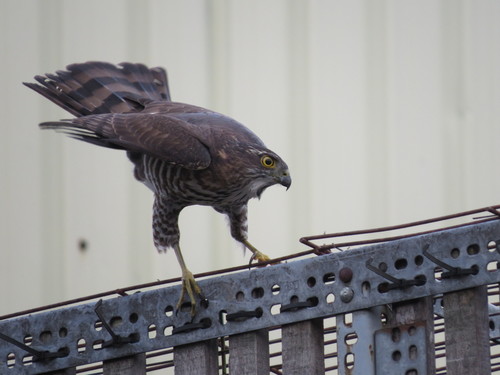
Japanese Sparrowhawk (Tachyspiza gularis) Japanese Sparrowhawk
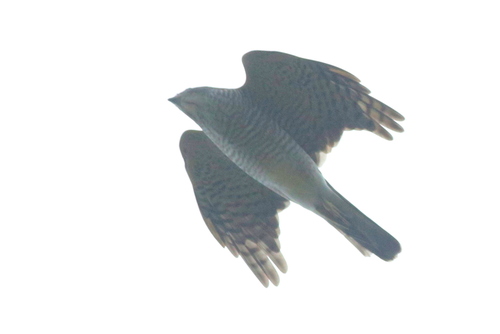
Besra (Tachyspiza virgata) Besra

Media

Loading…

In short

The Japanese Sparrowhawk and Besra are similar in appearance, but can be distinguished by structural and plumage differences. The Japanese Sparrowhawk generally has a more compact structure with a shorter tail, while the Besra is slightly larger with a longer tail. Both species have similar plumage, but subtle differences exist in their underparts and facial markings.

Identification tips

  1. Look for the shorter tail and more compact structure of the Japanese Sparrowhawk. 2. Note the pronounced supercilium and paler underparts in the Japanese Sparrowhawk. 3. Observe habitat preference: Japanese Sparrowhawk in open woodlands, Besra in dense forests. 4. Use size as a guide: Japanese Sparrowhawk is generally smaller. 5. Vocalizations are not a reliable differentiator.

Size

The Japanese Sparrowhawk is generally smaller and more compact than the Besra, which is slightly larger with a longer tail.

Plumage

Both species have similar plumage with barred underparts, but the Japanese Sparrowhawk often has a more pronounced supercilium and a slightly paler underside compared to the Besra.

Behaviour

Both species exhibit similar hunting behaviors, often seen gliding or soaring in search of prey. They are both agile and fast flyers.

Habitat

Both species can be found in forested areas, but the Japanese Sparrowhawk is more likely to be seen in open woodlands and edges, while the Besra prefers denser forest habitats.

Voice

Vocalizations are similar and not the most reliable field mark for differentiation, as both species have high-pitched calls.

Submit a better description

Use the same sections as the comparison. Your text is published immediately.

The Japanese Sparrowhawk and Besra are similar in appearance, but can be distinguished by structural and plumage differences. The Japanese Sparrowhawk generally has a more compact structure with a shorter tail, while the Besra is slightly larger with a longer tail. Both species have similar plumage, but subtle differences exist in their underparts and facial markings.

  1. Look for the shorter tail and more compact structure of the Japanese Sparrowhawk. 2. Note the pronounced supercilium and paler underparts in the Japanese Sparrowhawk. 3. Observe habitat preference: Japanese Sparrowhawk in open woodlands, Besra in dense forests. 4. Use size as a guide: Japanese Sparrowhawk is generally smaller. 5. Vocalizations are not a reliable differentiator.

The Japanese Sparrowhawk is generally smaller and more compact than the Besra, which is slightly larger with a longer tail.

Both species have similar plumage with barred underparts, but the Japanese Sparrowhawk often has a more pronounced supercilium and a slightly paler underside compared to the Besra.

Both species exhibit similar hunting behaviors, often seen gliding or soaring in search of prey. They are both agile and fast flyers.

Both species can be found in forested areas, but the Japanese Sparrowhawk is more likely to be seen in open woodlands and edges, while the Besra prefers denser forest habitats.

Vocalizations are similar and not the most reliable field mark for differentiation, as both species have high-pitched calls.

Discard your changes?

You have unsaved edits. If you leave now, those changes will be lost.

Japanese Sparrowhawk · Besra · My Tricky Birds