Birdr

Japanese Thrush vs Black-breasted Thrush

Turdus cardis versus Turdus dissimilis

Play a quiz with Japanese Thrush and Black-breasted Thrush
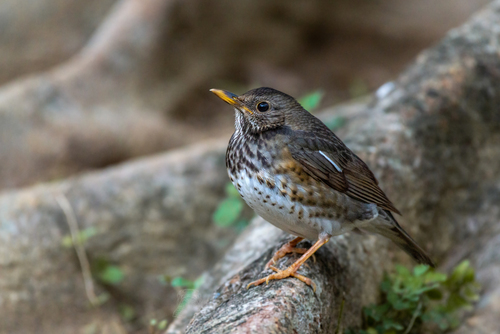
Japanese Thrush (Turdus cardis) Japanese Thrush
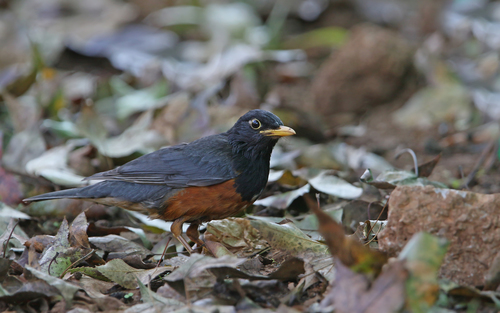
Black-breasted Thrush (Turdus dissimilis) Black-breasted Thrush

Media

Loading…

In short

The Japanese Thrush (Turdus cardis) and Black-breasted Thrush (Turdus dissimilis) are similar in structure, but differ notably in plumage. The male Japanese Thrush has a striking black head and upperparts with a white belly, whereas the male Black-breasted Thrush has a black head and breast with a contrasting orange belly. Both species are similar in size and shape, making plumage the most reliable field mark.

Identification tips

  1. Plumage: Look for the contrasting belly color—white in Japanese Thrush males and orange in Black-breasted Thrush males. 2. Habitat: Consider the habitat; Japanese Thrushes are more often found in montane forests. 3. Season: Be aware of seasonal plumage changes, especially in females, which may obscure some differences.

Size

Both species are similar in size, typical of medium-sized thrushes, with no significant differences in structure or proportions.

Plumage

Male Japanese Thrushes have black upperparts and a white belly, while male Black-breasted Thrushes have a black head and breast with an orange belly. Females of both species are more subdued, but the Japanese Thrush female is generally browner with a paler throat, whereas the Black-breasted female has a more uniform brownish tone.

Behaviour

Both species exhibit typical thrush behavior, foraging on the ground and in low vegetation. No significant behavioral differences are noted.

Habitat

Japanese Thrushes are typically found in forests and woodlands, often in mountainous regions. Black-breasted Thrushes also prefer forested areas but are more commonly associated with subtropical or tropical moist lowland forests.

Voice

Both species have melodious songs, but specific differences in vocalizations are not well-documented. Observers should rely on plumage for identification.

Submit a better description

Use the same sections as the comparison. Your text is published immediately.

The Japanese Thrush (Turdus cardis) and Black-breasted Thrush (Turdus dissimilis) are similar in structure, but differ notably in plumage. The male Japanese Thrush has a striking black head and upperparts with a white belly, whereas the male Black-breasted Thrush has a black head and breast with a contrasting orange belly. Both species are similar in size and shape, making plumage the most reliable field mark.

  1. Plumage: Look for the contrasting belly color—white in Japanese Thrush males and orange in Black-breasted Thrush males. 2. Habitat: Consider the habitat; Japanese Thrushes are more often found in montane forests. 3. Season: Be aware of seasonal plumage changes, especially in females, which may obscure some differences.

Both species are similar in size, typical of medium-sized thrushes, with no significant differences in structure or proportions.

Male Japanese Thrushes have black upperparts and a white belly, while male Black-breasted Thrushes have a black head and breast with an orange belly. Females of both species are more subdued, but the Japanese Thrush female is generally browner with a paler throat, whereas the Black-breasted female has a more uniform brownish tone.

Both species exhibit typical thrush behavior, foraging on the ground and in low vegetation. No significant behavioral differences are noted.

Japanese Thrushes are typically found in forests and woodlands, often in mountainous regions. Black-breasted Thrushes also prefer forested areas but are more commonly associated with subtropical or tropical moist lowland forests.

Both species have melodious songs, but specific differences in vocalizations are not well-documented. Observers should rely on plumage for identification.

Discard your changes?

You have unsaved edits. If you leave now, those changes will be lost.

Japanese Thrush · Black-breasted Thrush · My Tricky Birds