Birdr

Japanese Thrush vs Izu Thrush

Turdus cardis versus Turdus celaenops

Play a quiz with Japanese Thrush and Izu Thrush
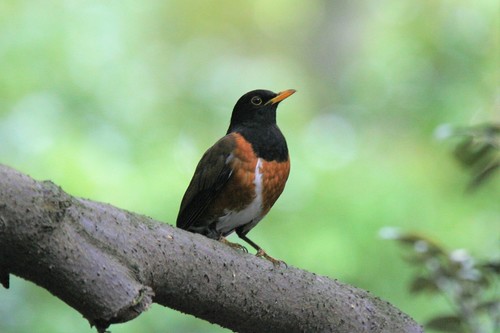
Japanese Thrush (Turdus cardis) Japanese Thrush
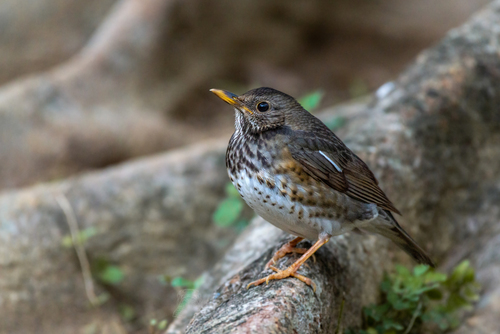
Izu Thrush (Turdus celaenops) Izu Thrush

Media

Loading…

In short

The Japanese Thrush and Izu Thrush are similar in appearance but can be distinguished by their geographic range and subtle plumage differences. The Japanese Thrush is more widespread, while the Izu Thrush is endemic to the Izu Islands. In terms of plumage, the Izu Thrush typically has a more uniform black head and upperparts compared to the Japanese Thrush.

Identification tips

  1. Location: Check the geographic range; the Izu Thrush is only found on the Izu Islands. 2. Plumage: Look for the more uniform black head and upperparts of the Izu Thrush. 3. Underparts: Japanese Thrush has more distinct white underparts with black spots. 4. Season: Consider the time of year, as migratory patterns might affect presence.

Size

Both species are similar in size, typical of medium-sized thrushes.

Plumage

The Japanese Thrush has a black head and upperparts with white underparts and black spots. The Izu Thrush, on the other hand, has a more uniformly black head and upperparts, with less contrast between the head and body. The Izu Thrush also tends to have a more uniform and darker plumage overall.

Behaviour

Both species exhibit typical thrush behavior, foraging on the ground and in trees, but specific differences in behavior are not well-documented.

Habitat

The Japanese Thrush is found in a variety of forested habitats across its range, while the Izu Thrush is restricted to the Izu Islands, where it inhabits subtropical or tropical moist lowland forests.

Voice

Vocalizations are not well-documented for field differentiation, but both species have typical thrush-like songs and calls.

Submit a better description

Use the same sections as the comparison. Your text is published immediately.

The Japanese Thrush and Izu Thrush are similar in appearance but can be distinguished by their geographic range and subtle plumage differences. The Japanese Thrush is more widespread, while the Izu Thrush is endemic to the Izu Islands. In terms of plumage, the Izu Thrush typically has a more uniform black head and upperparts compared to the Japanese Thrush.

  1. Location: Check the geographic range; the Izu Thrush is only found on the Izu Islands. 2. Plumage: Look for the more uniform black head and upperparts of the Izu Thrush. 3. Underparts: Japanese Thrush has more distinct white underparts with black spots. 4. Season: Consider the time of year, as migratory patterns might affect presence.

Both species are similar in size, typical of medium-sized thrushes.

The Japanese Thrush has a black head and upperparts with white underparts and black spots. The Izu Thrush, on the other hand, has a more uniformly black head and upperparts, with less contrast between the head and body. The Izu Thrush also tends to have a more uniform and darker plumage overall.

Both species exhibit typical thrush behavior, foraging on the ground and in trees, but specific differences in behavior are not well-documented.

The Japanese Thrush is found in a variety of forested habitats across its range, while the Izu Thrush is restricted to the Izu Islands, where it inhabits subtropical or tropical moist lowland forests.

Vocalizations are not well-documented for field differentiation, but both species have typical thrush-like songs and calls.

Discard your changes?

You have unsaved edits. If you leave now, those changes will be lost.

Japanese Thrush · Izu Thrush · My Tricky Birds