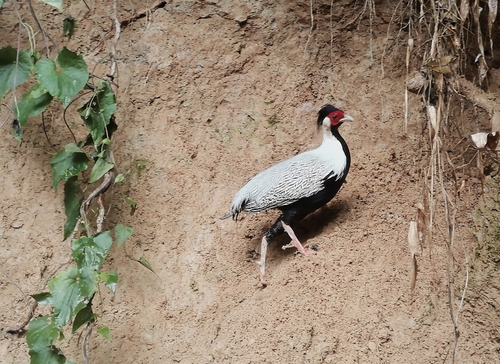
Kalij Pheasant vs Silver Pheasant
Lophura leucomelanos versus Lophura nycthemera
Play a quiz with Kalij Pheasant and Silver Pheasant
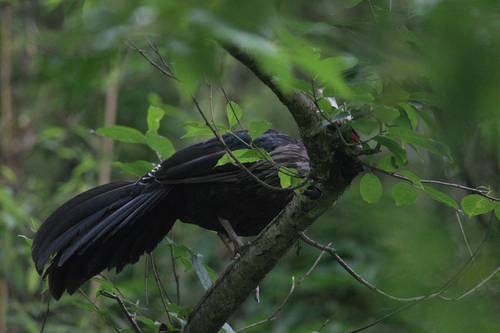
Kalij Pheasant
Silver Pheasant
In short
Kalij Pheasant and Silver Pheasant are both striking members of the pheasant family, but they can be distinguished by their plumage and habitat preferences. The Kalij Pheasant typically has a darker, more uniform appearance, while the Silver Pheasant is noted for its contrasting black and white plumage. Observing their habitat can also provide clues, as they have overlapping but distinct preferences.
Identification tips
- Plumage: Look for the Kalij Pheasant's darker, more uniform coloration compared to the Silver Pheasant's stark black and white contrast. 2. Habitat: Consider the elevation and type of forest; Kalij Pheasants are more common at lower elevations. 3. Location: If in a region where both species occur, focus on plumage differences as the primary identifier.
Size
Both species are similar in size, typical of large pheasants, making size an unreliable distinguishing feature.
Plumage
Kalij Pheasant males generally have a darker, glossy blue-black plumage with a less contrasting appearance, while Silver Pheasant males feature a striking contrast between their white upperparts and black underparts. Females of both species are more cryptically colored but can be differentiated by the Kalij's more uniform brown tones compared to the Silver's more patterned appearance.
Behaviour
Both species exhibit similar behaviors typical of pheasants, such as ground foraging and short flights when disturbed. Behavior is not a reliable distinguishing feature.
Habitat
Kalij Pheasants are often found in forested areas at lower elevations, while Silver Pheasants prefer higher elevation forests. However, there is some overlap in their habitat preferences, especially in regions where their ranges meet.
Voice
Vocalizations of both species are similar and not easily distinguishable in the field, consisting of various calls and cackles typical of pheasants.