Birdr

Kentish Plover vs Little Whimbrel

Anarhynchus alexandrinus versus Numenius minutus

Play a quiz with Kentish Plover and Little Whimbrel
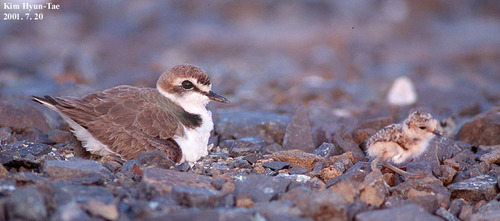
Kentish Plover (Anarhynchus alexandrinus) Kentish Plover
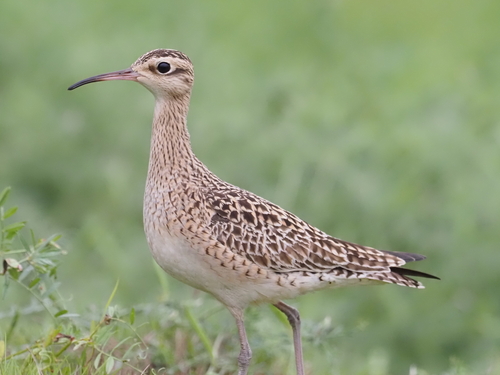
Little Whimbrel (Numenius minutus) Little Whimbrel

Media

Loading…

In short

The Kentish Plover and Little Whimbrel are distinct in structure and habitat. The Kentish Plover is a small, compact plover with a white collar and black patches, while the Little Whimbrel is a medium-sized curlew with a long, decurved bill. These differences are most apparent when observing their feeding behavior and preferred environments.

Identification tips

  1. Bill Shape: Kentish Plovers have short, straight bills; Little Whimbrels have long, decurved bills. 2. Neck and Head Pattern: Look for the Kentish Plover's white collar and black patches. 3. Size and Structure: Note the more compact body of the Kentish Plover versus the elongated form of the Little Whimbrel. 4. Habitat: Consider the environment; plovers are more coastal, while whimbrels are inland. 5. Behavior: Watch for the plover's quick movements versus the whimbrel's probing.

Size

The Kentish Plover is smaller (15–17.5 cm) compared to the Little Whimbrel, which is larger and more elongated.

Plumage

Kentish Plovers have a white collar, black patches on the sides of their neck, and a variable rufous cap. Little Whimbrels have a more uniform brownish plumage with a distinctive supercilium and lack the contrasting neck patterns of the plover.

Behaviour

Kentish Plovers are often seen running along shores, while Little Whimbrels exhibit more deliberate probing behavior with their long bills.

Habitat

Kentish Plovers are typically found in coastal areas, mudflats, and sandy beaches. Little Whimbrels prefer open grasslands and wetlands, often in more inland areas.

Submit a better description

Use the same sections as the comparison. Your text is published immediately.

The Kentish Plover and Little Whimbrel are distinct in structure and habitat. The Kentish Plover is a small, compact plover with a white collar and black patches, while the Little Whimbrel is a medium-sized curlew with a long, decurved bill. These differences are most apparent when observing their feeding behavior and preferred environments.

  1. Bill Shape: Kentish Plovers have short, straight bills; Little Whimbrels have long, decurved bills. 2. Neck and Head Pattern: Look for the Kentish Plover's white collar and black patches. 3. Size and Structure: Note the more compact body of the Kentish Plover versus the elongated form of the Little Whimbrel. 4. Habitat: Consider the environment; plovers are more coastal, while whimbrels are inland. 5. Behavior: Watch for the plover's quick movements versus the whimbrel's probing.

The Kentish Plover is smaller (15–17.5 cm) compared to the Little Whimbrel, which is larger and more elongated.

Kentish Plovers have a white collar, black patches on the sides of their neck, and a variable rufous cap. Little Whimbrels have a more uniform brownish plumage with a distinctive supercilium and lack the contrasting neck patterns of the plover.

Kentish Plovers are often seen running along shores, while Little Whimbrels exhibit more deliberate probing behavior with their long bills.

Kentish Plovers are typically found in coastal areas, mudflats, and sandy beaches. Little Whimbrels prefer open grasslands and wetlands, often in more inland areas.

Discard your changes?

You have unsaved edits. If you leave now, those changes will be lost.

Kentish Plover · Little Whimbrel · My Tricky Birds