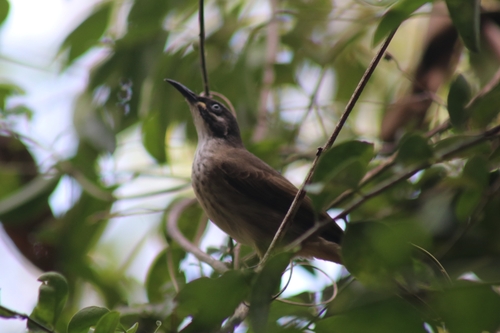
Kimberley Honeyeater vs White-lined Honeyeater
Meliphaga fordiana versus Meliphaga albilineata
Play a quiz with Kimberley Honeyeater and White-lined Honeyeater
Kimberley Honeyeater
White-lined Honeyeater
In short
The Kimberley Honeyeater and White-lined Honeyeater are similar in appearance, but can be distinguished by their facial markings and habitat preferences. The Kimberley Honeyeater typically has a more pronounced white line above the eye, while the White-lined Honeyeater's line is subtler. Both species have similar body structures, but their vocalizations and habitats can aid in identification.
Identification tips
- Look for the white supercilium: more pronounced in Kimberley Honeyeater.
- Consider habitat: Kimberley Honeyeater in Western Australia, White-lined in Northern Territory.
- Listen for calls, though differences are subtle and not well-documented.
Size
Both species are similar in size, typical of honeyeaters, with no significant differences noted in field guides.
Plumage
The Kimberley Honeyeater has a more distinct white supercilium (eyebrow) compared to the White-lined Honeyeater. Both have similar overall plumage tones, but the Kimberley may appear slightly more contrasting due to the facial markings.
Behaviour
Both species exhibit typical honeyeater behavior, actively foraging for nectar and insects. No significant behavioral differences are noted.
Habitat
The Kimberley Honeyeater is found in the Kimberley region of Western Australia, often in eucalypt woodlands and riverine forests. The White-lined Honeyeater prefers tropical woodlands and forests in the Northern Territory, often near water sources.
Voice
Vocalizations are not well-documented for both species, but they are known to have typical honeyeater calls. Differences, if any, are subtle and not well-described.
Kimberley Honeyeater · White-lined Honeyeater · My Tricky Birds