Birdr

Klaas's Cuckoo vs Greater Sand Plover

Chrysococcyx klaas versus Anarhynchus leschenaultii

Play a quiz with Klaas's Cuckoo and Greater Sand Plover
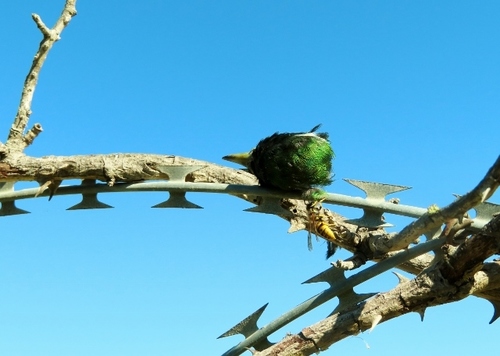
Klaas's Cuckoo (Chrysococcyx klaas) Klaas's Cuckoo
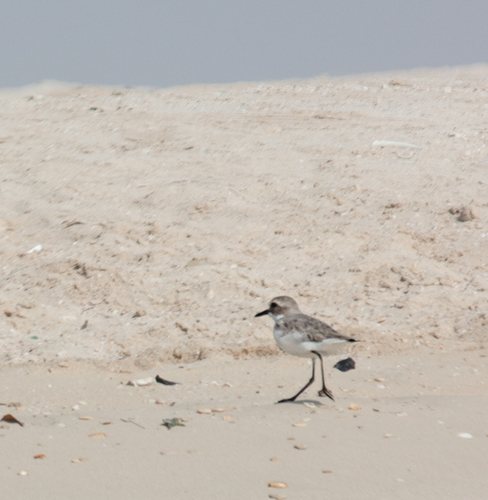
Greater Sand Plover (Anarhynchus leschenaultii) Greater Sand Plover

Media

Loading…

In short

Klaas's Cuckoo and Greater Sand Plover are distinct in both appearance and habitat. Klaas's Cuckoo is a small, iridescent green bird often found in wooded areas, while the Greater Sand Plover is a larger, sandy-colored shorebird typically seen in coastal regions.

Identification tips

1. Location: Klaas's Cuckoo in wooded areas; Greater Sand Plover along coasts. 2. Size and Shape: Greater Sand Plover is larger with longer legs. 3. Plumage: Look for iridescent green in Klaas's Cuckoo; sandy tones in Greater Sand Plover. 4. Behavior: Klaas's Cuckoo often solitary; Greater Sand Plover in flocks. 5. Calls: Listen for repetitive calls of Klaas's Cuckoo.

Size

The Greater Sand Plover is larger than Klaas's Cuckoo, with a more robust body and longer legs.

Plumage

Klaas's Cuckoo males have a brilliant, iridescent green back and a white belly with green bars, while females are gray-brown with thin brown bars. The Greater Sand Plover has sandy-brown upperparts and a white underbelly, with a distinctive white forehead and supercilium.

Behaviour

Klaas's Cuckoo is a brood parasite, often seen alone or in pairs, while the Greater Sand Plover is typically observed in flocks, especially during migration.

Habitat

Klaas's Cuckoo inhabits woodlands, forest edges, and gardens, while the Greater Sand Plover is found in coastal areas, mudflats, and sandy shores.

Voice

Klaas's Cuckoo has a distinctive, repetitive call, whereas the Greater Sand Plover's calls are softer and more varied, often heard during flight.

Submit a better description

Use the same sections as the comparison. Your text is published immediately.

Klaas's Cuckoo and Greater Sand Plover are distinct in both appearance and habitat. Klaas's Cuckoo is a small, iridescent green bird often found in wooded areas, while the Greater Sand Plover is a larger, sandy-colored shorebird typically seen in coastal regions.

1. Location: Klaas's Cuckoo in wooded areas; Greater Sand Plover along coasts. 2. Size and Shape: Greater Sand Plover is larger with longer legs. 3. Plumage: Look for iridescent green in Klaas's Cuckoo; sandy tones in Greater Sand Plover. 4. Behavior: Klaas's Cuckoo often solitary; Greater Sand Plover in flocks. 5. Calls: Listen for repetitive calls of Klaas's Cuckoo.

The Greater Sand Plover is larger than Klaas's Cuckoo, with a more robust body and longer legs.

Klaas's Cuckoo males have a brilliant, iridescent green back and a white belly with green bars, while females are gray-brown with thin brown bars. The Greater Sand Plover has sandy-brown upperparts and a white underbelly, with a distinctive white forehead and supercilium.

Klaas's Cuckoo is a brood parasite, often seen alone or in pairs, while the Greater Sand Plover is typically observed in flocks, especially during migration.

Klaas's Cuckoo inhabits woodlands, forest edges, and gardens, while the Greater Sand Plover is found in coastal areas, mudflats, and sandy shores.

Klaas's Cuckoo has a distinctive, repetitive call, whereas the Greater Sand Plover's calls are softer and more varied, often heard during flight.

Discard your changes?

You have unsaved edits. If you leave now, those changes will be lost.

Klaas's Cuckoo · Greater Sand Plover · My Tricky Birds