Birdr

Koklass Pheasant vs Finsch's Wheatear

Pucrasia macrolopha versus Oenanthe finschii

Play a quiz with Koklass Pheasant and Finsch's Wheatear
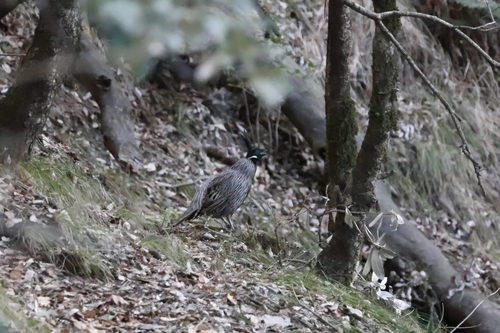
Koklass Pheasant (Pucrasia macrolopha) Koklass Pheasant
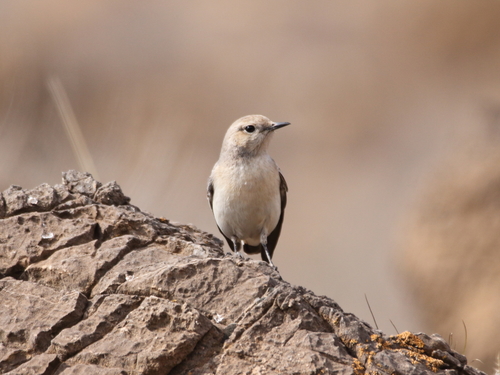
Finsch's Wheatear (Oenanthe finschii) Finsch's Wheatear

Media

Loading…

In short

The Koklass Pheasant and Finsch's Wheatear are easily distinguishable by their size and habitat preferences. Koklass Pheasants are large, ground-dwelling birds found in forested areas, while Finsch's Wheatears are small, agile passerines that inhabit open, rocky landscapes.

Identification tips

  1. Size and Shape: Koklass Pheasant is much larger and bulkier. 2. Habitat: Observe the environment; pheasants are in forests, wheatears in open, rocky areas. 3. Plumage: Look for the pheasant's iridescent greens and browns versus the wheatear's black and white. 4. Behavior: Note if the bird is ground-dwelling (pheasant) or perching on rocks (wheatear).

Size

Koklass Pheasant is significantly larger than Finsch's Wheatear, with a robust body typical of pheasants, compared to the small, slender build of the wheatear.

Plumage

Koklass Pheasant has a complex plumage pattern with iridescent greens and browns, whereas Finsch's Wheatear is predominantly black and white, with a distinctive white rump and tail.

Behaviour

Koklass Pheasants are typically ground foragers and may be seen walking through forest undergrowth. In contrast, Finsch's Wheatears are often seen perched on rocks or making short flights to catch insects.

Habitat

Koklass Pheasants are found in dense forests, often at higher elevations, while Finsch's Wheatears prefer open, rocky, and arid landscapes.

Voice

The vocalizations of Koklass Pheasants are generally deeper and more resonant, while Finsch's Wheatears produce a variety of high-pitched calls and songs typical of wheatears.

Submit a better description

Use the same sections as the comparison. Your text is published immediately.

The Koklass Pheasant and Finsch's Wheatear are easily distinguishable by their size and habitat preferences. Koklass Pheasants are large, ground-dwelling birds found in forested areas, while Finsch's Wheatears are small, agile passerines that inhabit open, rocky landscapes.

  1. Size and Shape: Koklass Pheasant is much larger and bulkier. 2. Habitat: Observe the environment; pheasants are in forests, wheatears in open, rocky areas. 3. Plumage: Look for the pheasant's iridescent greens and browns versus the wheatear's black and white. 4. Behavior: Note if the bird is ground-dwelling (pheasant) or perching on rocks (wheatear).

Koklass Pheasant is significantly larger than Finsch's Wheatear, with a robust body typical of pheasants, compared to the small, slender build of the wheatear.

Koklass Pheasant has a complex plumage pattern with iridescent greens and browns, whereas Finsch's Wheatear is predominantly black and white, with a distinctive white rump and tail.

Koklass Pheasants are typically ground foragers and may be seen walking through forest undergrowth. In contrast, Finsch's Wheatears are often seen perched on rocks or making short flights to catch insects.

Koklass Pheasants are found in dense forests, often at higher elevations, while Finsch's Wheatears prefer open, rocky, and arid landscapes.

The vocalizations of Koklass Pheasants are generally deeper and more resonant, while Finsch's Wheatears produce a variety of high-pitched calls and songs typical of wheatears.

Discard your changes?

You have unsaved edits. If you leave now, those changes will be lost.

Koklass Pheasant · Finsch's Wheatear · My Tricky Birds