Birdr

Kori Bustard vs Denham's Bustard

Ardeotis kori versus Neotis denhami

Play a quiz with Kori Bustard and Denham's Bustard
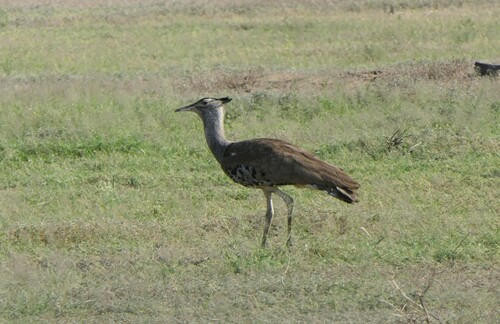
Kori Bustard (Ardeotis kori) Kori Bustard
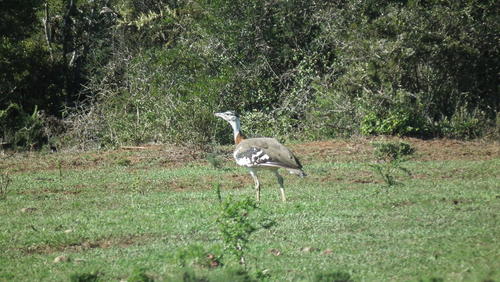
Denham's Bustard (Neotis denhami) Denham's Bustard

Media

Loading…

In short

The Kori Bustard and Denham's Bustard are large, ground-dwelling birds that can be distinguished by size and plumage patterns. Kori Bustards are generally larger and have a more robust build, while Denham's Bustards have distinct white markings on their wings. Observing these features in the field can help differentiate them.

Identification tips

  1. Size and Build: Look for the larger size and more robust build of the Kori Bustard. 2. Wing Markings: Check for white patches on the wings of Denham's Bustard, especially visible in flight. 3. Habitat: Consider the habitat; Denham's Bustards may be more common in wetter areas. 4. Behavior: Note group size; Denham's Bustards are more likely to be seen in small groups.

Size

Kori Bustards are larger and heavier than Denham's Bustards, with a more robust build.

Plumage

Kori Bustards have a more uniform grayish-brown plumage with less contrast, while Denham's Bustards display prominent white patches on their wings, especially visible in flight.

Behaviour

Both species are ground-dwelling and can be seen walking slowly while foraging. Kori Bustards are often more solitary, whereas Denham's Bustards may be seen in small groups.

Habitat

Kori Bustards prefer open savannas and grasslands, while Denham's Bustards are also found in similar habitats but can be more associated with wetter grasslands and open woodlands.

Voice

Both species are generally silent, but Kori Bustards may produce low booming calls during the breeding season, which are less commonly reported in Denham's Bustards.

Submit a better description

Use the same sections as the comparison. Your text is published immediately.

The Kori Bustard and Denham's Bustard are large, ground-dwelling birds that can be distinguished by size and plumage patterns. Kori Bustards are generally larger and have a more robust build, while Denham's Bustards have distinct white markings on their wings. Observing these features in the field can help differentiate them.

  1. Size and Build: Look for the larger size and more robust build of the Kori Bustard. 2. Wing Markings: Check for white patches on the wings of Denham's Bustard, especially visible in flight. 3. Habitat: Consider the habitat; Denham's Bustards may be more common in wetter areas. 4. Behavior: Note group size; Denham's Bustards are more likely to be seen in small groups.

Kori Bustards are larger and heavier than Denham's Bustards, with a more robust build.

Kori Bustards have a more uniform grayish-brown plumage with less contrast, while Denham's Bustards display prominent white patches on their wings, especially visible in flight.

Both species are ground-dwelling and can be seen walking slowly while foraging. Kori Bustards are often more solitary, whereas Denham's Bustards may be seen in small groups.

Kori Bustards prefer open savannas and grasslands, while Denham's Bustards are also found in similar habitats but can be more associated with wetter grasslands and open woodlands.

Both species are generally silent, but Kori Bustards may produce low booming calls during the breeding season, which are less commonly reported in Denham's Bustards.

Discard your changes?

You have unsaved edits. If you leave now, those changes will be lost.

Kori Bustard · Denham's Bustard · My Tricky Birds