Birdr

Lapland Bunting vs Red-headed Bunting

Calcarius lapponicus versus Emberiza bruniceps

Play a quiz with Lapland Bunting and Red-headed Bunting
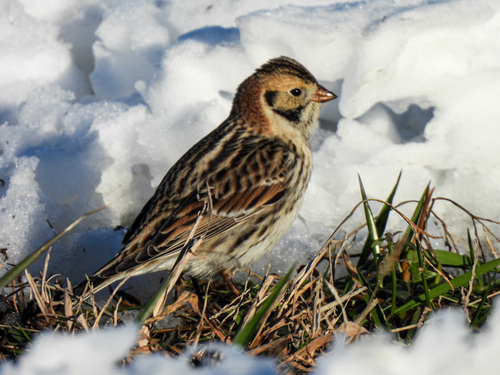
Lapland Bunting (Calcarius lapponicus) Lapland Bunting
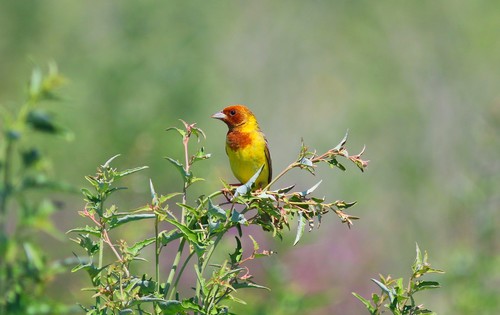
Red-headed Bunting (Emberiza bruniceps) Red-headed Bunting

Media

Loading…

In short

The Lapland Bunting (Calcarius lapponicus) and the Red-headed Bunting (Emberiza bruniceps) are distinguishable by their distinct head patterns and coloration. The Lapland Bunting has a more complex plumage with a black face and chestnut nape in breeding males, while the Red-headed Bunting features a striking red head and yellow underparts. Observing these differences in open habitats or during migration can aid identification.

Identification tips

  1. Look for the black face and chestnut nape in breeding male Lapland Buntings. 2. Note the bright red head and yellow underparts of the Red-headed Bunting. 3. Observe habitat: Lapland Buntings in open tundra, Red-headed Buntings in fields. 4. Listen for the complex song of the Lapland Bunting during breeding season.

Size

Both species are similar in size, typical of small passerines, but the Lapland Bunting may appear slightly more robust.

Plumage

The Lapland Bunting has a black face and chestnut nape in breeding males, with streaked brown upperparts. In contrast, the Red-headed Bunting features a bright red head and yellow underparts, making it more vibrant in appearance.

Behaviour

Lapland Buntings are often seen in open, tundra-like habitats where they are relatively tame during the breeding season. Red-headed Buntings are less studied in terms of behavior but are known to frequent open fields and agricultural areas.

Habitat

Lapland Buntings prefer open, tundra habitats in the Arctic during breeding, while Red-headed Buntings are found in open fields and agricultural areas in their range.

Voice

Lapland Buntings have a complex song that is often heard during the breeding season, while the Red-headed Bunting's song is less documented but generally simpler.

Submit a better description

Use the same sections as the comparison. Your text is published immediately.

The Lapland Bunting (Calcarius lapponicus) and the Red-headed Bunting (Emberiza bruniceps) are distinguishable by their distinct head patterns and coloration. The Lapland Bunting has a more complex plumage with a black face and chestnut nape in breeding males, while the Red-headed Bunting features a striking red head and yellow underparts. Observing these differences in open habitats or during migration can aid identification.

  1. Look for the black face and chestnut nape in breeding male Lapland Buntings. 2. Note the bright red head and yellow underparts of the Red-headed Bunting. 3. Observe habitat: Lapland Buntings in open tundra, Red-headed Buntings in fields. 4. Listen for the complex song of the Lapland Bunting during breeding season.

Both species are similar in size, typical of small passerines, but the Lapland Bunting may appear slightly more robust.

The Lapland Bunting has a black face and chestnut nape in breeding males, with streaked brown upperparts. In contrast, the Red-headed Bunting features a bright red head and yellow underparts, making it more vibrant in appearance.

Lapland Buntings are often seen in open, tundra-like habitats where they are relatively tame during the breeding season. Red-headed Buntings are less studied in terms of behavior but are known to frequent open fields and agricultural areas.

Lapland Buntings prefer open, tundra habitats in the Arctic during breeding, while Red-headed Buntings are found in open fields and agricultural areas in their range.

Lapland Buntings have a complex song that is often heard during the breeding season, while the Red-headed Bunting's song is less documented but generally simpler.

Discard your changes?

You have unsaved edits. If you leave now, those changes will be lost.

Lapland Bunting · Red-headed Bunting · My Tricky Birds