Lapland Bunting vs Snow Bunting
Calcarius lapponicus versus Plectrophenax nivalis
Play a quiz with Lapland Bunting and Snow Bunting
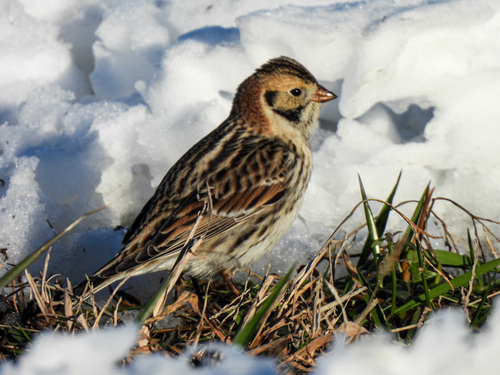
Lapland Bunting
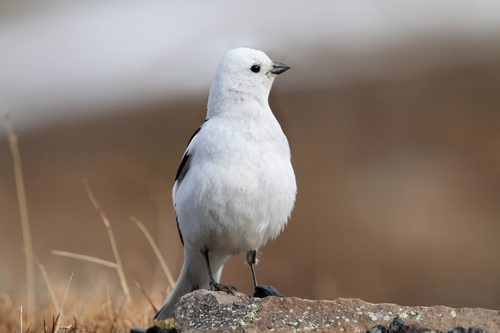
Snow Bunting
In short
The Lapland Bunting and Snow Bunting can be distinguished by their plumage and habitat preferences. The Lapland Bunting typically has a more streaked appearance, while the Snow Bunting is predominantly white with black markings. Both species are found in open, tundra-like habitats, but the Snow Bunting is more likely to be seen in snow-covered areas.
Identification tips
- Look for plumage: Lapland Bunting has streaked brown plumage; Snow Bunting is mostly white.
- Check habitat: Snow Buntings are more likely in snowy areas.
- Listen for calls: Lapland Bunting has a melodious song; Snow Bunting has a musical trill.
- Observe behavior: Lapland Buntings often in flocks; Snow Buntings more solitary.
Size
Both species are similar in size, though the Snow Bunting may appear slightly bulkier due to its plumage.
Plumage
Lapland Bunting males in breeding plumage have a distinctive black face and chestnut nape, while females and non-breeding males are streaked brown. Snow Buntings are mostly white with black wingtips and back, making them more conspicuous in snowy environments.
Behaviour
Both species are ground foragers, but the Lapland Bunting is often seen in flocks during migration and winter, while Snow Buntings are more solitary or in small groups.
Habitat
Lapland Buntings prefer open tundra and grasslands, whereas Snow Buntings are often found in snow-covered fields and rocky coasts during winter.
Voice
The Lapland Bunting's song is a sweet, melodious warble, while the Snow Bunting's call is a soft, musical trill. Both species have distinct vocalizations, but they can be difficult to distinguish without experience.